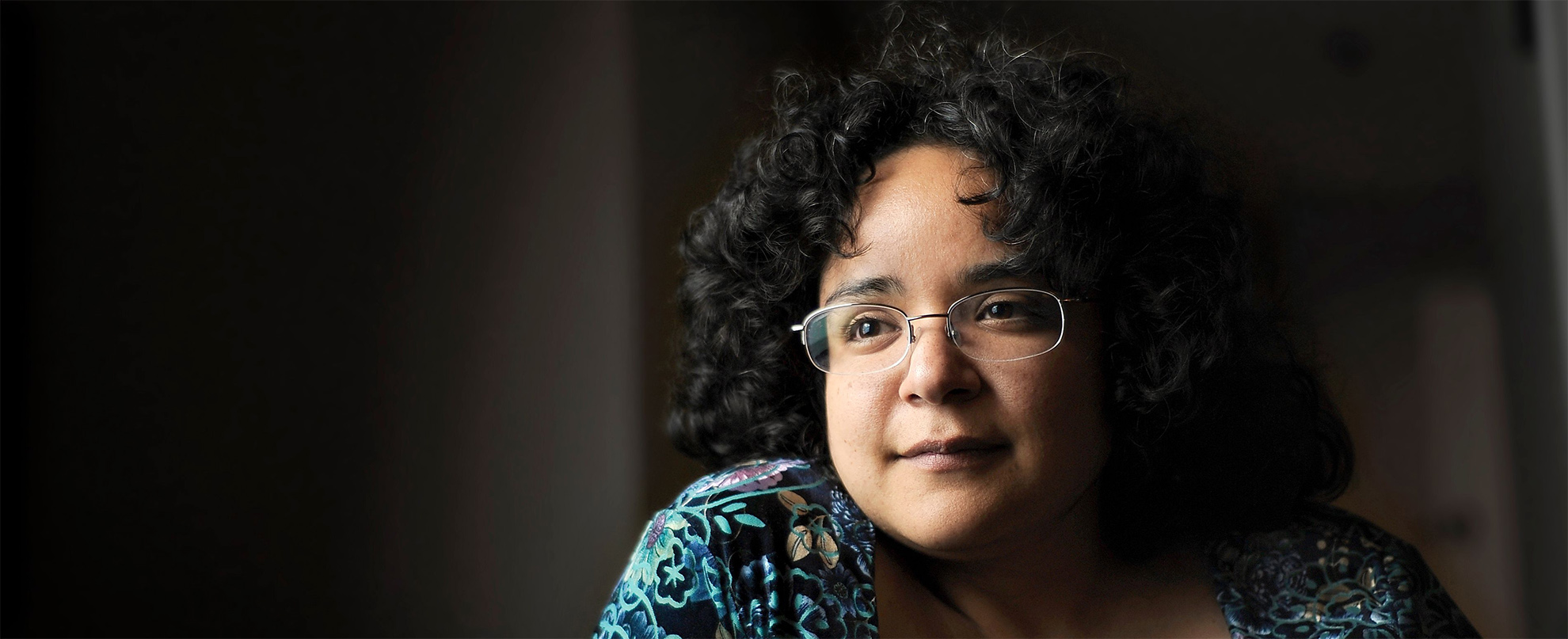

The coming weeks promise big events for Gabriela Lena Frank. In March, Lyric Opera of Chicago will stage Frank’s El último sueño de Frida y Diego, a 2022 drama-fantasy centering on artists Frida Kahlo and Diego Rivera. In May, New York’s Metropolitan Opera gives El último sueño an entirely new staging, which it will livestream to theaters worldwide.

“It’s a lot of Frida,” Frank says with a laugh. The works’ roots go back to when she was only five or six years old.
Frank had already begun studying the piano and “making up little songs,” despite having to wear hearing aids because of a congenital hearing loss, she recalls. Her parents wanted to “introduce me to other disabled people that were accomplished,” so Frank’s mother told her about Kahlo.
“Frida fit the bill and then some,” Frank says. Though their disabilities were different—Kahlo suffered years of pain because of severe injuries from a bus crash—the youngster got the message. And for the child of a Peruvian mother and American father, the resonances went further.
“I was so young, I wasn’t necessarily aware of specific ethnic identities. … I just saw her, and she and I both looked brown,” Frank continues. “And she was creative. The way I was creative was music, and she was creative with art. And I remember my mother pointing out that she had this thick eyebrow, and I used to get teased because my eyebrows were nice and full. And so I identified with that as well.”
1 ⁄2
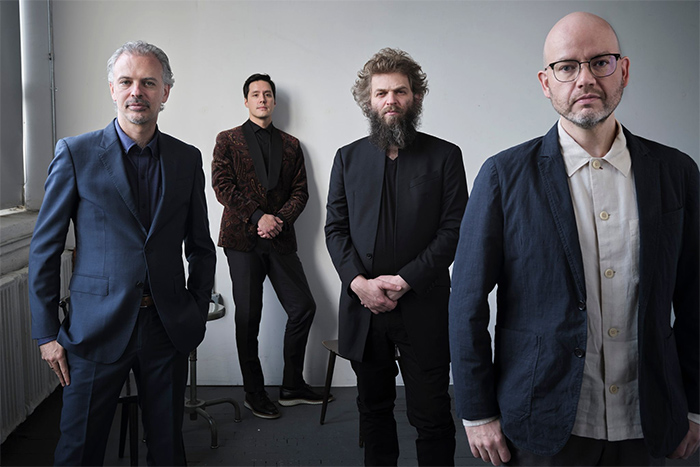
Brooklyn Rider; Photo by Marco Giannavola.
2 ⁄2
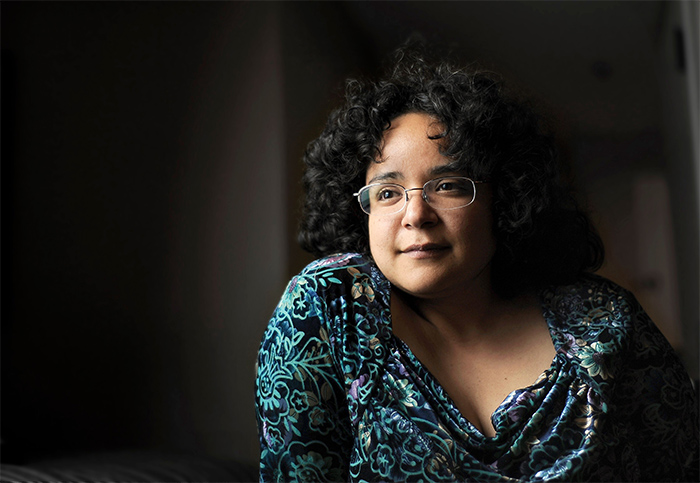
Gabriela Lena Frank; Photo courtesy of DACAMERA.
When Frank grasped that Kahlo “was mixed race…that made a big impact on me,” Frank continues. “Her father was a white European man, and my father is a white Jewish man. For all those reasons, that’s pretty compelling stuff for a little kid, and I didn’t have other role models or heroes like that.”
Only when Frank was in college did she discover more about Kahlo’s place as “a cultural icon,” she says. Meanwhile, the budding composer had learned how to infuse the musical styles of her mother’s Latin American heritage into her own works.
A breakthrough came when her Shepherd School piano teacher, Jeanne Kierman Fischer, introduced her to the music of Alberto Ginastera, an Argentine who gained international prominence in the mid-1900s by blending classical and Latin American influences. “I heard what he was doing, and it was familiar to me from my past—from what I had picked up in my own listening to South American music,” Frank says.
In El último sueño de Frida y Diego—“The Last Dream of Frida and Diego”—Frank and librettist Nilo Cruz set aside the historical facts of Kahlo and Rivera’s marriage. The scenario instead weaves the couple into a transformation of the myth of Orpheus and Eurydice.
The opera opens on the Day of the Dead. Rivera, passing a cemetery where an observance is unfolding, begs the deceased Kahlo to return to him. In the underworld, she at first resists. But she finally agrees to rejoin the living for 24 hours, during which she revisits not only Rivera but her past life and art. At the close, Rivera dies and accompanies Kahlo to the underworld.

The strategy paid off, Frank continues, when she created a half-hour adaptation for Brooklyn Rider. Its nine movements draw on the scenes she thought would “work best and sound beautiful with the quartet.”
“The first movement of the quartet is based on Act 1, scene1 of the opera, in which the choir comes out in a cemetery and announces the beginning of the Day of the Dead,” Frank says. “And after that we’re introduced to Frida. There’s a moment for Diego later. There’s a moment when she’s realizing that she cannot stay in this world of the living that she has entered temporarily, and there’s the reconciliation at the end. So the unfolding of the opera chronologically happens in the string quartet, even if it’s not every single step of the opera.”
—STEVEN BROWN