

A masquerade does not begin as an object. It begins in motion: in the shake of raffia, in the flash of sequins catching light, in the sudden apparition of a face that is not quite human and not quite animal, in the collective intake of breath that happens when a body becomes something more than itself. Even at rest, the ensembles gathered in New African Masquerades: Artistic Innovations and Collaborations retain that charge. Feathers flare outward. Beads tighten the surface into a skin of light. Cloth pools, horns rise, shells and fibers and carved wood hold the memory of performance. Installed at the San Antonio Museum of Art, the works seem to wait not for a viewer but for the next activation, as though still listening for drums somewhere beyond the gallery walls.

At SAMA, the exhibition also marks a return. It is the museum’s first major exhibition of African art in roughly twenty years. Kristopher Driggers, curator of Latin American art at SAMA, said the museum was drawn to the project because of the way it rethinks how African art is presented within museum contexts.
“The reason that we were excited about bringing this exhibition to San Antonio is that we really see the team that organized New African Masquerades as doing something new and important for the field of African art,” Driggers said. “It’s a project that has really been intentional about getting the buy-in of the artists who participate in it, and a project that’s been intentional about forming ethical collaborations and having a tour that travels both in the U.S. and in Africa. It feels like this is a team that is trying to reverse some old expectations about how museums do business.”
Historically, African masquerade ensembles entered Western museum collections stripped of authorship and context, often catalogued under the phrase “artist unknown.” New African Masquerades works deliberately against that legacy. The artists featured in the exhibition shaped how their work would appear in the gallery, contributing to decisions about installation, display, and interpretation.
1 ⁄10
2 ⁄10
3 ⁄10
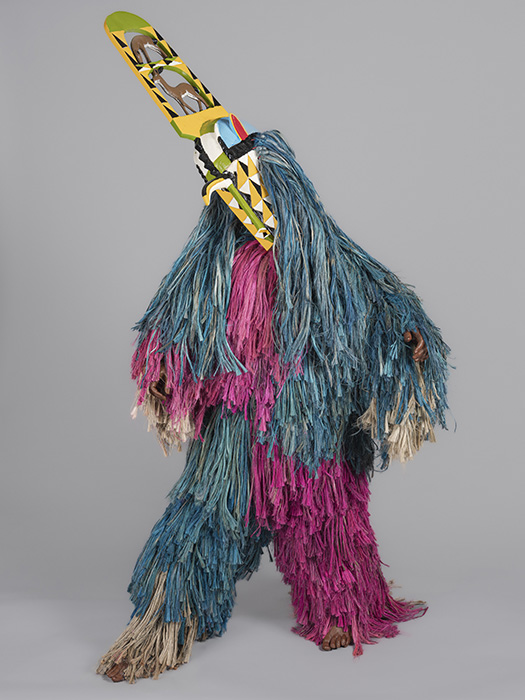
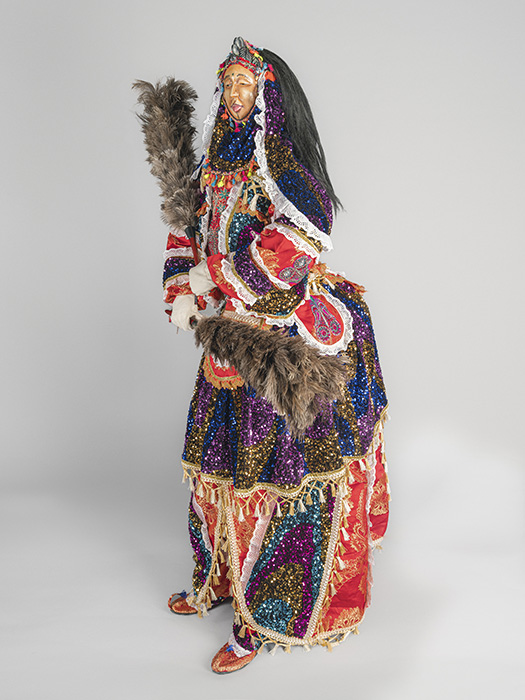
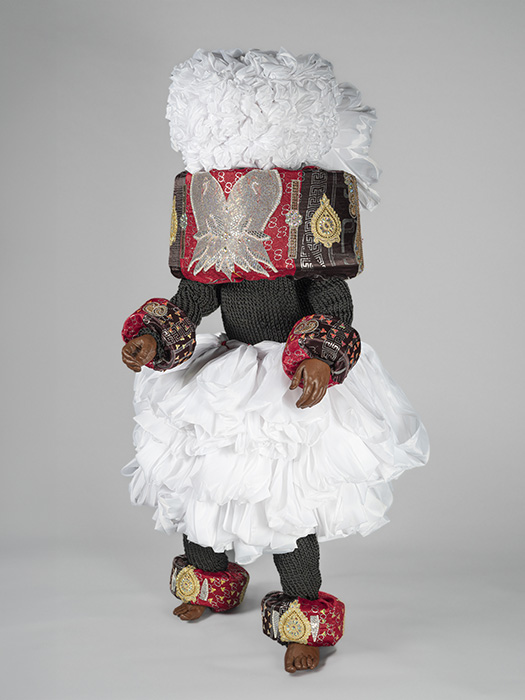
Sheku “Goldenfinger” Fofanah, Sierra Leonean (active in Freetown), “Fairy” Masquerade Ensemble, 2022. Fabric, sequins, wood, paint, glue: life-size. Commission for the Fitchburg Art Museum. Photo courtesy of the New Orleans Museum of Art.
4 ⁄10
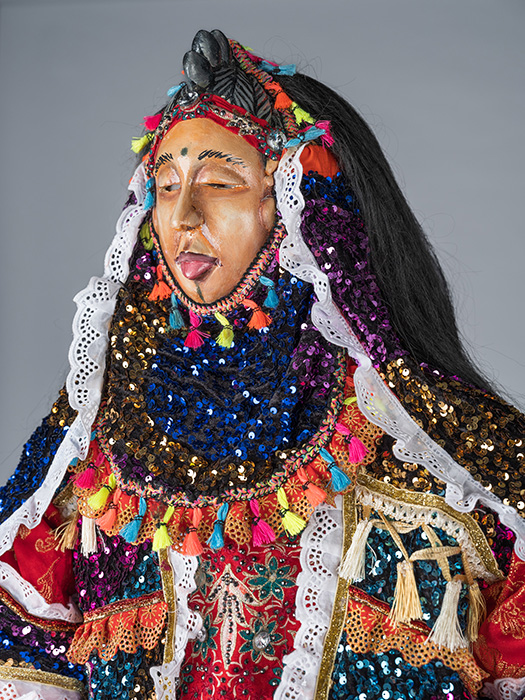
Sheku “Goldenfinger” Fofanah, Sierra Leonean (active in Freetown), “Fairy” Masquerade Ensemble (detail), 2022. Fabric, sequins, wood, paint, glue: life-size. Commission for the Fitchburg Art Museum. Photo courtesy of the New Orleans Museum of Art.
5 ⁄10
6 ⁄10
7 ⁄10
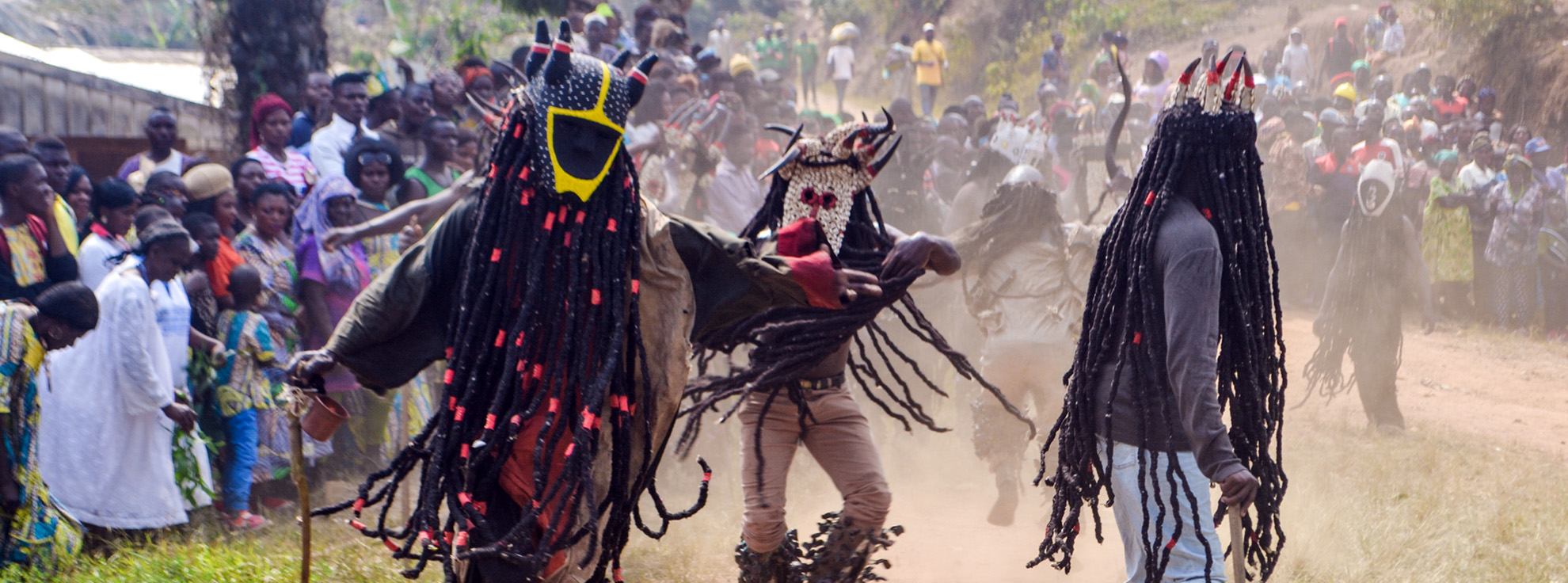
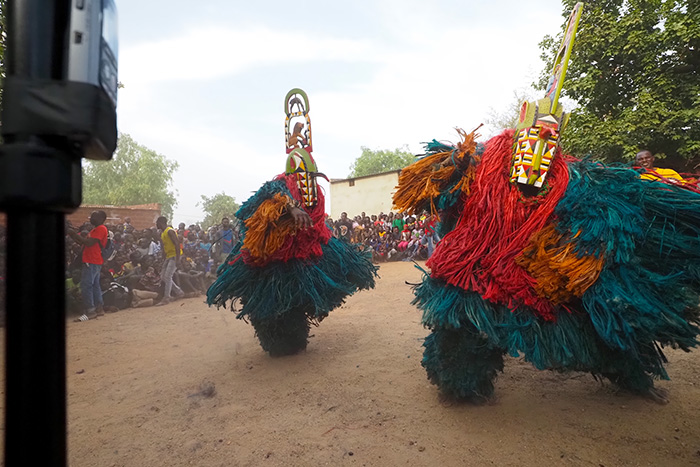
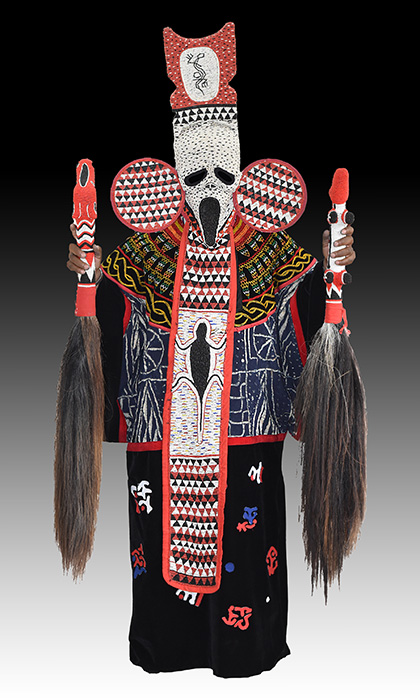
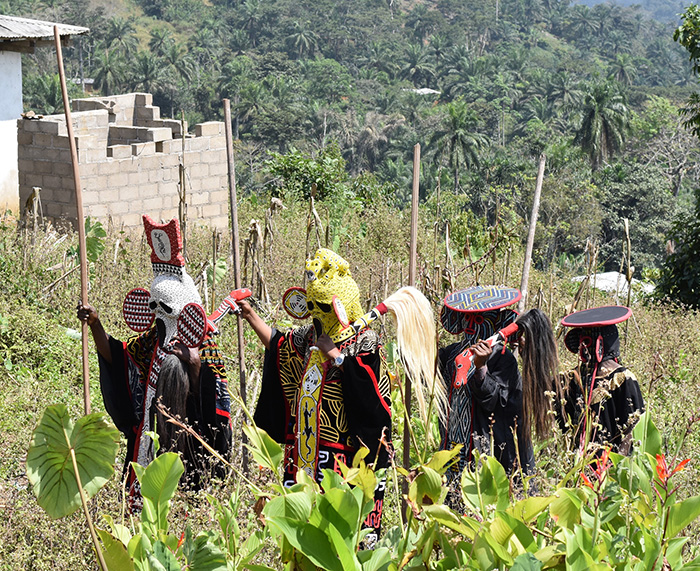
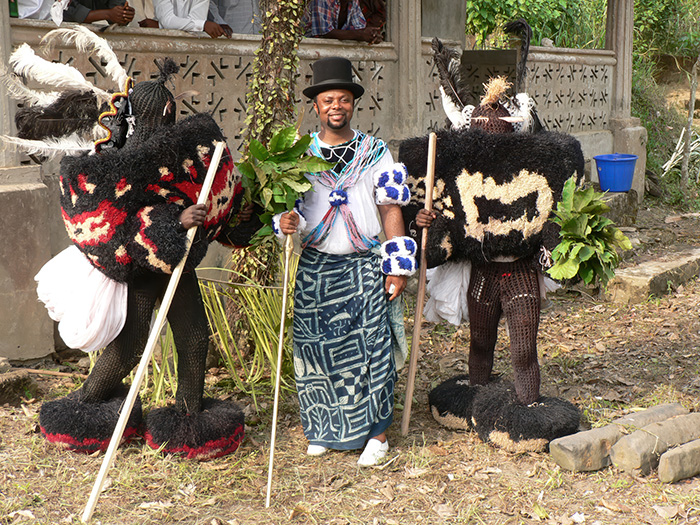
Hervé Youmbi, Tso Scream Mask and Tso Scream Leopard Mask at the Nka’a Kossié society succession ceremony at Fondati Chieftaincy, Saturday, December 3, 2022. Photo by Hervé Youmbi. Courtesy of the artist and Axis Gallery, New York and New Jersey.
8 ⁄10
9 ⁄10
10 ⁄10
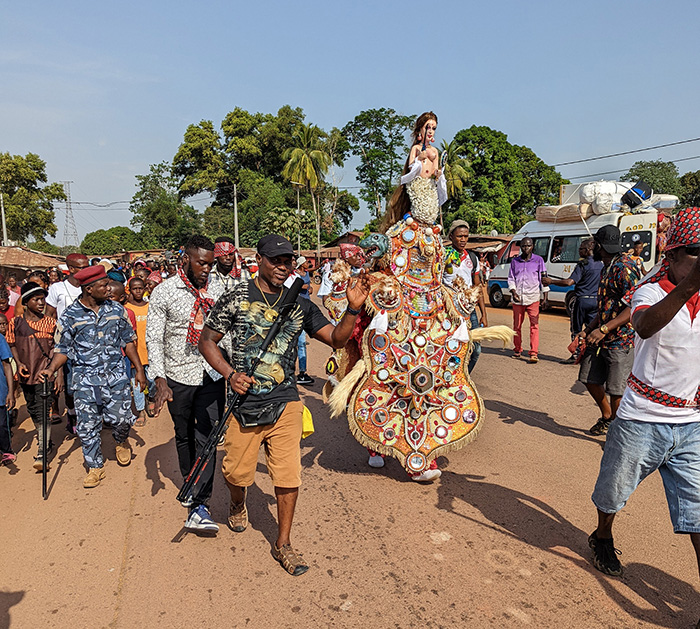
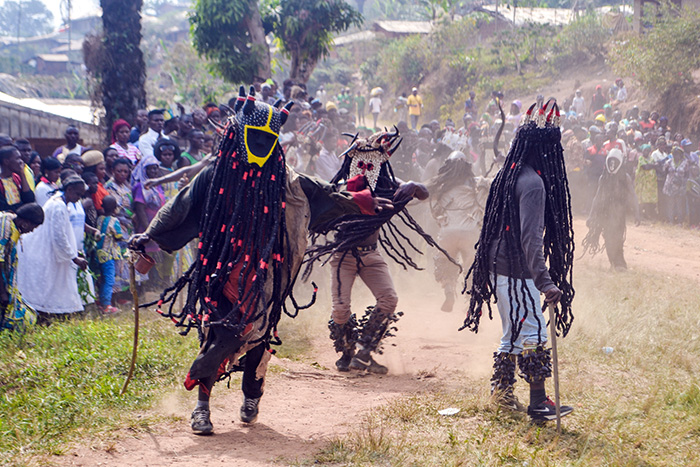
Two raffia Efik Ekpe masquerades with Chief Ekpenyong Bassey Nsa during his Ekpe chieftaincy installation, Creek Town, Nigeria, December 31, 2009. Photo by Jordan A. Fenton.
That collaboration extends into the exhibition design. Mannequins are posed dynamically to evoke the movements of masquerade performance, while architectural patterns and gallery colors reference environments familiar to the artists. Video installations showing the ensembles in motion, further emphasizing activation through dance, music, and communal gathering.
The exhibition’s central premise, that masquerade remains a living form, runs through each artist’s work. “We shouldn’t think of masquerade as something that’s sort of fossilized in the past,” Driggers said. “This exhibition is about how masquerade is alive today, which means it’s also about how masquerade is evolving. Each of the artists in the show is making decisions about what their masquerade ensembles should look like based on things that are part of their lived experience.”
For Sheku “Goldenfinger” Fofanah, that experience reflects the ways masquerade circulates across communities and diasporic networks. One ensemble in the exhibition has already moved between contexts, first performed in Freetown before appearing during a diasporic event in Los Angeles. To Driggers, the story illustrates how masquerade now travels through both physical and digital spaces.
“There’s an ensemble in the show that was performed first in Freetown, Sierra Leone,” he said. “It was later performed in Los Angeles as part of a diasporic performance, and one of the organizing curators of the show saw it on Facebook Live. So, she saw it because it was being performed on social media, and now it’s being exhibited as a museum object with the consent of the artists and the societies that made and performed it.”
In Burkina Faso, David Sanou approaches masquerade through lineage and reinvention. A third-generation sculptor, Sanou inherited a workshop and an artistic legacy from his father, who developed a photorealistic mask style that departed from the abstraction typical of older forms. Sanou’s work merges those traditions, combining elements of the older kimi masks with the representational qualities of his father’s style to create a hybrid genre of his own.

The project began when members of a masquerade society started performing with imported rubber Ghostface masks. Rather than dismiss the phenomenon, Youmbi studied the symbolic rules governing the society’s masks before introducing similar imagery through hand-crafted forms.
“The way he innovated was by introducing some pop culture images of the Predator and of Ghostface from Scream,” Driggers said. “What he’s told us is that when they were first performed, they were remarkably popular, that after the first ones were introduced the leadership of these brotherhoods immediately wanted more.”
These experiments challenge a distinction that museums often reinforce between “traditional” and “contemporary” art. Driggers argues that such a division obscures how cultural practices actually function.
“Tradition versus contemporary, that’s not a binary that we should have,” he said. “Tradition endures because it suits needs that we still have today, and tradition gets revised because we need different things now than we needed in the past.”
The exhibition ultimately asks audiences to reconsider the stories museums tell about art and its makers. “If you walk into museums that have encyclopedic collections, we see objects without makers’ names everywhere,” Driggers said. “What this exhibition does is remind us that there are makers for those objects, people with real motivations and real intentions who care deeply about their work.”
Standing among the ensembles at SAMA, that point becomes tangible. The figures rise from their platforms like bodies paused mid-performance, elaborate surfaces built from cloth, wood, beads, and feathers. The museum fixes them in stillness, yet the suggestion of movement remains.
The masquerade has not stopped. It is simply waiting to move again.
—MICHAEL McFADDEN