

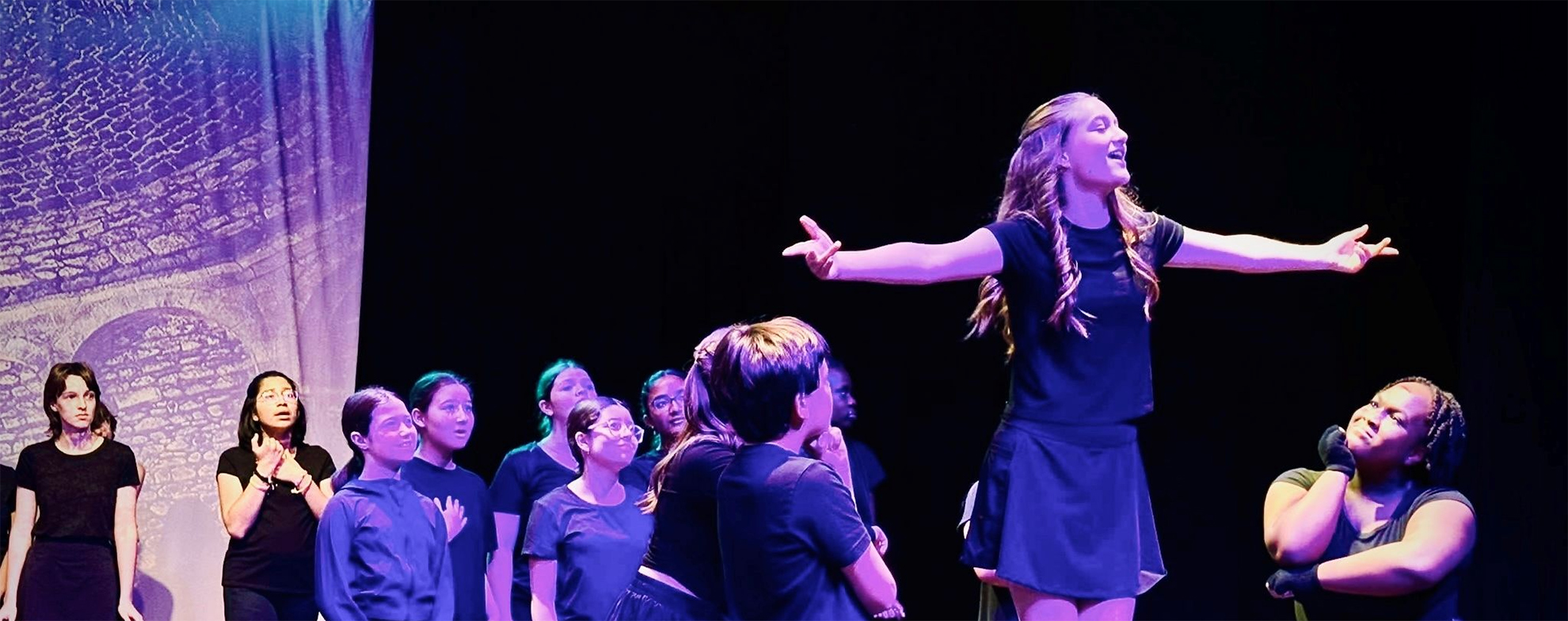

Whether used as a compliment, insult, meme, or pseudo psychological term to explain a politician’s antics, the phrase “theater kid,” (or “theatre kid” for the British, Canadian, and pretentious) has become something of a catch-all description for anyone enthusiastic about the performing arts or who holds a “pick me” mentality of life. But in Texas, with our culture of strong public school theater departments, performing arts high schools, and statewide teen acting competitions, we take the theater kid ideal to a whole other league.

“There has been a lot of news on the value of theater education in the business world. We have done those stories too! That’s great that theater training in high school and college is such a versatile education,” notes Nancy Wozny, Arts and Culture Texas editor in chief. “That said, we need some of those theater kids to become the next generation of theater professionals or we won’t have a professional theater.”
Sent on this quest, I set out to interview some grownup theater kids who have managed to make a career in professional theater and stayed in Texas to do so, including Dana Schultes and Garret Storms, executive producer and associate producer at Stage West, Theatre Under The Stars associate artistic director Mitchell Greco, and Alley Theatre resident actor Melissa Molano. And for a look into the theater future, I also consulted current theater kid, Ashlynn Hull of Sugar Land and Houston theater teen Mack Hutchinson.
Though countless theater kids reached adulthood, found rewarding day jobs while also taking roles onstage or behind the scenes of regional theaters across the state, the theater professionals I interviewed have made theater a main focus of their professional and creative lives. They remember hearing the call even before high school.
“I caught the bug as a young child doing plays in elementary school and in my living room with my brother, cousins, and neighborhood kids,” says Storms. Greco reminisces on his first stage role in the ensemble of a high school production of The Music Man, while he was in third grade. Schultes recalls participating in theater as early as first grade and found herself drawn at a young age to the idea of performance as storytelling.
1 ⁄ 11
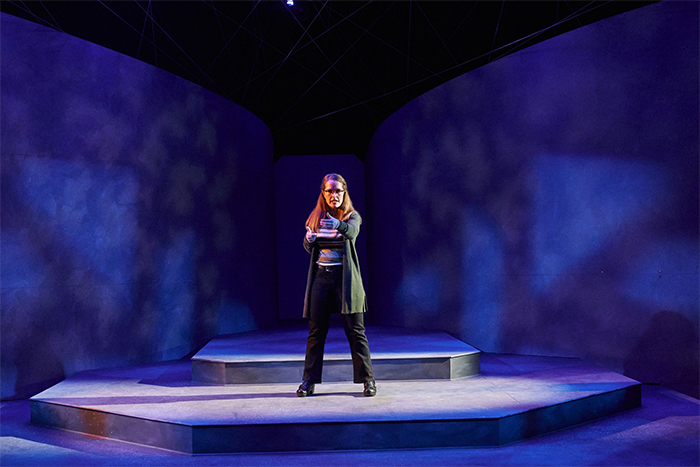
Dana Schultes in the 2022 Stage West production of On the Exhale by Martin Zimmerman. Photo by Evan Michael Woods.
2 ⁄ 11
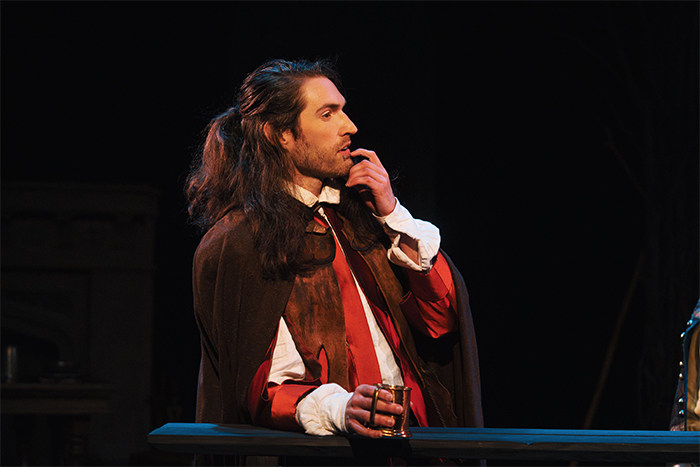
Garret Storms in the 2022 Stage West production of Witch by Jen Silverman. Photo by Evan Michael Woods.
3 ⁄11
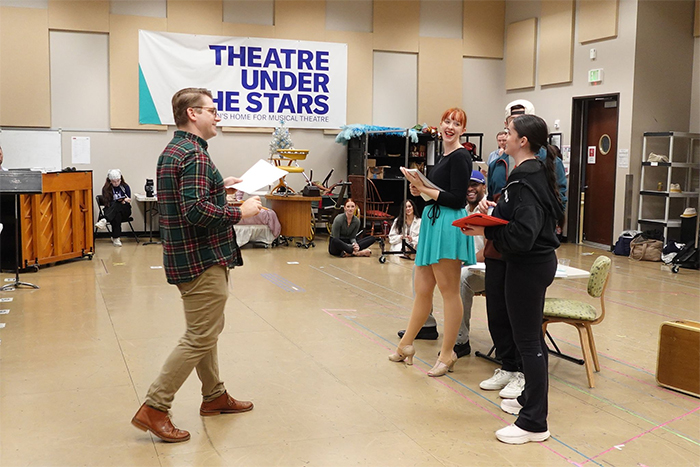
Mitchell Greco directing the cast of White Christmas at Theatre Under The Stars. Photo by Elizabeth Gentry.

4 ⁄11
Mack Hutchinson in the Alley Theatre’s Play Makers. Photo courtesy of Alley Theatre.
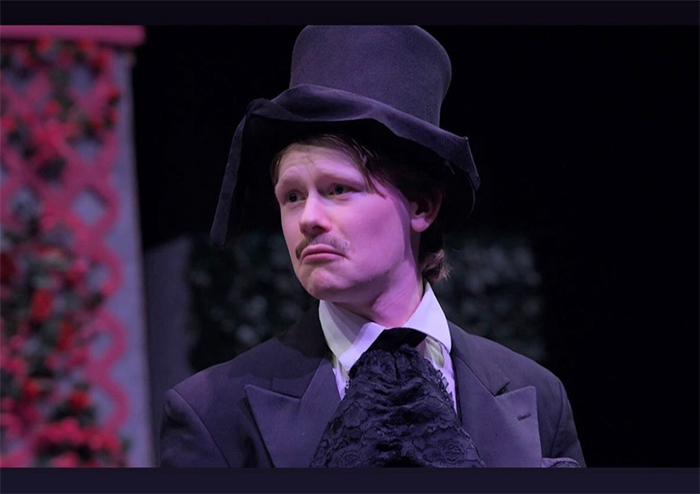
5 ⁄11
Mack Hutchinson in the KHSPVA production of The Importance of Being Earnest. Photo courtesy of KHSPVA.
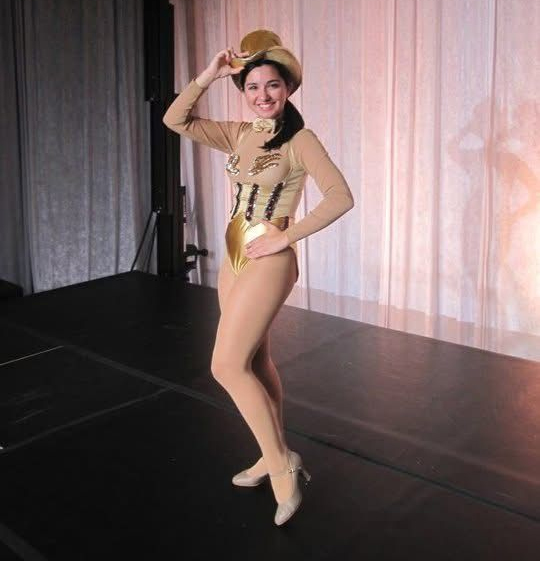
6 ⁄11
Melissa Molano in the Sam Houston State University production of A Chorus Line. Photo courtesy of the artist.
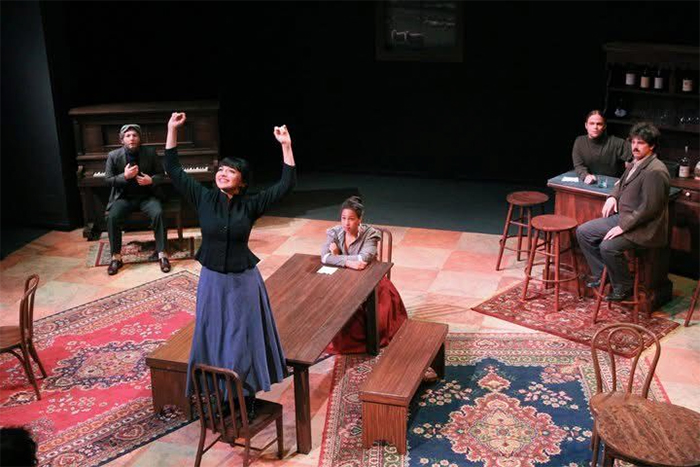
7 ⁄11
Melissa Molano in the Houston State University production of Picasso at the Lapin Agile. Photo courtesy of the artist.

8 ⁄11
Melissa Molano and Zach Fine in Alley Theatre’s production of The Da Vinci Code. Photo by Melissa Taylor.
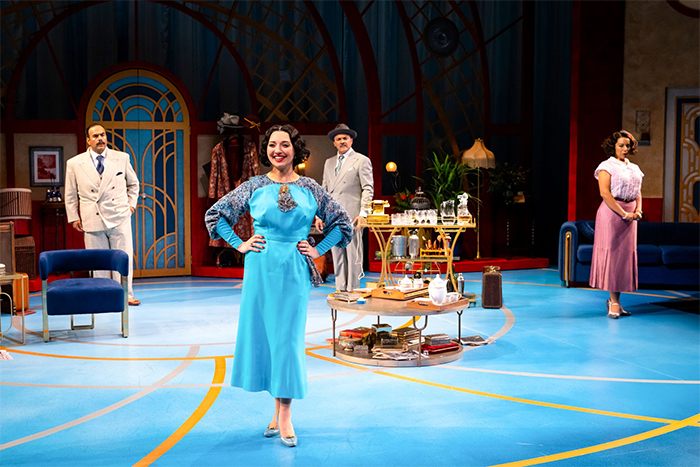
9 ⁄11
Melissa Molano with Orlando Arriaga, Hugo E. Carbajal, and Briana J. Resa in the Alley Theatre’s production of Noël Coward’s Private Lives. Photo by Lynn Lane.
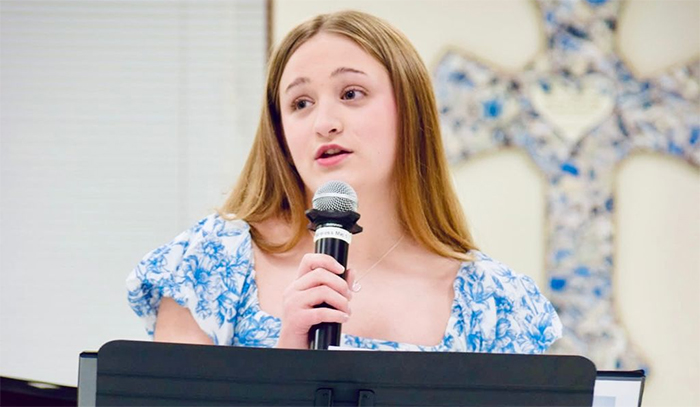
10 ⁄11
Ashlynn Hull. Photo courtesy of the artist.
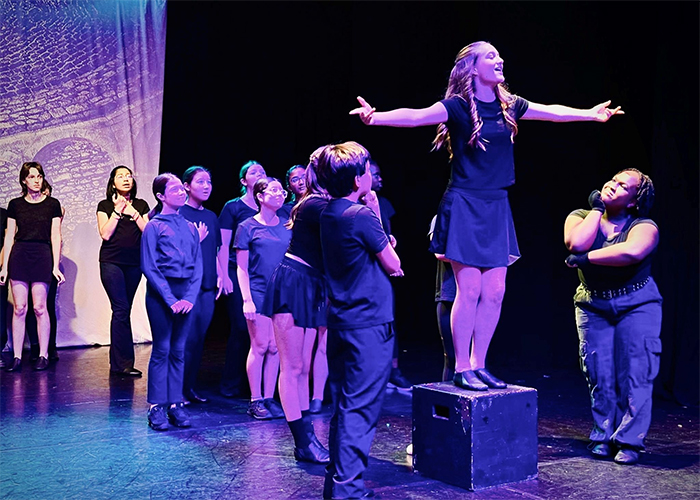
11 ⁄11
Theater’s ability to transport us into a story is also what made Hull a theater kid. Hull has already performed in shows at her middle school, takes part in the choir/musical theater program, and stays involved in local community theater. She even recently attended Broadway Artists Alliance summer intensive musical theater program in New York City.
“When I was little, I really enjoyed watching Disney musicals like Aladdin and The Lion King on stage,” Hull describes. “However, it wasn’t until I saw Come from Away at the Hobby Center that I fell in love with musical theater. The way that the actors made me feel like I was part of the story and not just sitting in the theater made me want to do the same for others.”
As a student at Houston’s Kinder High School for the Performing and Visual Arts, Mack Hutchinson embraces the theater kid labeling. “I strongly identify with the title, and the relationships it allows me to have.”
Hutchinson comes from a multi-generation theater family. His parents are Elizabeth Bunch and Chris Hutchinson, longtime Alley Theatre resident company members, and he has an uncle who is an accomplished Broadway and screen actor. Hutchinson has previously taken on acting roles at the Alley and at Catastrophic Theatre, but understands his experience as a theater kid is likely different than his peers.
“I recognize the advantages that come with having parents who are respected regional actors. I do my best not to take it for granted,” remarks Hutchinson, later adding “I’m very inspired by my friends that have found theater on their own, because it truly means that the art form transcends generational passion, and becomes individual.”
Discussing theater education and advocating for its place in our national culture, Storms wishes that we might celebrate the arts as much as sports in the U.S., so I found it intriguing that so many of these theater professionals described their early theater experiences using language similar to how we might reference participating in sports or our relationship with our favorite teams.
“It has the ability to create community and family during the most formative years of your life. I would not be the person I am today without the community of weirdos in high school that mentored me, lifted me up, and taught me all the wonderful things about myself and life,” says Greco. With the exception of the word “weirdos” Greco could easily be describing time playing on a high school sports team.
Similarly, Schultes explained that her time in high school theater “meant a place where I felt like I belonged.” And both Molano and Storms found community or a sense of belonging one of the most important benefits of being a theater kid.

Of course, other descriptions of their theater kid times could only be used for the arts, with Molano describing her high school and early college experiences as a “place where everyone had the freedom to explore different walks of life.” And Storms believes, “Theater fosters creativity, imagination, collaboration, empathy, responsibility, critical thinking, and community.”
Even with all those qualities, many young people are sometimes told that while arts education can be valuable, realistically they should take those skills into other careers. But these artists prove it is possible to make a life in the theater, even in Texas, though it does take support and encouragement.
Schultes heard those words of warning and has repeated them to younger folks. “However, my mentors, Larry Cure and Jerry Russell, nurtured my inner theater maker and helped me see that I had talent. They gave me opportunities to hone it,” she explains. Likewise, Greco remembers it was that first chance to be in a professional production, coincidently at TUTS, that gave him the confidence to take a chance.
“I was in the 2007 production of A Wonderful Life, the first time I worked with professionals in a professional setting. It was an eye-opening and thrilling experience, and the first time that I thought ‘Maybe I could do this!’ It turns out that money is an effective motivator and confidence booster.”
But Schultes does qualify that becoming a theater professional includes thinking about everything that entails. “No job in the theater was ‘unworthy.’ I’ve happily swept the stage; I gladly played Chorus Role 14.”
Storms believes each artist needs to be their own life judge. “On a practical level, I think something that is important is checking in with yourself throughout the artistic journey about what ‘success’ looks like for you personally. It will change and shift of course, but it’s an important conversation to have with oneself.”
Many of these theater adults give credit to parents who encouraged them to pursue their theatrical dreams, but Mack Hutchinson credits his actor parents for also giving him the freedom and support to go in any direction he wants.
“As I continued on with school, I fell in love with the technical aspect of the theater, specifically sound design, and it has become the thing I want to pursue,” he says, later adding “Along with acting and theatre, live music, production and sound design are undoubtedly aspects of my ideal education, and hopefully career.”
And while Hutchinson has hopes for moving to Chicago or New York to work in sound design and young Hull has Broadway dreams, these theater professionals found that sometimes there’s no place like home in Texas theater.
“It wasn’t until college that I really considered that there were other options beyond Broadway as far as a theatrical career,” remembers Greco. “I think it’s so important that emerging artists consider the community that raised them as a vital and fertile ground to grow a career. Creating work that is for and by the community you serve is so fulfilling. Broadway is incredible, but so is the theater right in your backyard.”
“In the beginning, of course, it was all about getting to New York,” echoes Molano. “I had family there already and of course I want to make it on Broadway. My first professional show was at Stages while I was still in college, and I remember at the time the Associate Artistic Director encouraging me to stick around Houston as there was a rich arts community. It’s been incredible to see how much the theatre scene has grown here since that time. I’m very grateful to be a part of it.”
And as I asked them to share their theater kid past, they’re also thinking about the future of Texas theater for the next generation of theater kids like Hull and Hutchinson.
“I’m constantly considering what choices I can make to make the industry a better place than how I found it,” explains Greco. “I think about how we can create new audiences and new theater makers for the next generation. We talk a lot about how musical theater is one of the most accessible of the art forms.”
Both Molano and Schultes especially think about the future of theater in these virtual, remote, and online times. They wonder if the immediacy of live theater makes it all the more valuable and to be cherished.
“There have been days when I worried that live theater was not going to continue to exist,” confesses Schultes. “However, I think it will become stronger than ever as AI becomes more prevalent. Over the last year or so, I’ve been saying to audiences that one of the great joys of live theater is that you know it’s real. You can touch it, feel it, smell it, see it. It’s tangible.”
“In an increasingly digital world, it gives me great purpose to uphold the tradition of live performance and encourage people to go experience it,” says Molano. “People don’t even walk down the street and look up from a screen much anymore. There’s something fundamentally human about being right there among other humans and having a shared experience. We need it. It sparks new ideas, conversations, makes us see things in a new way.”
And just as the real-life stories of Come From Away helped make Ashlynn Hull a theater kid, Storms believes storytelling will keep theater alive. “At the end of the day, all we have are stories—they are where we place our morals, our flaws and contradictions, our discoveries, our histories, our love and grief, our rage and passion. They are our entertainment and escape as well as our provocation and collective growth. Stories shape culture and humanity.”
—TARRA GAINES