

Though one of Texas’ biggest multidisciplinary arts events, Austin’s Fusebox Festival, moved from an annual to biennial schedule in 2024, that doesn’t mean the Fusebox organization took a year off to relax. Talking to founder and artistic director, Ron Berry, it became apparent that 2025 was a busy year indeed. Fusebox “formalized” their partnership with Texas Performing Arts, collaborating to help present four to six performances that take place within the larger TPA season. They also launched their Artist Salon, a kind of informal gathering between artists and audiences that give audiences unique insight into the creative process.

Previous Salon artists, like UT professor and AR/VR performance artist Jiabao Li, and digital artists/musicians Liz Ferrer and Bow Ty (a.k.a LIZN’BOW) will return for the festival. Chris Grace, one of the first artists invited to salon, and a comic, theater-maker, and Fusebox alumnus who has become a fixture at many fringe festivals around the world, will once again perform, but he’ll also curate a kind of mini Edinburgh Fringe Festival within the Fusebox Festival.
“It’ll be a lot of stuff that largely floats between theater and comedy,” says Berry of the performances Grace will help host. Though a new program in their 20-year history, Berry says the Artist Salon is “creating a connective tissue between this network of artists that we’re in conversation and relationship with. Then in certain cases we’re connecting that to the festival.”
Three Texas Performing Arts presentations will also overlap as part of the festival, including two homegrown theatrical pieces. Berry says that with many of TPA’s season presentations being national and international artists, both organizations wanted the opportunity to share local artists doing innovative work.
1 ⁄5
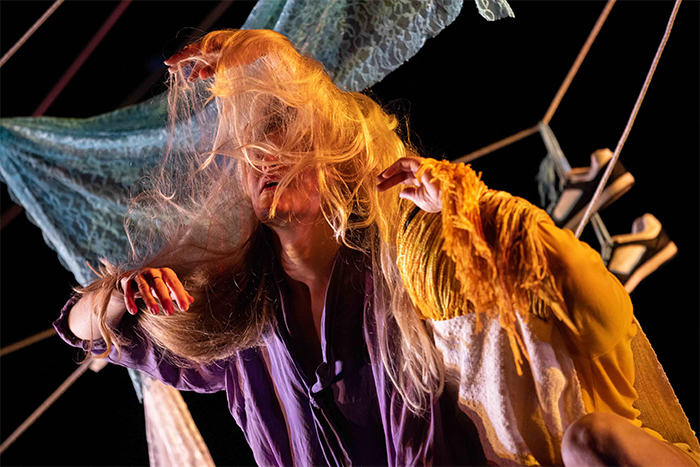
Laura Osterhaus in Vanessa Anspaugh’s mourning after mornings, Photo by Maria Baranova.
2 ⁄5
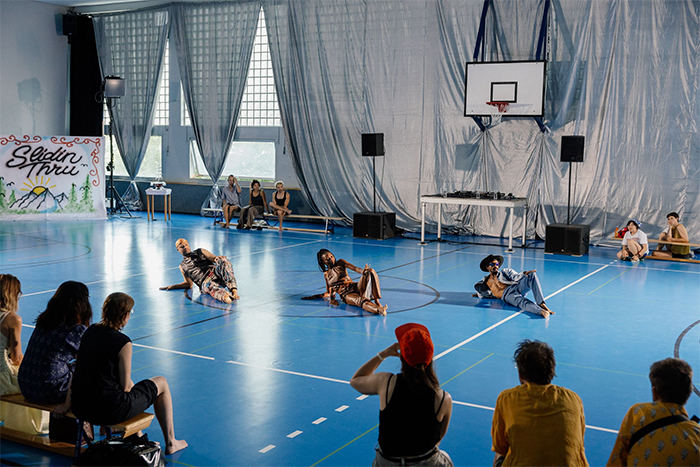
Jeremy Nedd, Slidin Thru. Photo by Julie Folly.
3 ⁄5
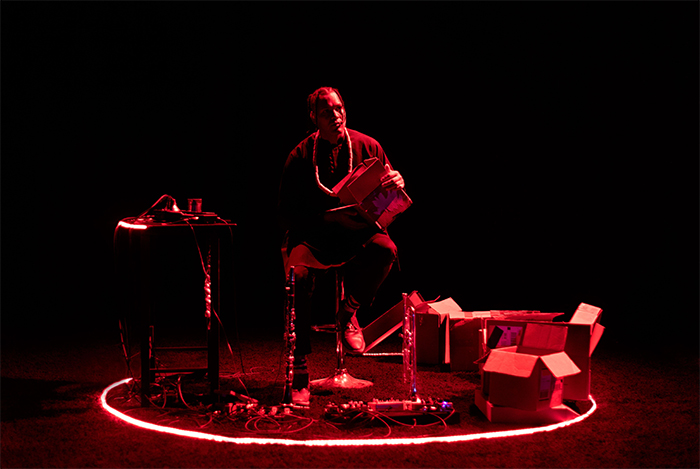
Ahamefule Oluo, The Things Around Us. Photo by Malique Pye.
4 ⁄5
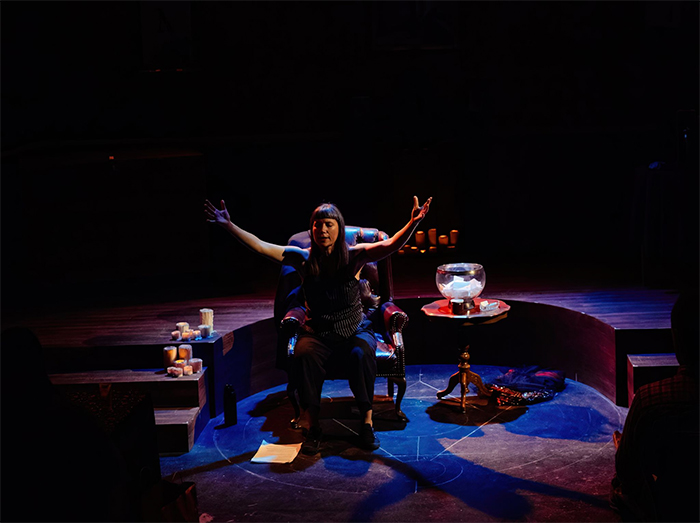
Katie Bender, Instructions For A Seance. Photo by Evan Woods.
5 ⁄5
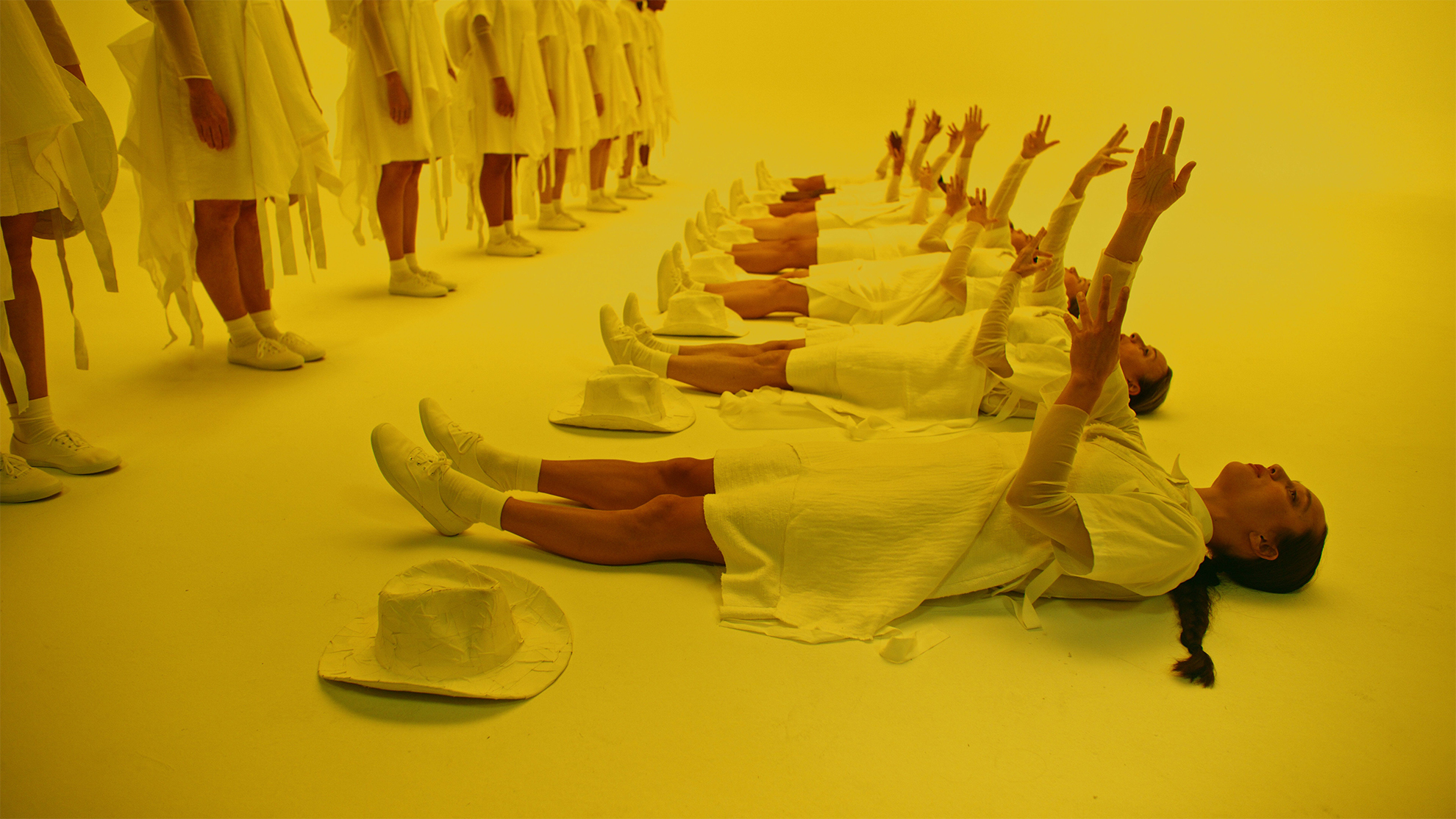
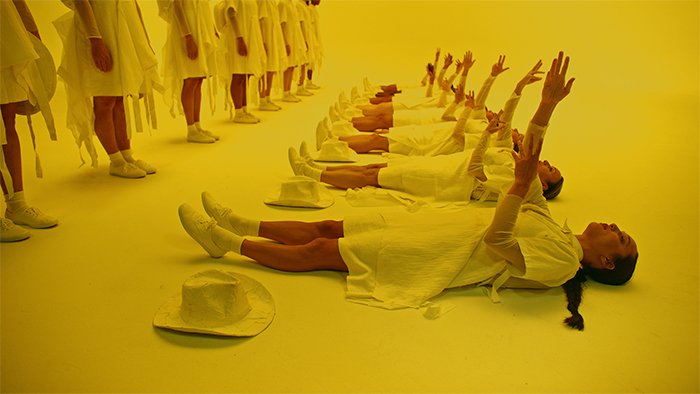
Annie-B Parson, The Oath, film still.
Austin theater collective, the Rude Mechs, will revisit their play Not Every Mountain, which they performed at Fusebox 2019. “They felt like there was some unfinished business with it and really wanted to revisit it and reimagined some of the staging,” explains Berry, adding. “I love that show. I think the text is so beautiful.”
Also part of both the festival and the TPA season will be Austin playwright and performer Katie Bender’s Instructions for a Séance, a one-woman, audience interactive show that was also workshopped at the Alley All New play reading festival in Houston.
Acclaimed choreographer Vanessa Anspaugh will appear with mourning after mornings, a late addition to the TPA lineup, which is also a part of the festival. She’ll also work with the UT Dance Department.
Keeping with their name, Fusebox also brings together a mix of returning and new artists as well as local, national, and international artists, sometimes as a fusion, like indie, New York rock band, Dirty Projectors, who will perform their orchestral concept album, Song of the Earth, with the Austin Symphony. This year marks both the Projectors and, strangely, Austin Symphony’s first appearance in the festival.
Austin becomes a major theme and inspiration for 2026. Texas musician, composer and friend to the festival, Graham Reynolds, will have two new works, including a composition performed by a 12-piece orchestra atop a parking garage, with star-gazing after the concert. Japanese choreographer, Ayaka Nakama, arrives two weeks early to create an Austin-specific work, Hello, I’m Your New Neighbor. <Fly Me to Austin>. “A walk for audiences as a sort of piece of choreography, it’ll also be a journey through the city,” describes Berry.

“We’re really interested in how a festival lives in relationship to a place, how it allows you to encounter a place. We were interested in using the festival as a way to explore different parts of our architecture, which is something we’ve always done. It’s just we want to do a little more of it.” describes Berry, on making the whole city–from parking garages to buildings to a basketball court, to architect Jack Sanders’ Wishing Well baseball field–into performance spaces for the festival.
One of the biggest Austin explorations will be a series of walks with acclaimed author of A Natural History of Empty Lots, Christian Brown, as he shares some of the history and stories of his favorite abandoned spaces in Austin.
“For me, probably my least favorite festivals are those that feel like they could be happening anywhere. And so we really want people to be able to encounter this place and meet people from this place and get some different experiences within the city and also celebrate places or sites within Austin that are special for people.”
—TARRA GAINES
