

In 1985, Jeff Hurst and Cora Cardona founded Teatro Dallas, the city’s first Latinx stage company. It debuted with two shows co-produced with ACAL de Mexico, and across the next four decades the married duo broadened their mission to embrace global theater. Works by literary giants—Molière, García Lorca, Cervantes, and Kafka—found their way onto Teatro Dallas’ stages, as did early career performances from some of DFW’s most notable artists: Christie Vela, associate artistic director at Theatre Three; Bruce DuBose, artistic director at Undermain Theatre; and Adelina Anthony, co-founder of Cara Mía Theatre, among others.

But even with its artistic achievements and its commitment to elevating new voices, faces, languages, and ideas, Teatro Dallas has weathered uncertain times. “There was a stretch between our 35th anniversary and now when we didn’t know if we’d make it to 40,” says Welch. “Jeff had passed on, Cora had stepped down, and of course it was the pandemic.”
Welch notes the common challenge of arts organizations whose founders become synonymous with the institution. “The real name of the theater back then was Cora’s Theatre,” he says.
Today, no single person steers Teatro. Instead, the pioneering company has adopted what Welch calls a “socialist model,” with decision-making shared across staff and the board of directors. But reaching that structure took time. After Cardona’s retirement in 2017, her daughter Sara briefly stepped in—she now serves as development director—followed by Venezuelan playwright Gustavo Ott, who led the theater until his departure in 2023.

1 ⁄4
Javier Carmona and Devon Khalsa in the Teatro Dallas production of JOB by Max Wolf Friedlich. Photo by Frederick Ezeala.

2 ⁄4
Juliana Rincon and Caleb De La Torre in the Teatro Dallas production of Como Agua Para Chocolate, adapted for the stage by Gabriel Scampini. Photo by Frederick Ezeala.
3 ⁄4
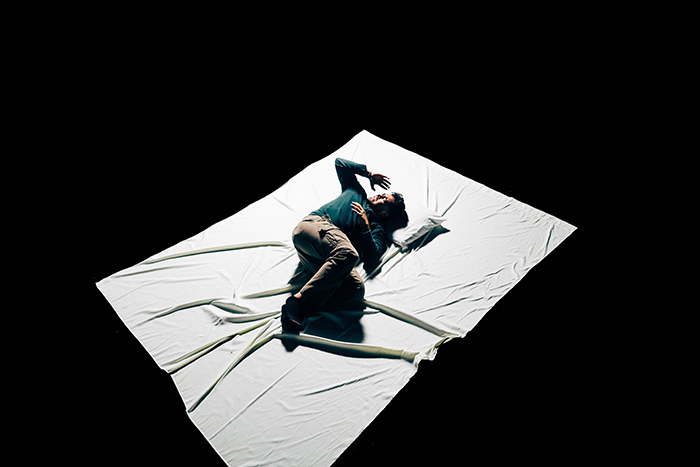
Francisco Grifaldo in the Teatro Dallas production of Cloud Tectonics by José Rivera. Photo by Frederick Ezeala.
4 ⁄4
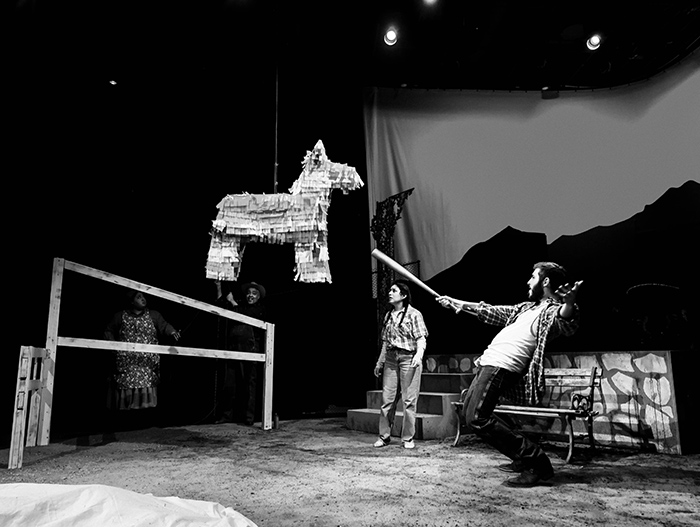
Alex Camacho, Bethany Mejorado, Marta Torres, and Javier Carmona in the Teatro Dallas production of Octavio Solis’s El Otro. Photo by Frederick Ezeala.
Welch entered the picture unexpectedly. Initially freelancing, he stepped in to direct a production after a medical emergency and found himself drawn deeply into the company’s ethos. He eventually sent Sara a bold letter outlining possible improvements, a conversation that ultimately led him to propose Teatro’s now artist-first model.
“We don’t pick our season of plays,” Welch explains. “We pick artists first—actors, directors, writers—and ask them, ‘What’s your dream gig?’”
The first artist to answer that call was Sasha Maya Ada, who picked José Rivera’s Cloud Tectonics to stage in 2024. Welch and Ada had been classmates at SMU, and when a touring company from Chicago canceled at the last minute, he reached out.
“My pitch was: What if I can make something locally that’s better, runs longer, and is cheaper?” Welch recalls. “We started Cloud rehearsals two weeks later, and the response convinced the board we were onto something.”
The model works, Welch says, because it “raises the floor,” ensuring at least one person is profoundly passionate about the work. That enthusiasm becomes contagious, igniting commitment across the cast and crew.
This season’s first spark came in November with the recent Broadway hit Job, a tense two-person thriller by Gen Z playwright Max Wolf Friedlich that explores psychotherapy, generational divides, and the digital age.

Cora Cardona returns to her theater May 15-24, 2026, with Los Niños Santos de María Sabina, a play she has written and will direct. It explores the life of the renowned Oaxacan healer whose sacred mushroom rituals cured generations, but whose legacy was distorted by the rise of drug culture.
The season concludes June 20-28, 2026, with Como Agua Para Chocolate, Gabriel Scampini’s Spanish-language stage adaptation of Laura Esquivel’s novel and Alfonso Arau’s beloved film. Scampini, who participated in Teatro’s new directors festival last year, first tested the adaptation then.
“It was far and away the most successful thing we have ever produced,” Welch says. “No extension could have prepared us for how many people wanted to see that show. It spread like wildfire through the Latino community, especially in South and West Dallas.”
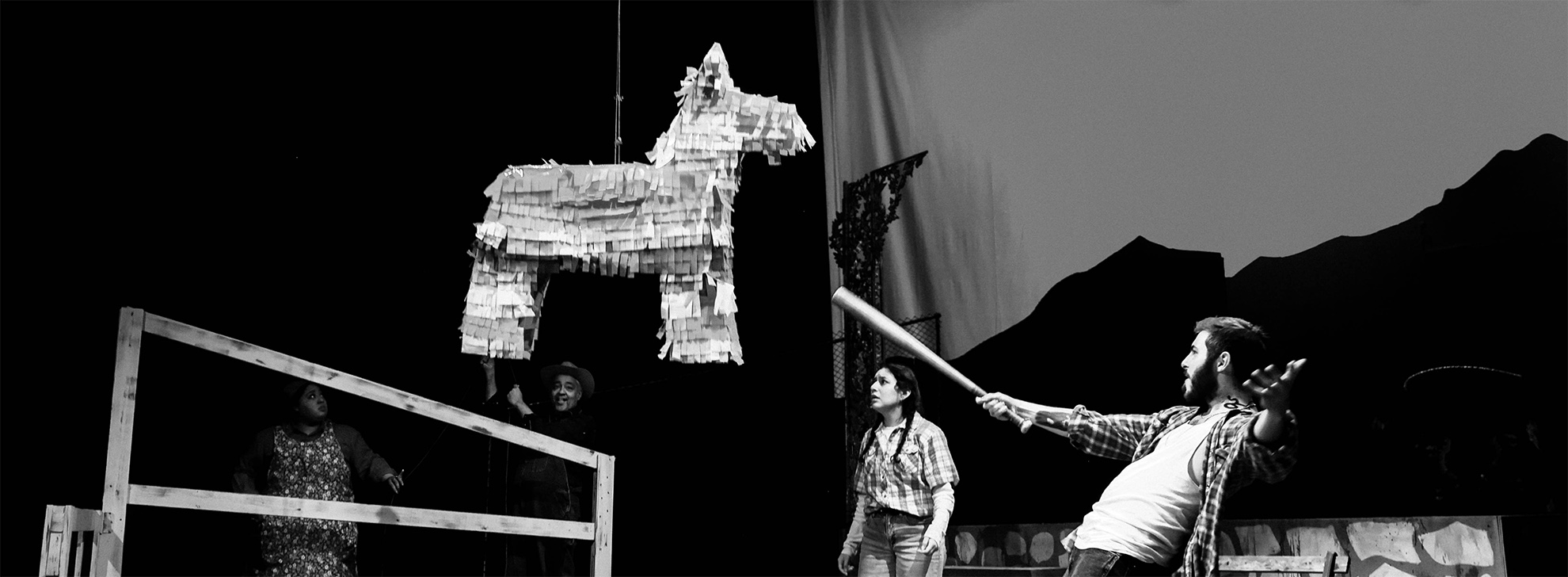
Teatro Dallas is betting its future on this simple truth: When one artist burns bright enough, everyone around them starts to glow. It’s the kind of heat that outlives founders, reshapes institutions, and pulls entire communities toward the light. And that is how a theater not only survives 40 years, but keeps remaking its future, one fire starter at a time.
— LINDSEY WILSON