

Live music and dance collaborations create Synergy, an annual music and contemporary ballet event produced by Pegasus Contemporary Ballet. This year’s performance on June 5-6 at Moody Performance Hall in Dallas presents three commissioned ballets showcasing DFW-based musicians onstage along with the dancers.

Crowder’s desire to work with live local music morphed into a larger mission: to produce full-length programs featuring outstanding DFW musicians working in concert with renowned choreographers. The net result of what Crowder terms as a “creative collision” of talent is an event that pushes the boundaries of contemporary ballet.
“In concert” aptly describes Synergy’s rehearsal process and performance. It is a joint creative project as both “the musicians and composers collaborate on the direction of the work throughout,” according to Crowder.
1 ⁄4
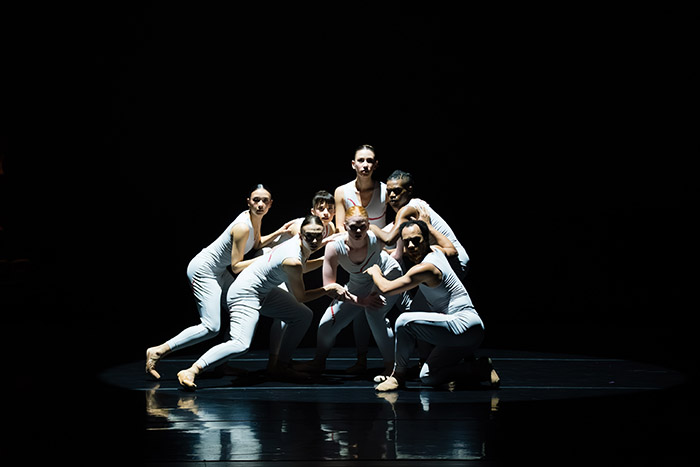
Pegasus Contemporary Ballet members: Aia McInnes, Elena Olshin, Natalie Panayi, Elijah Lancaster, Emma Krusling, Kiera Mays, and Dominiq Luckie in From A Beating Heart, choreography by Bruce McCormick, music by Martin Morgan. Photo by DFW Dance Photography.
2 ⁄4
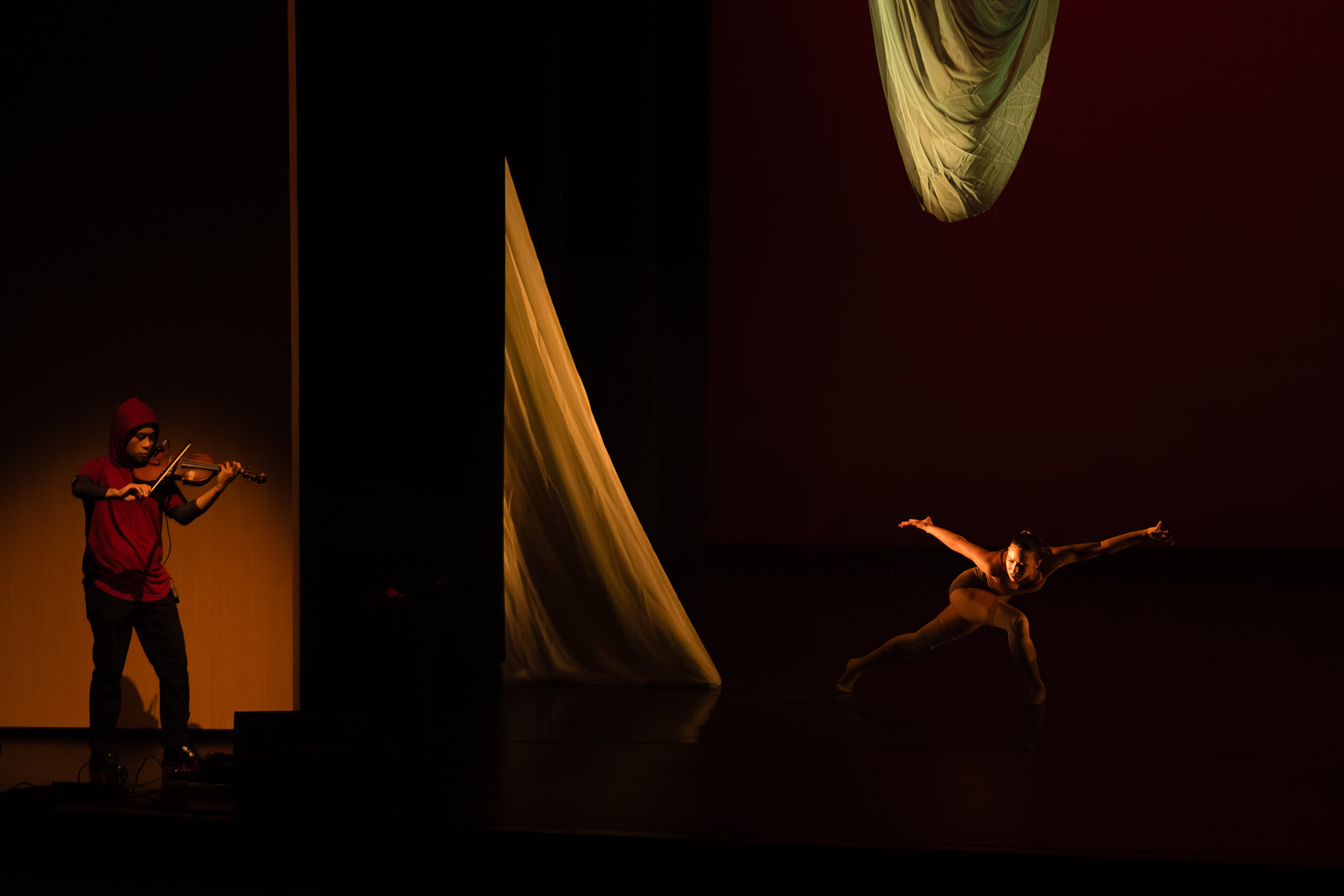
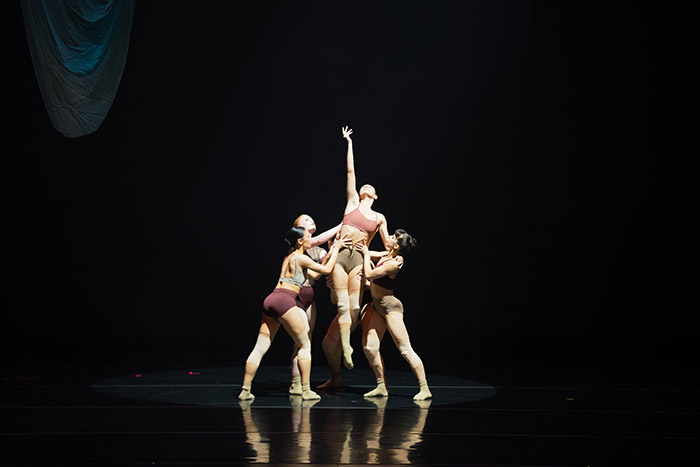
Pegasus Contemporary Ballet members Aia McInnes, Elena Olshin, Natalie Panayi, and Emma Krusling in Under the Blood Moon, choreography by Gabriel Speiller, music by LeonCarlo Canlas. Photo by DFW Dance Photography.
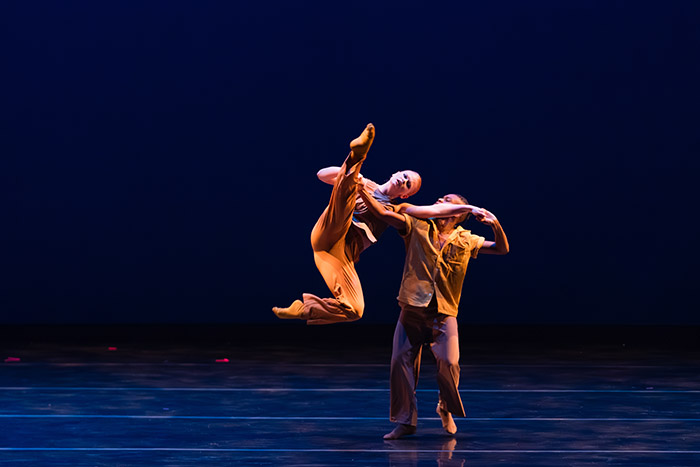
3 ⁄4
Pegasus Contemporary Ballet members Emma Krusling, Elijah Lancaster in Love Language, choreography by Norbert De La Cruz III, music by Jacob Metcalf. Photo by DFW Dance Photography.
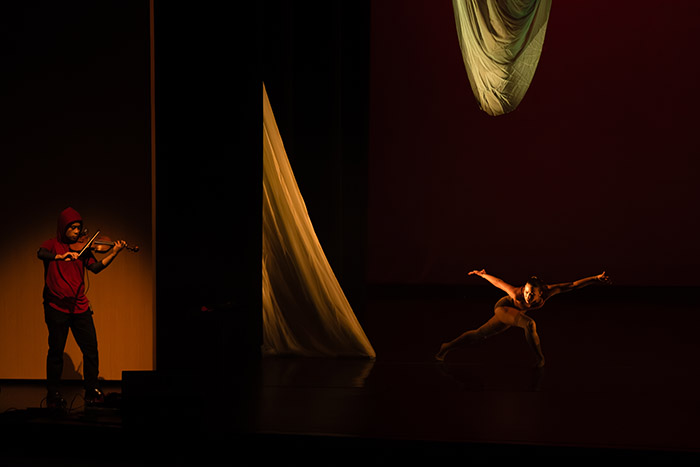
4 ⁄4
Pegasus Contemporary Ballet member Natalie Panayi with LeonCarlo Canlas in Under the Blood Moon, choreography by Gabriel Speiller music by LeonCarlo Canlas. Photo by DFW Dance Photography.
The first step for Crowder is to select choreographers to commission. “Synergy is our biggest show of the year, and we bring in visionary choreographers. Oftentimes, they come from around the country, but we feature local choreographers as well. We make sure the choreographers understand Synergy’s concept and the expectations of creating a work from scratch in conversation with the musician,” she says
In turn, Crowder and her team ask the choreographers, “What kind of music inspires you? In the canon of music not traditionally associated with ballet, what’s your vibe? What do you like?” From their responses, Crowder engages in what she calls, “artistic matchmaking.” She reaches out to contacts and culls artists from the “musical grapevine” that has grown and blossomed since Synergy’s inception four years ago. In this way, she connects choreographers and composers that are artistically and temperamentally aligned.
This season’s dance makers include Natasha Adorlee, an award-winning filmmaker who uses elements of street dance and martial arts in her pieces. Takehiro “Take” Ueyama, a native of Japan and former member of the Paul Taylor Dance Company, counterbalances modern dance’s athletic sensibilities with a Japanese aesthetic appreciation of nature in her new work. Musical theater veterans Brooke Wendel and Peter Chursin co-choreograph a dance that mines their collective film, television and Broadway expertise, along with their contemporary dance sensibilities.
Synergy’s headlining musicians (those who are composers, group leaders, or solo musicians) include Brianne Sargent who performs on bass, cello, and synthesizer and leads the band “Skinny Cooks.” The hip hop collective “Cure for Paranoia” recently featured in Austin’s SXSW festival collaborated on a different piece. Gabby Byrd, a vocalist and composer inspired by R&B, soul and jazz styles, rounds out the musical roster.
To this end, Pegasus performances have included traditional ballet music but have also featured DJs arranging beats and narration by poets and writers. Dances are presented on traditional stages, but also throughout theater lobbies and hallways, “black box” spaces, and art galleries. The dancers are adept in performing in traditional pointe shoes, but equally comfortable dancing in socks, or even with charcoal attached to their feet as they create movement calligraphy on huge swaths of paper.
While produced on a proscenium stage, Synergy 2026 presents contemporary ballet works that are, in Crowder’s words “collaborative, modern and accessible.” Crowder feels especially successful when audiences are able for the first time to see contemporary ballet’s potential, “I hear it many times, but I still so appreciate it when an audience member says, ‘I didn’t think I could like ballet, but I didn’t realize ballet could look like that.’”
—TARA MUNJEE