
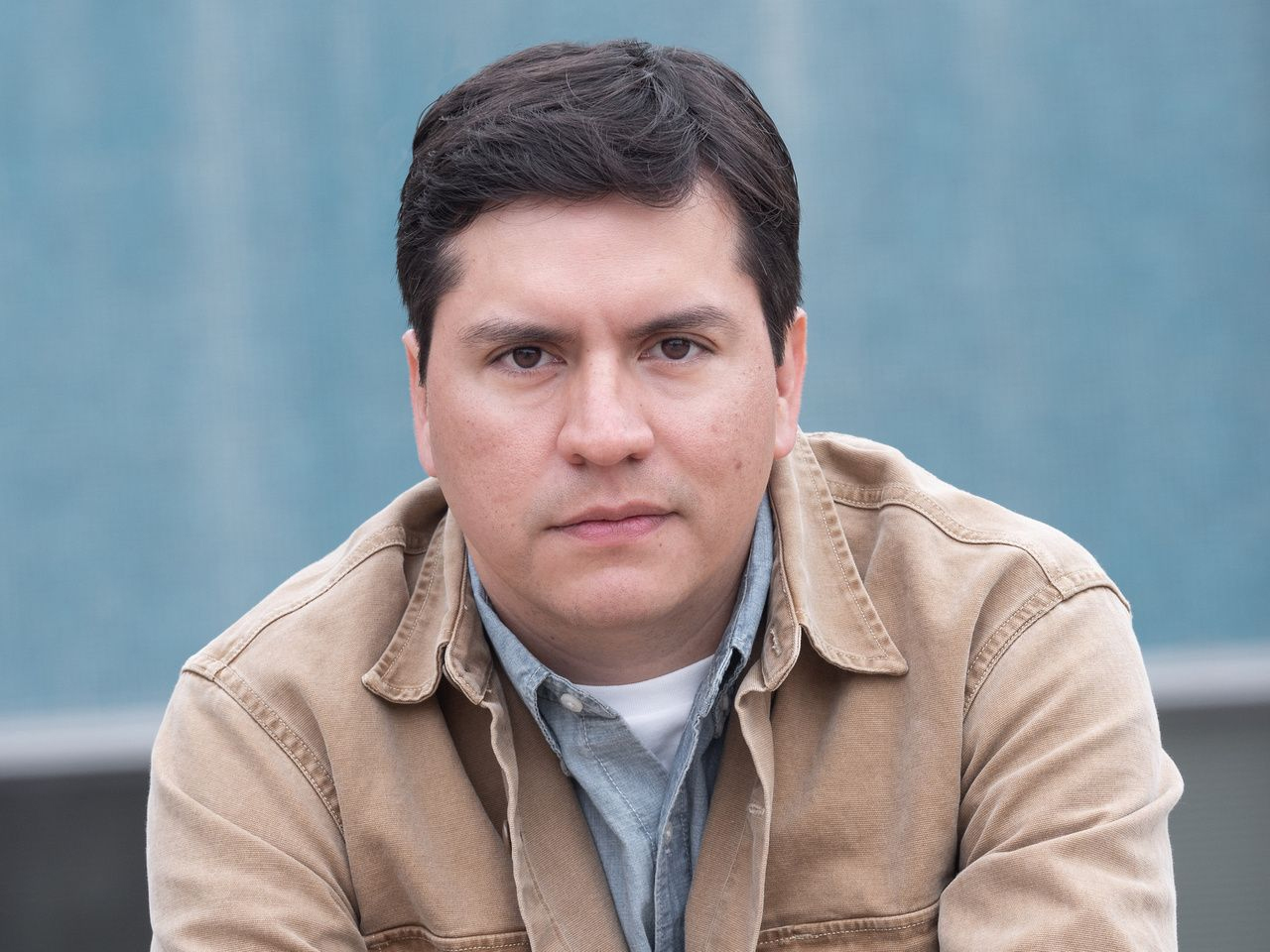

Since its founding in 1959, Dallas Theater Center has been led by only five artistic directors: Paul Baker, Adrian Hall, Ken Bryant, Richard Hamburger, and Kevin Moriarty. Now the Tony Award-winning regional theater can add one more name to the list: Jaime Castañeda, who officially assumes the position in July 2026.

“It’s been a whirlwind, but right now my mind’s on the art,” he says. “In the midst of all these interviews, we only have a short window to confirm the upcoming season.”
Castañeda calls himself a “new development junkie,” and vows that his era will restore DTC as a springboard for original plays and musicals. Beginning in 1978 with Preston Jones’ The Texas Trilogy and 1986’s All the King’s Men by Robert Penn Warren and adapted by Hall, DTC really ramped up its investment in new works under Moriarty’s leadership. Giant (2012), Fly By Night (2013), The Fortress of Solitude (2014), Clarkston (2015), and Bella: An American Tall Tale (2016) all progressed to Off Broadway, while Hood: The Robin Hood Musical Adventure (2017) nearly made the leap to the Great White Way. 2015’s Moonshine: That Hee Haw Musical eventually morphed into the corny Broadway crowd-pleaser Shucked, which was nominated for nine Tony Awards in 2023.
But then the pandemic forced DTC, like many theaters around the world, to shelve daring new works in favor of familiar titles that could entice back wary audiences. Though it couldn’t produce new works with the same lofty ambitions as before, DTC still invested in original scripts where it could. Appointed resident playwright in 2019, Jonathan Norton has since debuted his own titles I Am Delivered’t and penny candy, with Malcom X & Red Foxx Washing Dishes at Jimmy’s Chicken Shack in Harlem premiering this spring. Since 2022, Norton has also served as DTC’s interim artistic director, when Moriarty shifted to his current role as executive director.
“I’m starting with a lot of titles that are currently in development, with the hope that we maybe get one or two for next season,” Castañeda says. “I’m reading projects right now with the [Diane and Hal Brierley] Resident Acting Company in mind, along with a lot of Dallas-Fort Worth’s usual suspects. But I also plan to sprinkle in new faces—actors, directors, and playwrights—whose work maybe isn’t as familiar in the area.”
Previously, Castañeda was the artistic associate at Atlantic Theater Company in New York and was a company member at Chicago’s American Theater Company. Immediately prior to joining DTC, he served as associate artistic director at La Jolla Playhouse near San Diego.

“At my wedding 12 years ago, probably 30% of the guests were from DFW,” he says. “The majority of my close friends and family live in this area, and coming back is really exciting for me and my family.”
Castañeda is looking forward to checking back in at his old theatrical haunts and experiencing new-to-him local companies. His focus, he says, is on building relationships—not just with the artists he hopes to work with, but with the audiences he’s eager to begin building.
“I always start with the play—if we don’t start with the art, what are we even doing here?” he says. “Next is the audience experience: What’s the engagement between the performers and our audience? A lot of the plays I love tend to be inherently theatrical, not adaptations of TV or films. I’m not interested in competing with other forms of entertainment. I want works that are meant for the stage. I want to feel moved and connected to what’s happening right in front of me. It’s an intense time to be an artist and administrator post-pandemic, but I always go back to why we do this. It’s what gets me on the phone at 6 am to talk about a play. These characters and stories and new ideas are what everyone will be reading when I’m long gone.”
—LINDSEY WILSON