

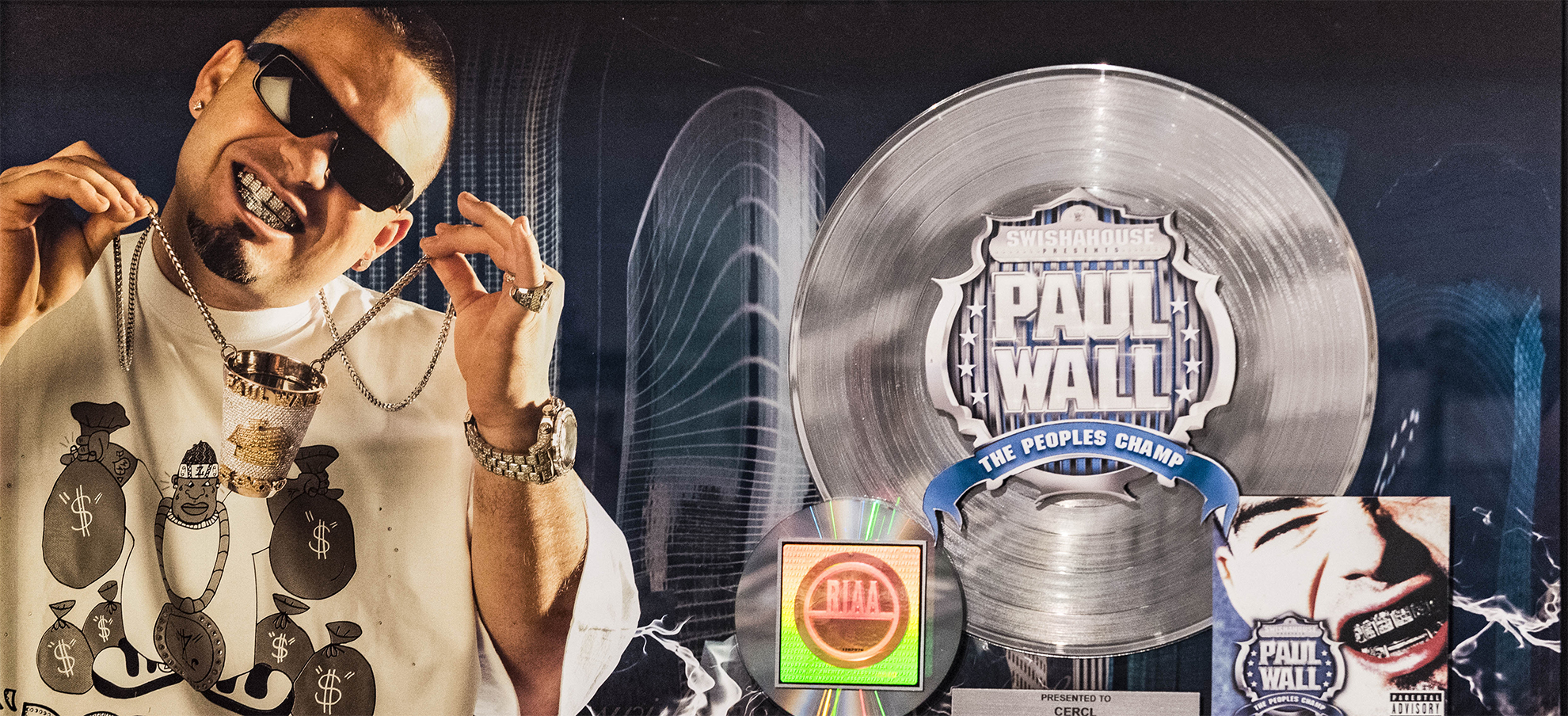

Houston has always answered to more than one name. Bayou City, Space City, H-Town, Screwston: each nickname captures a real part of its character, but none can contain the whole of it. One points to water and mud, another to aerospace ambition, another to swagger, another to the slowed-down sonic gravity of DJ Screw. Together they form a loose civic poem, a set of partial truths about a place that resists being pinned down. Houston is an oil city and a port city, a city of freeways, laboratories, and subdivisions. It is also a city shaped by makers.

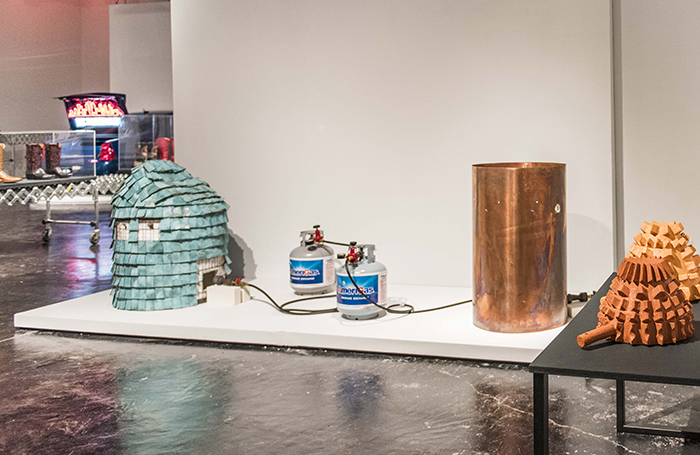
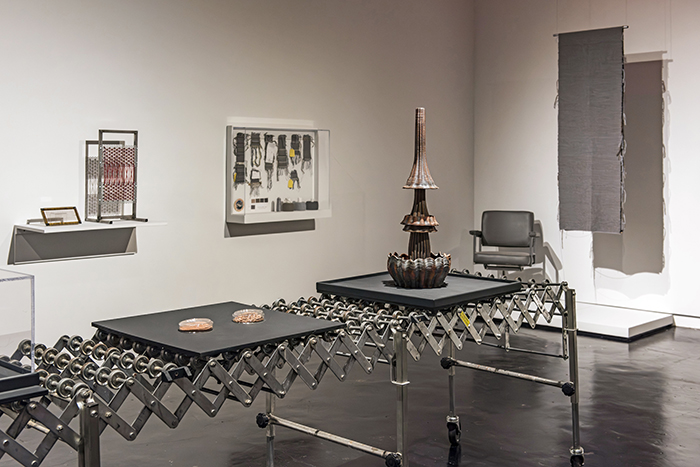
Curated by Sarah Darro, the exhibition approaches Houston through its material cultures, moving from brick and civic infrastructure to boots, grillz, custom wheels, and the specialized labor tied to aerospace and petrochemical industries. The premise is straightforward: craft is not a side story in Houston’s history. It is one of the ways the city has been built, worn, and imagined.
For Darro, the project began with a question of visibility. “People are always asking, is Houston a craft capital? And I’m like, ‘Oh yeah,’” she said. “It also has the largest network of craft guilds in any city that I’ve ever seen.” The craft scene, she realized, was not absent; it was simply overshadowed by the city’s larger industrial reputation.
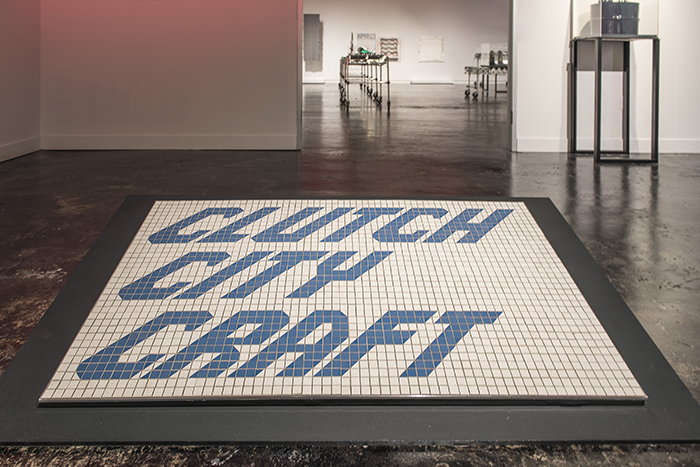
That sense of craft as both central and overlooked shapes the exhibition’s framework. The title itself emerged from the city’s habit of renaming itself. Darro found herself drawn to the story behind the nickname “Clutch City,” coined during the Houston Rockets’ improbable championship run in the 1990s.
“What really resonated with me was reading about the story of the nickname of Clutch City, because it was all about the comeback,” she said. “It more cleverly speaks to all of the making practices that happen here, where they’re right under your feet… it’s not in your face.”
1 ⁄10
2 ⁄10
3 ⁄10
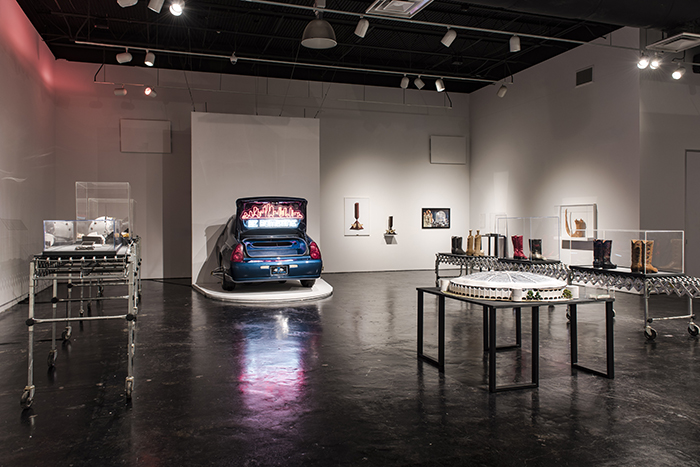
“Clutch City Craft” at Houston Center for Contemporary Craft. Photo by Graham W. Bell.
4 ⁄10
“Clutch City Craft” at Houston Center for Contemporary Craft. Photo by Graham W. Bell.
5 ⁄10
6 ⁄10
7 ⁄10
“Clutch City Craft” at Houston Center for Contemporary Craft. Photo by Graham W. Bell.
8 ⁄10
9 ⁄10
10 ⁄10
“Clutch City Craft” at Houston Center for Contemporary Craft. Photo by Graham W. Bell.
The exhibition follows that idea quite literally. It begins with the ground, the clay, brick, and tile, before moving outward into the systems that have shaped Houston’s modern identity.
“There’s all of these things that are inherent to the foundational structures of Houston that have craft ties that people don’t know about,” Darro said. “The bayous used to be brick production centers because they were super rich in clay.”
Alexander Squier’s The Houston Brick Archive, an installation of archival brick samples, emerges directly from that line of thinking. Squier tracks the movement of construction materials across Houston’s history, revealing a gradual shift from locally produced bricks to regionally sourced materials and eventually imported ones. What appears at first to be a quiet display of masonry becomes a record of migration, labor, and urban expansion.
The work also opens onto a deeper history embedded in the city itself.
“One of the most significant African American sites of craftsmanship and labor is right in our city in the Fourth Ward,” Darro noted. Freedmen’s Town in Houston’s Fourth Ward still contains streets built from hand-cast bricks made by formerly enslaved Black laborers and artisans.
From there, the exhibition follows what Darro describes as a movement from “street to space,” tracing a material lineage from Houston’s physical infrastructure into the industries that define the city today.
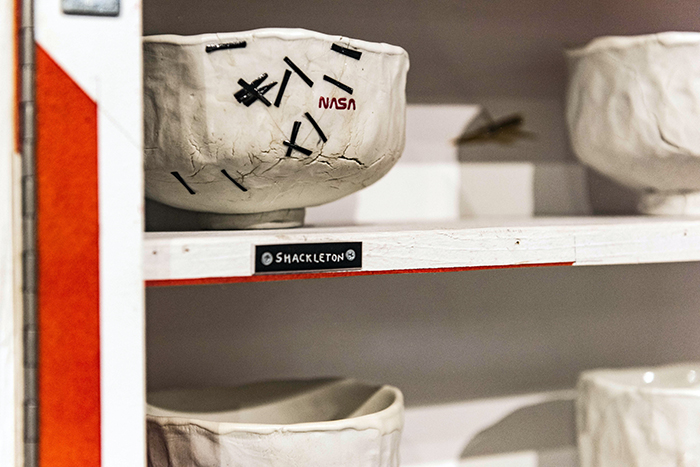
“How can you showcase the breadth of making in a city like ours where it’s known as an industry capital, an energy capital?” Darro asked. Seen through the lens of craft, those industries begin to look different. Petroleum extraction reshaped the city’s landscape, but it also produced new material systems. Aerospace research depends on engineering, but it also relies on specialized knowledge in textiles, ceramics, and fabrication.
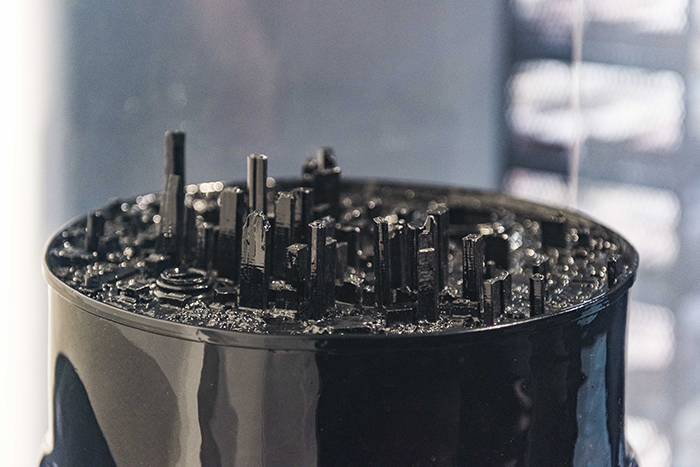
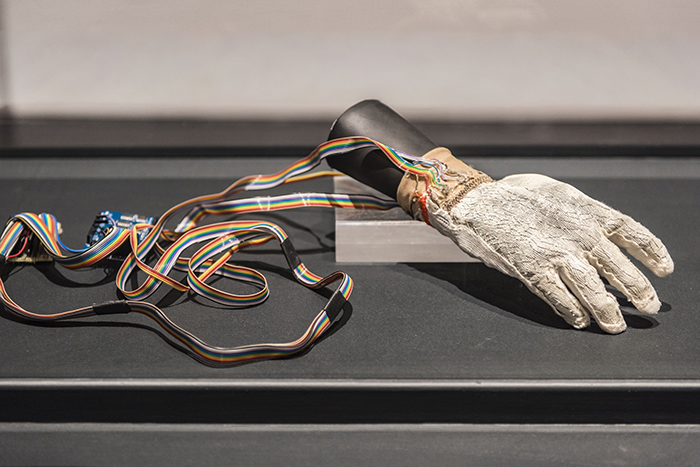
These connections surface throughout the exhibition. A sample of the first AstroTurf installed in the Astrodome appears alongside works that reference aerospace textiles and ceramic insulation systems used by contemporary artists. Materials developed through petrochemical research reappear in unexpected places, linking Houston’s industrial infrastructure to artistic experimentation.
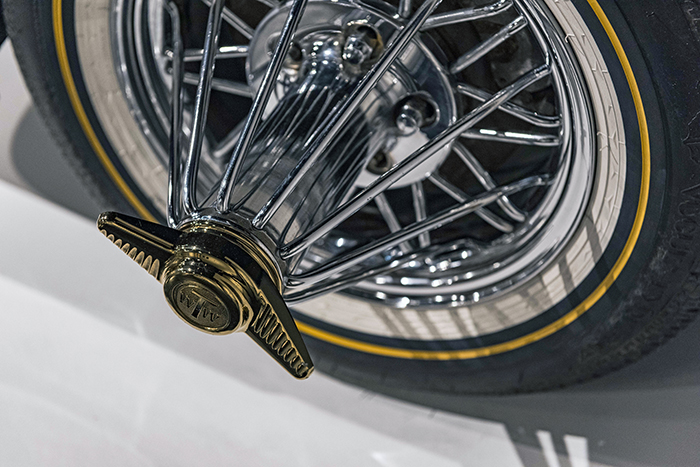
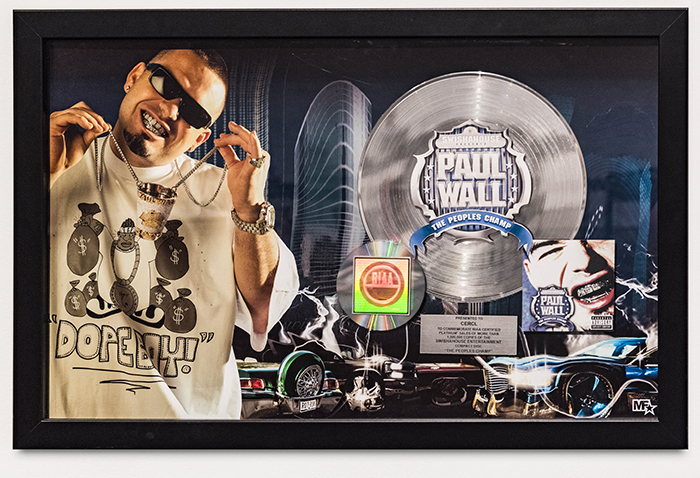
“There is a kind of drive to self-style in Houston through really high-level craftsmanship that I don’t know that I’ve seen in many other places,” Darro said. “And in Houston, of course, the car is like an extension of the body in such an important way.”
That idea finds a focal point in Phillip Pyle II’s Broken Obelisk Elbows, presented in the exhibition as a 3D-printed maquette for a speculative monument. Pyle reimagines Barnett Newman’s Broken Obelisk, the sculpture that stands near the Rothko Chapel, but replaces its austere geometry with a distinctly Houston intervention: a set of swangas jutting outward from the base. The result folds the visual language of slab culture into the vocabulary of public monuments.
“What I think is so brilliant about that piece is that it helps draw the connection between why the Texan wire wheels are in the show and why the grillz are in the show and why the boots are in the show really too,” she said.
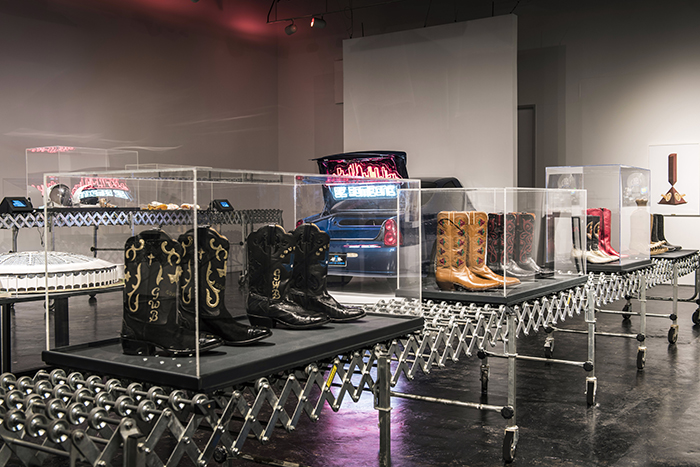
Seen together, these objects reveal a continuum of craftsmanship that stretches from traditional trades into contemporary cultural expression. Bootmakers trained through apprenticeship share space with jewelers who fabricate grillz one custom mold at a time. Wheel makers reshape steel and chrome into swangas, cutting, welding, plating, and polishing metal into the exaggerated spokes that define Houston’s slab cars.

“I’m really interested in the insane craftsmanship that I’m seeing on railings or gates or all of these things that are commissioned work,” Darro said. She sees those trades as part of a longer history of apprenticeship-based making that predates academic studio craft.
By the end of the exhibition, Houston begins to appear less like a collection of industries and more like a material ecosystem—a city where knowledge of clay, metal, fiber, and chemistry circulates through countless visible and invisible hands.
Darro hopes visitors leave with a new way of seeing their surroundings.
“I hope that it inspires a different way of moving through your own city,” she said. “I want people to slow down and look at the city in a different way… go find Gertrude Barnstone’s gates, go to the jewelry building in Sharpstown where Johnny Dang got his start… go look for the boot shops. This is just an outpost of it.”
If Houston’s many nicknames try to capture its spirit in a single phrase, Clutch City Craft suggests another method: follow the materials. Clay, steel, leather, tile, and gold tell a story the nicknames never could, one built slowly by the hands that continue to shape the city every day.
—MICHAEL McFADDEN