

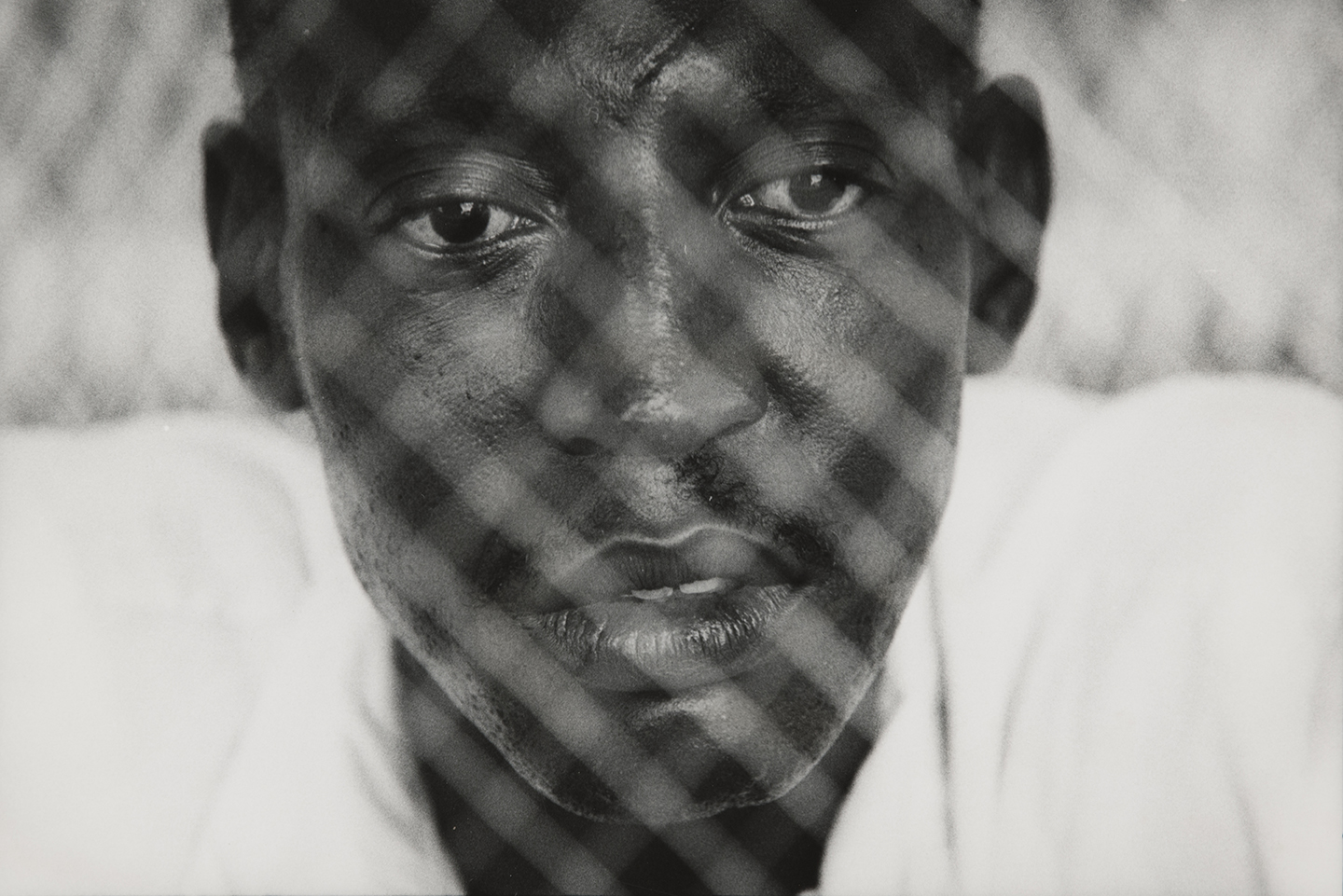

A camera moves through a crowd and pauses. It lingers on a face, then shifts to a gesture, a hand raised, a glance exchanged, a moment about to pass. These photographs hold that pause. They fix time without flattening it, allowing history to remain active, unsettled, and alive within the frame. Across the galleries of the Amon Carter Museum of American Art, images gather with a quiet insistence. They do not ask for spectacle. They ask to be looked at closely, and then again.

“Photojournalism is a way to resist oppression while insisting on the fullness of life,” said Charles Wylie, Curator of Photography at the Amon Carter Museum of American Art. “And so while there are the great people of the civil rights struggle and the struggle for equality for Black Americans featured certainly in the exhibition, there’s also daily life that was happening, communities living their lives and having debutante balls and football games and sporting events and other kinds of activity that were being covered by Black photojournalists for their communities.”
The exhibition’s origin rests in Harris’s work for the Pittsburgh Courier, where he documented Black life for over four decades. When the Carnegie acquired his archive, some 75,000 photographs and negatives, it became a catalyst for a broader inquiry. What else was happening across the country? What did Black media look like in Baltimore, Chicago, Atlanta, Los Angeles?
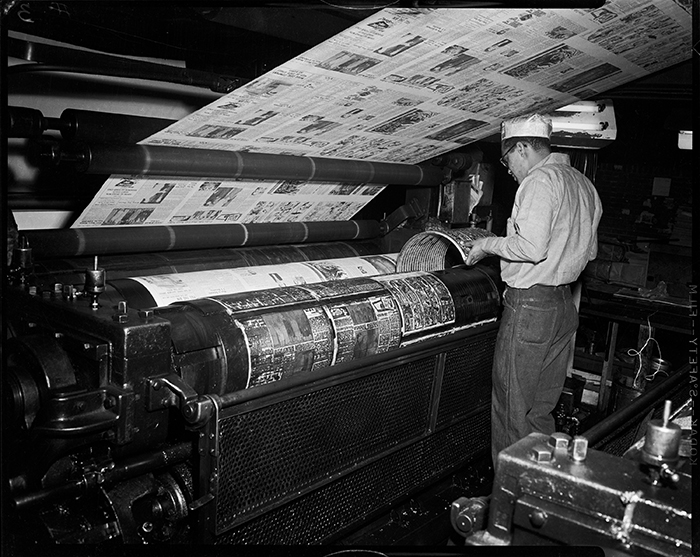
1 ⁄9
Charles “Teenie” Harris (1908–1998), A Pittsburgh Courier press operator, possibly William Brown, printing newspapers, possibly for a Midwestern edition, 1954, inkjet print, Carnegie Museum of Art, Heinz Family Fund, 2001.35.3136, © Carnegie Museum of Art, Pittsburgh
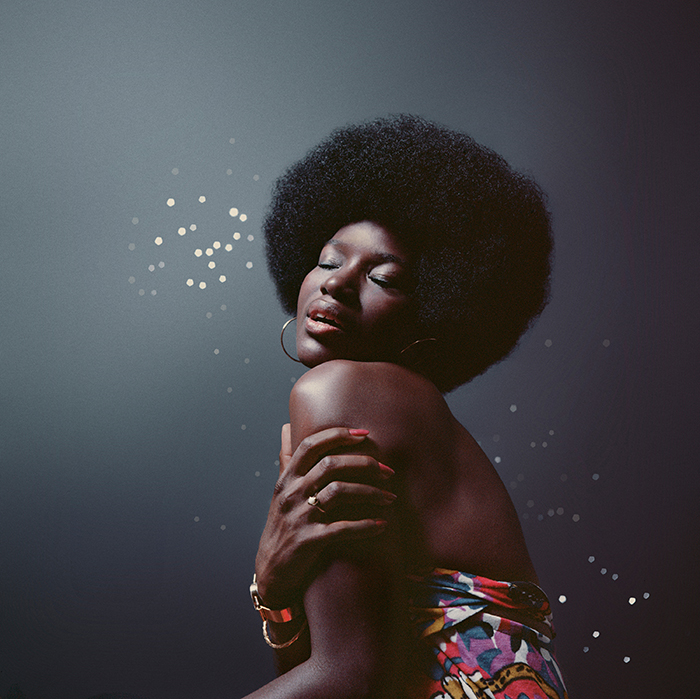
2 ⁄9
Kwame Brathwaite (American, 1938-2023); Changing Times; ca. 1973, printed 2025; inkjet print; sheet: 60 × 60 in. (152.4 × 152.4 cm); The Kwame Brathwaite Archive; BPJ.2025.997
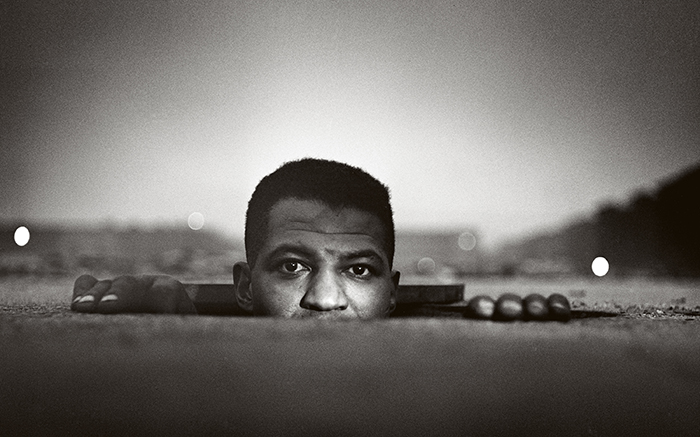
3 ⁄9
Gordon Parks (1912–2006), Emerging Man, Harlem, NY, 1952, gelatin silver print, Carnegie Museum of Art, William Talbott Hillman Fund for Photography, 2016.16, Courtesy of and © The Gordon Parks Foundation
4 ⁄9
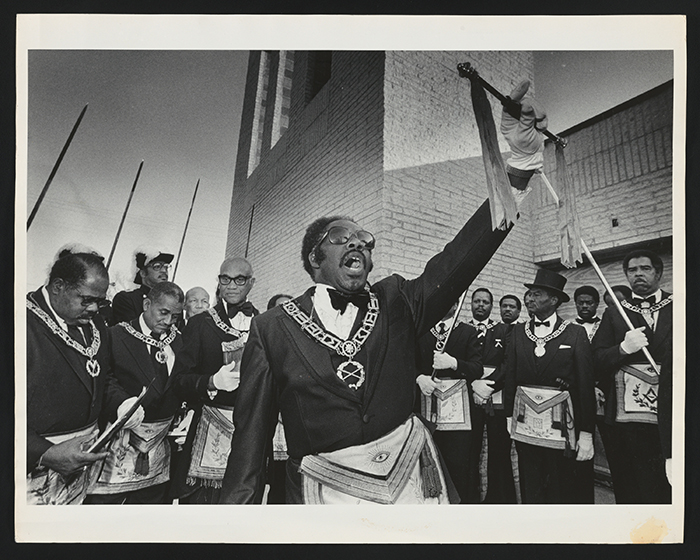
Sharon Farmer (b. 1951), Israel Baptist Church–Masons at cornerstone ceremony, ca. 1980, gelatin silver print, Library of Congress, Prints and Photographs Division, Washington, DC, © Sharon Farmer
5 ⁄9
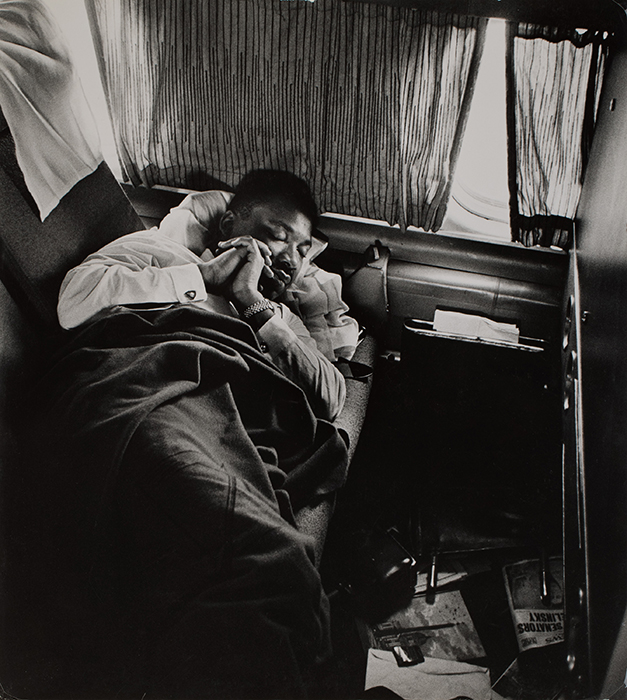
Moneta Sleet Jr. (1926–1996), Dr. Martin Luther King, Jr. enroute to receive the Nobel Peace Prize, 1964, gelatin silver print, Saint Louis Art Museum, Gift of the Johnson Publishing Company, 402:1991, © Johnson Publishing Company Archive
6 ⁄9
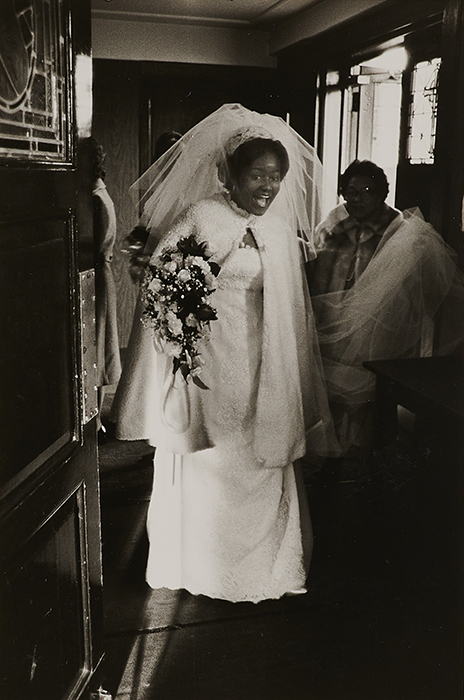
Jeanne Moutoussamy-Ashe (b. 1951), Josette’s Wedding, Queens, New York, 1981, gelatin silver print, Carnegie Museum of Art, William Talbott Hillman Fund for Photography, 2023.50.1, © Jeanne Moutoussamy-Ashe
7 ⁄9
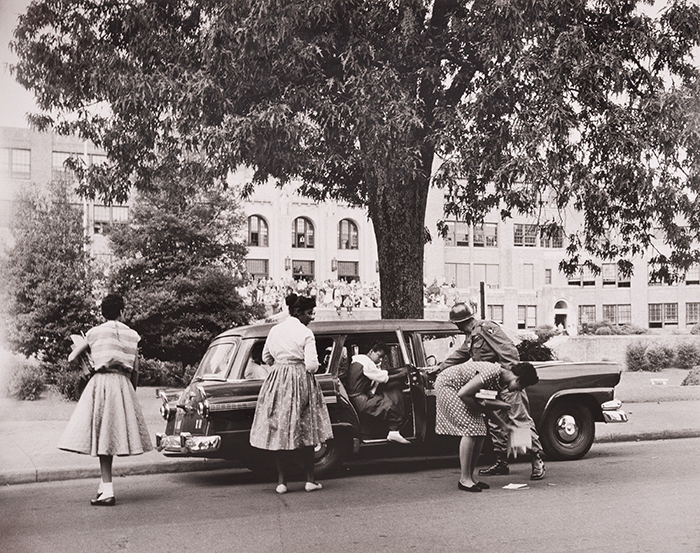
Ernest C. Withers (1922–2007), The "Little Rock Nine's" first day of school, Little Rock, AR, 1957, gelatin silver print, Carnegie Museum of Art, The Henry L. Hillman Fund, 2025.7.8, © Dr. Ernest C. Withers, Sr. courtesy of WITHERS ARCHIVE ENTERPRISES
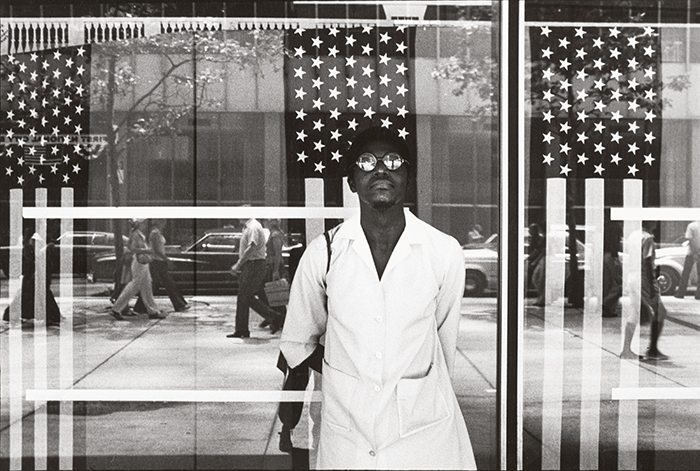
8 ⁄9
Ming Smith (b. 1953), America Seen Through Stars and Stripes, New York City, NY, ca. 1973, gelatin silver print, Carnegie Museum of Art, Margaret M. Vance Fund, 2017.19.5, © Ming Smith. By permission
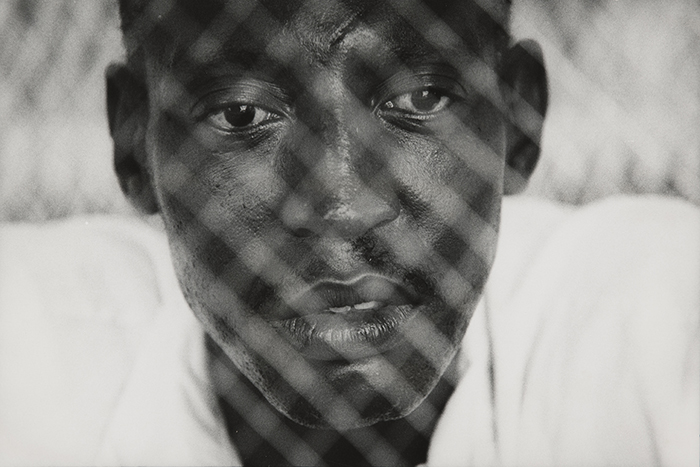
9 ⁄9
Anthony Barboza (b. 1944), Texas Death Row Prison, ca. 1985, gelatin silver print, Carnegie Museum of Art, William Talbott Hillman Fund for Photography, 2016.37.1, © Anthony Barboza. By permission
“The idea was to focus on what else was going on in other American cities, in Black media from coast to coast,” Wylie explained. “So what he did was he photographed Pittsburgh’s Black community for over four decades, focusing on the richness and depth of Black-owned media in those historic and monumental decades of American history.”
That richness unfolds not only in subject matter but in the structure of the exhibition itself. Installed across the museum’s full 7,000 square feet, the show moves loosely chronologically, beginning with images of Black soldiers returning from World War II, framing the notion of a “Double Victory,” both abroad and at home. From there, the narrative expands: civil rights marches, political funerals, church gatherings, high school sports, quiet domestic scenes.
Yet the exhibition never settles into a single storyline. Instead, it operates as a constellation of overlapping narratives.
“One overall narrative is how central newspapers and magazines were to everyone in getting information,” Wylie noted. “Another narrative is the civil rights struggles, but also the idea of community and how communities were living their lives. Another is the idea of the photojournalist who had a very difficult job, going from event to event, printing photographs, and submitting them to an editor.”
The labor behind these images becomes visible in subtle ways. Cropping marks remain on certain prints, revealing editorial decisions. The backs of photographs display handwritten instructions, “reduce this 50%”, traces of a workflow now largely obsolete. Nearby, vitrines hold copies of Ebony, Jet, the Chicago Defender, and Fort Worth’s own Sepia magazine, grounding the photographs in their original contexts.
To walk through the exhibition is to encounter not only images but systems: networks of photographers, editors, publishers, and communities. It is a reminder that these photographs were not made in isolation. They circulated, informed, and shaped perception.

The images themselves complicate the perceived divide between documentation and art. A photograph of the Little Rock Nine by Ernest Withers captures a moment of stillness before confrontation: young women stepping out of a car, framed by a crowd that looms in the background. The composition creates a visual tension that feels almost cinematic.
“What you have is a portrait of the incredible courage of these women at a moment before they walk to the high school,” Wylie said. “And that’s what I think a photograph can do. It really puts you there; there is this level of silence in the image before the reception that was tumultuous.”
The question of whether photojournalism is art lingers, but the exhibition seems less interested in answering it than in dissolving the boundary altogether. The perceptive eye of the photojournalist and artist extends beyond moments of crisis. In many cases, the photographs dwell in quieter registers: a child at play, a couple dancing, a church congregation mid-song. These images resist the flattening tendencies of mainstream media at the time, offering instead a textured, expansive view of Black life.
“A lot of these images are not the ones that we have seen from this era,” Wylie noted. “A lot of these are life as it was lived and there is a certain joy, a much more nuanced kind of view of Black life than what white-owned media was portraying.”
This nuance feels particularly resonant in a contemporary moment saturated with images. While the tools have changed, film replaced by digital, print by screens, the core questions remain: who is behind the camera, and for whom are these images made?
“I think there is a kind of directness from photographer to subject,” Wylie said. “Certainly the craft of storytelling with an image is something that everyone can learn, but also the commitment that all these artists had to their communities that is something that any photographer could gain from.”

“It’s one of the few exhibitions that takes up the entire 7,000 square feet of the museum, so it really benefits from multiple viewings because there are so many stories in it,” he said. “You could really spend hours in it and come back again and again and again.”
In the end, Black Photojournalism does not ask to be resolved. It asks to be returned to, like a newspaper folded open at the kitchen table, a photograph passed from hand to hand. Each image holds a fragment of a larger story, and together, they form a living archive: not fixed, but continually unfolding.
—MICHAEL McFADDEN