

After completing his most ambitious work, Gustav Mahler exulted to a friend. “Try to imagine the whole universe beginning to ring and resound,” he wrote. “These are no longer human voices, but planets and suns revolving.”

How could music by Mahler, whose works famously bridge the tormented and the transcendent, turn into a circus? Well, the Symphony No. 8 does marshal so many players and singers that the premiere’s impresario—who shared a bit of P.T. Barnum’s flair for promotion—dubbed it the “Symphony of a Thousand.”
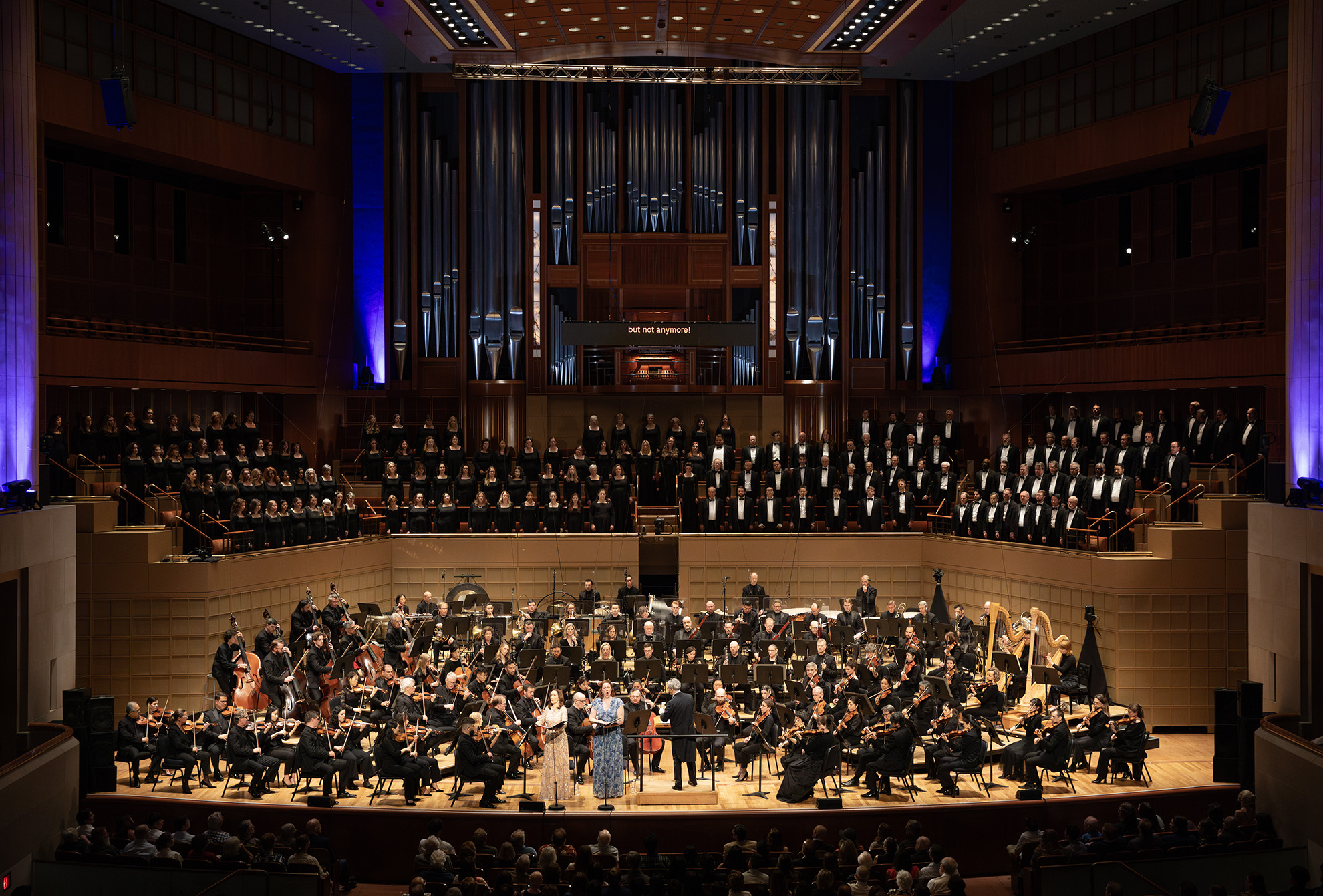
Even though the nickname has stuck, the roster doesn’t have to be that big. But the Symphony No. 8 is nevertheless a special-occasion event—as it will be May 15-17, when it climaxes the Dallas Symphony Orchestra’s season-long celebration of its 125th anniversary. Besides beefing up with extra players, the orchestra will enlist the Dallas Symphony Chorus, Dallas Symphony Children’s Chorus, eight solo singers and a second adult chorus, Baltimore Choral Arts.
1 ⁄2
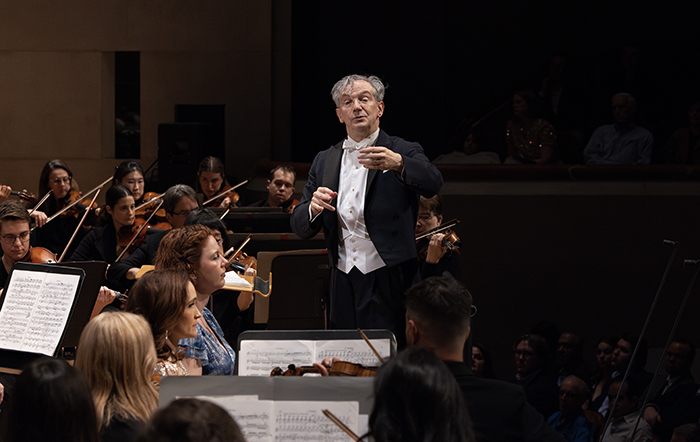
DSO music director Fabio Luisi. Photo by Sylvia Elzafon, courtesy of DSO.
2 ⁄3
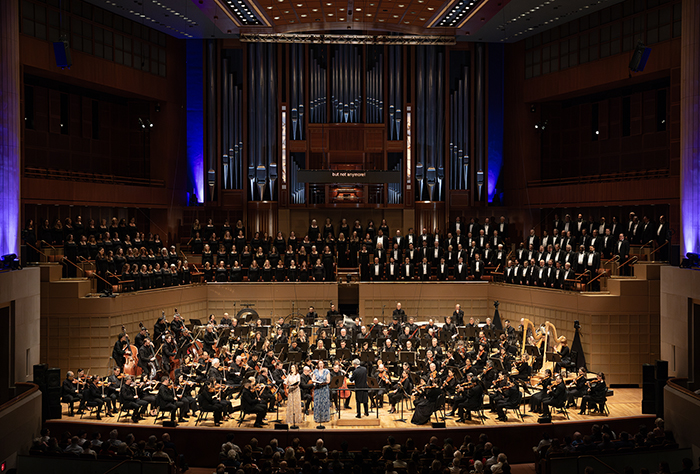
Dallas Symphony Orchestra performing Mahler’s Symphony No. 2. Photo by Sylvia Elzafon, courtesy of DSO.
No doubt the Meyerson Symphony Center will ring and resound. The sonic majesty is “something really special,” DSO music director Fabio Luisi says. But he looks beyond that.
“It’s not really about the size of the orchestra or the chorus. It’s about the message of the symphony, which is more important,” Luisi continues. Mahler “wrote the symphony as a description of the world, as a description of our existence. … What is it to be human? What does it mean to be part of humanity?”
The symphony unfolds in two hefty parts, distinct from one another in both text and musical profile. The first is based on the medieval hymn “Veni, Creator Spiritus”—”Come, Creator Spirit.” Mahler called the text “a song of yearning, of rapturous devotion in invocation of the creative spirit, the love that moves the worlds.”
Luisi views the text as “not necessarily Christian. [It] has to do with our spirituality and our need to have somebody to look to—who is, so to speak, responsible for our existence. We don’t know what it is, but we try to find out.”
Luisi is among many who think the music of this first part harkens back to Baroque oratorios. The kinships range from the brass fanfares to the bursts of vigorous counterpoint—all, of course, on a sonic scale dwarfing anything from the 18th century.
The symphony’s second part draws on Goethe’s mega-play Faust: the very last scene, which brings redemption to both the tortured title character and Gretchen, the innocent young woman he seduces. Mahler wrote to his wife that “the essence of it is really Goethe’s idea that all love is generative, creative.” To Luisi, Gretchen is “a symbol for ourselves. This is the redemption of humanity.”

Mahler’s goal, Luisi says, is to lead us in “ascending to a better life—to a better understanding of life.”
The Dallas Symphony hasn’t tackled the Symphony No. 8 since 2000, when the score added its dazzle to the group’s centennial celebrations. For many musicians, tackling this massive score will be a new experience, but Luisi is undaunted. “The orchestra is an experienced ensemble,” he says. “It will be challenging, but they are familiar with Mahler’s language.”

“If he sees the stage crew in a bit of a panic or sees me in a panic…he’s not nasty or aggressive,” McGuiness says. “That’s no element of him. He’s very, ‘Don’t worry. We’ll figure it out together.’”
—STEVEN BROWN