

Balance, an ability vital for a dancer en pointe or leaping from earth to air, is equally necessary for an artistic director programming a new ballet season. And this is especially true for a company as large as the Houston Ballet with its rarity of two artistic directors, Stanton Welch and Julie Kent.

The upcoming 2026-2027 lineup maintains that equilibrium in a mix of classics, some that haven’t graced the Wortham stage in over a decade, with world premieres, including the wondrous full-length Welch ballet, Where’s Alice?.
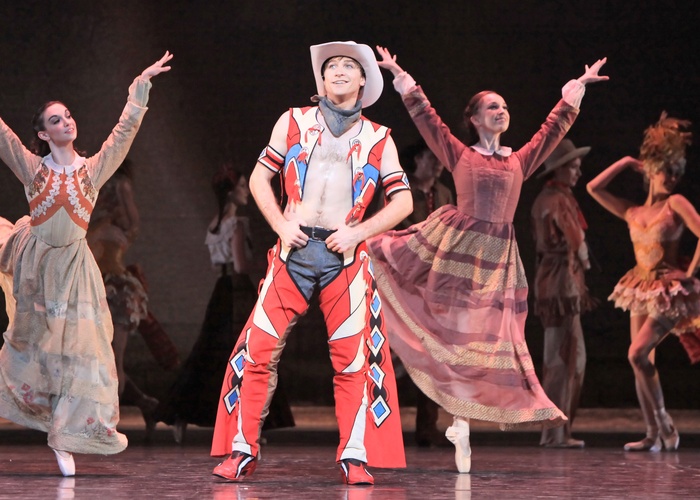
The season begins with the Pecos Bill mixed repertory that Kent says showcases Houston Ballet’s poise in presenting a diversity of tones, styles, and skill sets in the course of an evening. They begin in the grandeur of pointe shoes and tutus in Balanchine’s Symphonie Concertante, slip on flats for Lar Lubovitch’s contemporary Meadow, and end the evening in cowboy hats, chaps, and western skirts with the energetic storytelling of Welch’s Pecos Bill.
Kent had placed Lubovitch high on her dream list, as she’s worked with the acclaimed and prolific choreographer before, but Meadow will be the company’s first meander into Lubovitch’s repertoire.

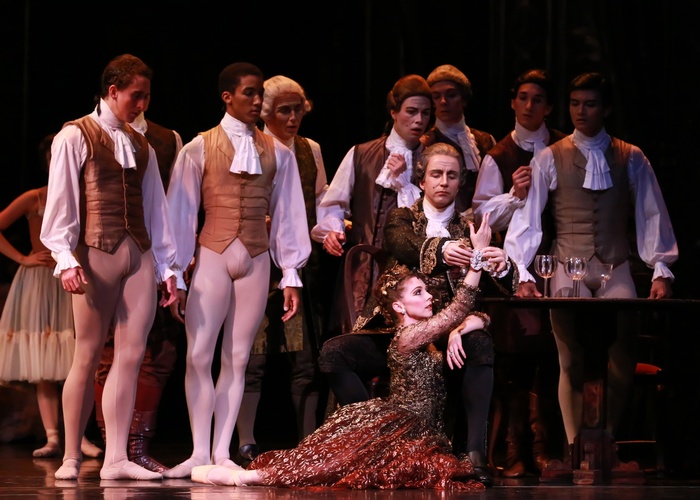
The fall also brings Sir Kenneth MacMillan’s Manon, the only full-length ballet of the season not choreographed by Welch.
“I think it fits into that category of a masterpiece. Choreographically, it was so ahead of its time,” explains Welch, likening it to an Oscar-winning film we return to every 15 years. “It has affected every classical ballet choreographer who has told a story in dance since then.”
Welch also makes the wry observation of Manon’s Houston connection, as the tragic love story may begin in glamorous Paris but ends in the swamps of Louisiana.
2026 closes with one of Houston’s most beloved traditions, Welch’s Nutcracker Ballet, and then the company celebrates 2027 with the big news in the dance community, the world premiere of Where’s Alice?, Welch’s take on Alice in Wonderland.
People have been asking Welch to create a ballet based on Lewis Carroll’s classic since he first started choreographing, but the inspiration only ignited when he listened to soundtracks by Nine Inch Nails frontman Trent Resner and composer and producer Atticus Ross. Welch also began thinking about our current relationship with our phones as a kind of treacherous fall down a rabbit hole.
The ballet will feature versions of the trial, Mad Hatter, and Caterpillar, but this Alice also lives in a landscape of “phone zombies” where the mean girl ruler of her high school resembles the Queen of Hearts. Welch says the title’s question hints at the ballet’s theme, asking ourselves who we are and how we fit into the world, but the dance will also embrace the wonder of imagination no matter how strange.
“There really is a danger that we could lose our creativity if we’re not allowed to imagine without being judged for that, the weirdness of it.”
1 ⁄5
Houston Ballet former Principal Ian Casady as Pecos Bill with Artists of Houston Ballet in Stanton Welch’s Pecos Bill. Photo by Amitava Sarkar (2010). Courtesy of Houston Ballet.
2 ⁄5
Houston Ballet former Principals Melody Mennite as Manon and Linnar Looris as Monsieur G.M. with Artists of Houston Ballet in Sir Kenneth MacMillan’s Manon. Photo by Amitava Sarkar (2015). Courtesy of Houston Ballet.
3 ⁄5
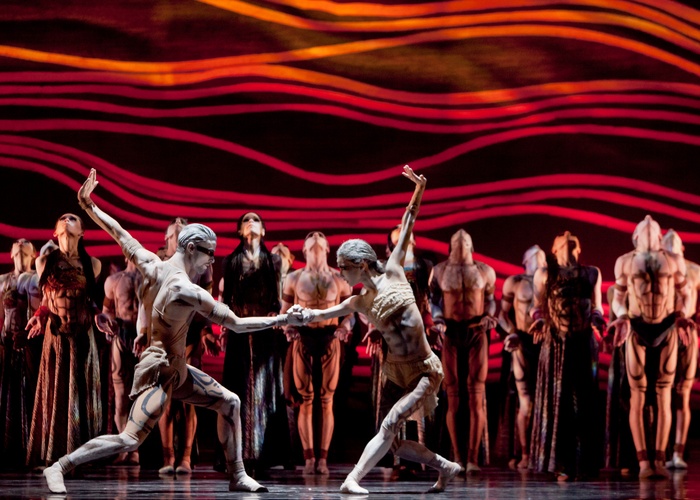
Houston Ballet former Principals Nozomi Iijima and Joseph Walsh with Artists of Houston Ballet in Stanton Welch’s The Rite of Spring. Photo by Amitava Sarkar (2013). Courtesy of Houston Ballet.
4 ⁄5
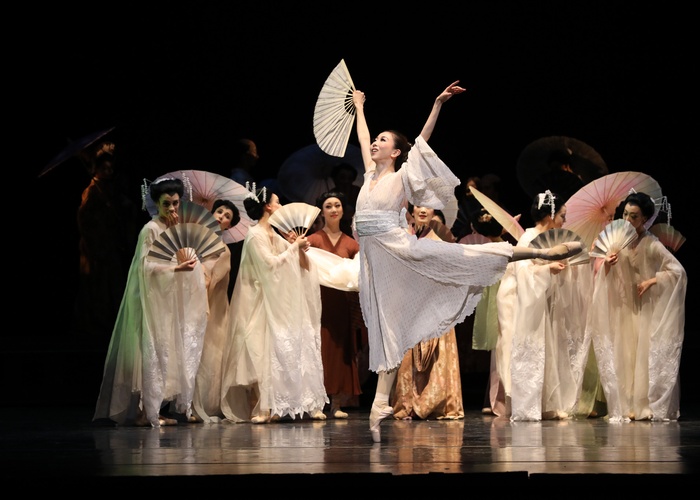
Houston Ballet Principal Yuriko Kajiya as Cio-Cio San and Artists of Houston Ballet in Stanton Welch’s Madame Butterfly. Photo by Amitava Sarkar (2016). Courtesy of Houston Ballet.
5 ⁄5
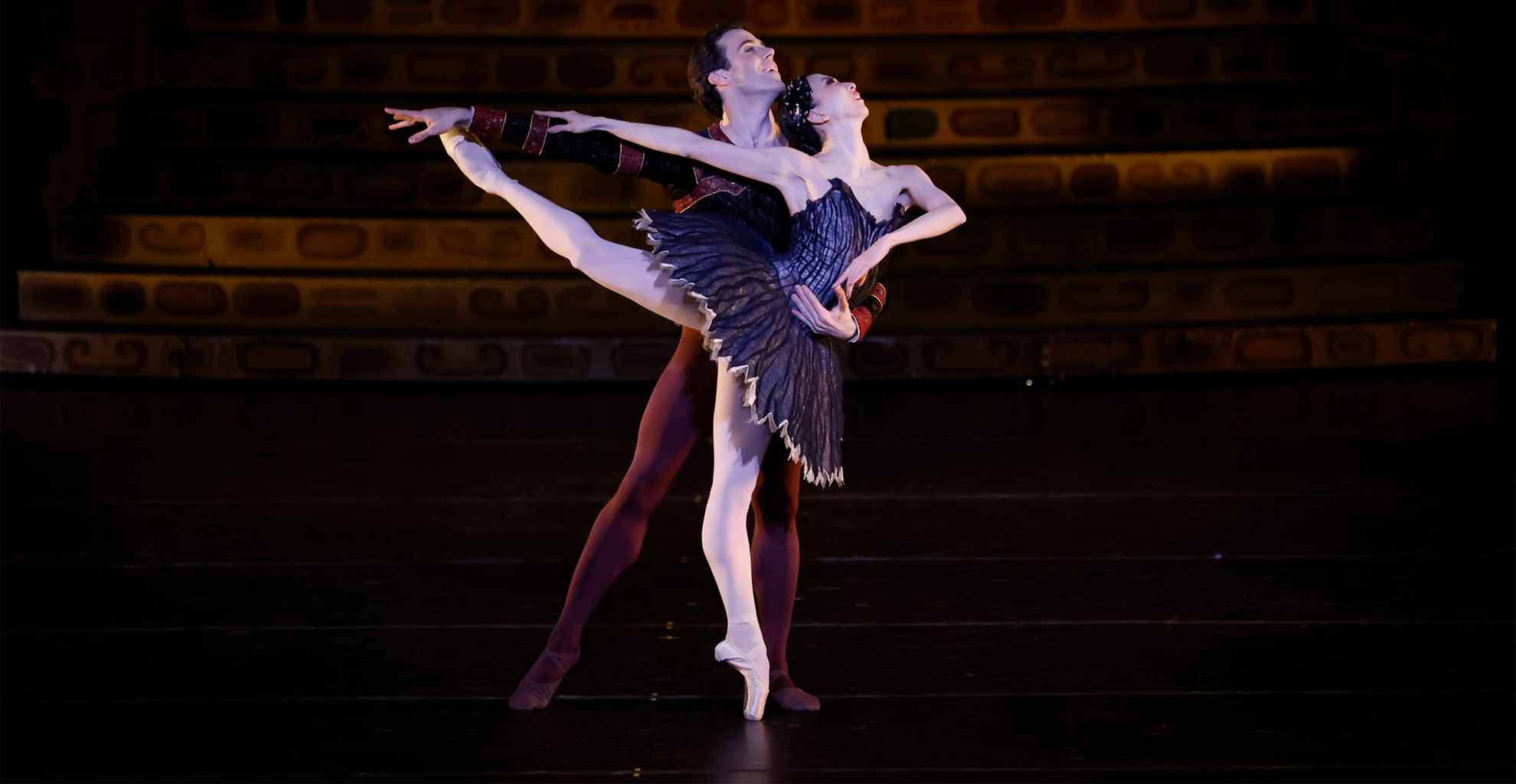
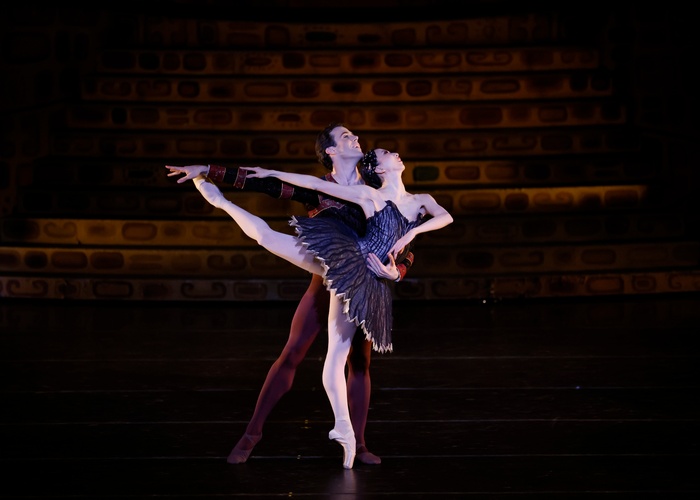
Houston Ballet Principal’s Yuriko Kajiya as Odile and Connor Walsh as Prince Siegfried in Stanton Welch’s Swan Lake. Photo by Hidemi Seto (2022). Courtesy of Houston Ballet.
Working with projection designer, Wendall K. Harrington, Welch has ideas for extending the production closer to the audience to give it immersive qualities. He’s also doing some research on his own phone, especially looking at how new dance movements spread along social media into our everyday culture and back again.
“While you’ll know it’s Stanton’s work,” adds Kent, “it’s going to be something really new for him, and that’s exciting for his evolution.”
As counterbalance, they’ve also programmed for spring Welch’s now-classic Madame Butterfly, which hasn’t been on the Wortham stage for a decade.
“So, a swing into romance and gentle music and storytelling that everyone understands and is fluid and structural and a very opposite type of story,” says Welch on the grand jeté from Alice to Butterfly.
The final mixed repertory of the season takes its name, The Rite of Spring, from Welch’s own dance vision for Igor Stravinsky’s masterpiece. This will be another piece not staged for some time that gives new audiences and the younger members of the company a chance to experience such a visceral work. The program also holds Reflections, the first ballet the current rock star of the dance world, Justin Peck, created for the Houston Ballet back in 2019. The third piece will be a world premiere from current HB soloist Jacquelyn Long.
Kent notes that among Long’s plethora of talents for creating dance, including choreographing for duets and trios, that her past work has given young dancers opportunities for breakthrough performances.
Everyone loves a swan, hence the need for so many performances, but Kent says it also gives audiences the opportunity to see the whole company, from their favorite principals to new up and coming members.
“It’s such a joy to follow the evolution of a dancer. You feel engaged, you feel invested. And so, the more times you come and see different dancers in those roles, the more investment you feel in their success because it’s a collective success. You can’t have a great career as an artist if you don’t have a great audience.”
—TARRA GAINES