

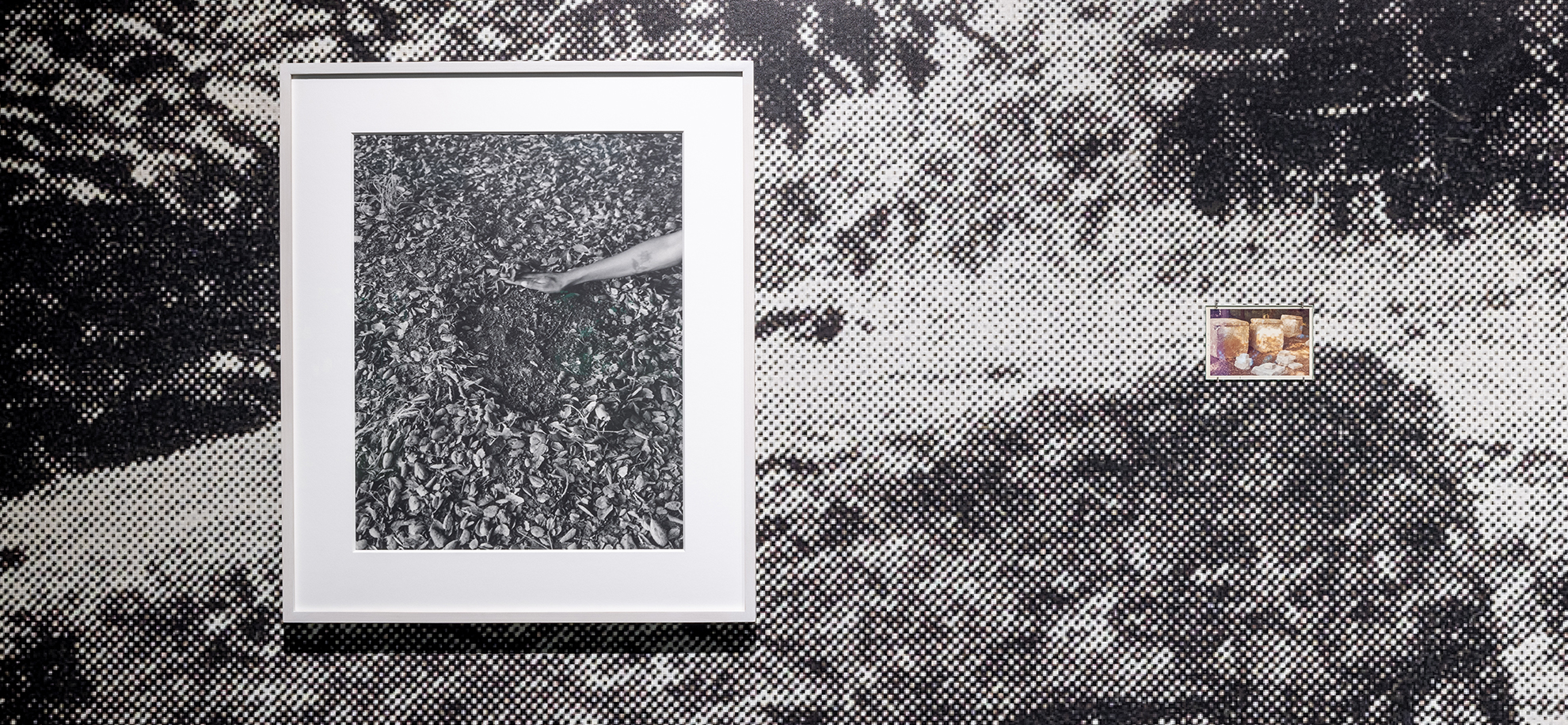

The gallery operates as a field site before it functions as an exhibition. Standing in the Contemporary Arts Museum Houston for Divination: Beverly Buchanan & Dionne Lee, the immediate encounter—through Feb. 14, 2027—is not with Buchanan’s earthworks themselves, but with their evidence: photographs, archived field notes, and carefully positioned fragments. These objects are not the interventions that once embedded themselves into Georgia’s displacement-scarred landscape; they are the instrumental records of that labor.

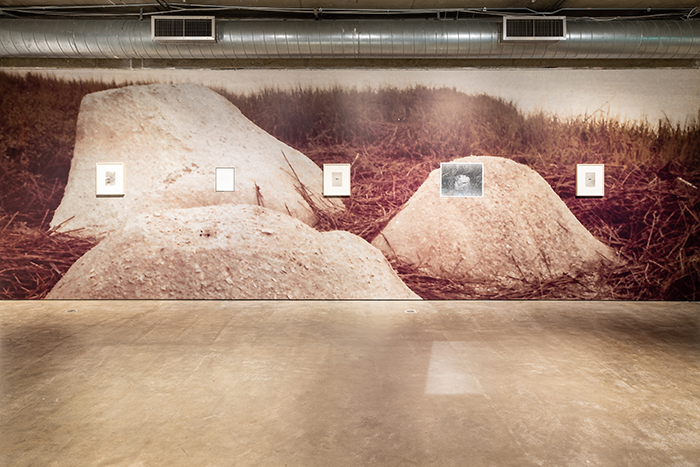
This material reality carries a historical weight. Historically, tabby—a crude aggregate concrete made by burning harvested oyster shells down to lime, then binding them with sand, water, and raw, broken shell—was the structural backbone of Southern plantation architecture, erected through the coerced labor of enslaved people. By choosing this matrix for Ruins and Rituals (1979) and Marsh Ruins, Buchanan locked the detritus of the sea directly into the architecture of extraction. The tabby does not hide its internal violence; whole oyster shells poke out like bone fragments, jagged and sharp. This same logic scales down in the shack sculptures to domestic fragility: monuments to persistence cobbled together from weathered cardboard, tin, sticks, and wax, sagging under their weight to document how people actually live in neglected spaces, shoring up against a landscape that threatens to swallow them.
Buchanan’s practice enacted a radical, material interrogation of “ruination,” embedding sculptures into neglected sites like the graveyards of enslaved people in rural Georgia to mark endurance rather than tragedy. From the start, she maintained a hybrid lens toward these interventions, speaking of them not as static sculptures, but as images.

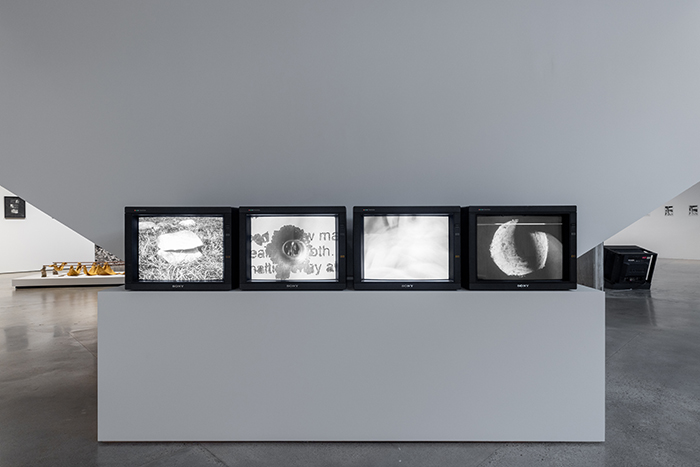
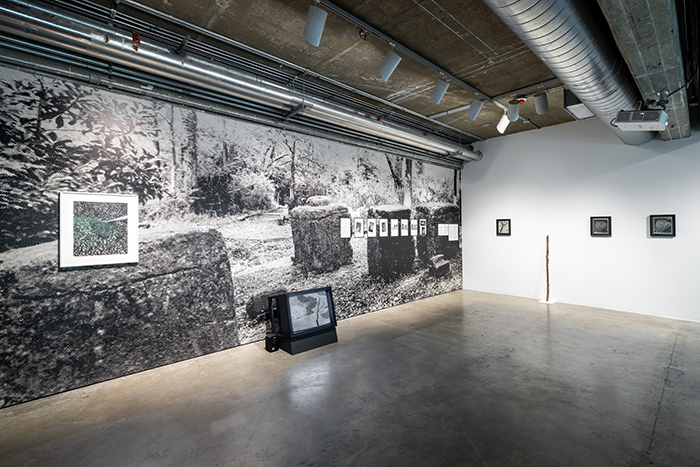
This intergenerational continuity is forged through shared physical labor. Senior curator Rebecca Matalon and Dionne Lee retraced Buchanan’s steps across the Georgia coast, moving through the landscape across tide heights until the site revealed its patterns. That embodied knowledge translates onto the gallery floor as a living lineage. Lee’s use of hand-carved walking sticks to map a vertical chain of ancestors (“Parents and parents and parents and parents…”) functions as an instrument of documentation. Alongside Buchanan’s wheelbarrow performance calendars and hand-marked notes, both artists utilize the camera as a tactical survival tool—visual telemetry tracking erosion, ecological vulnerability, and the persistent reclaiming of land by water before it vanishes from the historical record.
1 ⁄8
Installation view of Divination: Beverly Buchanan & Dionne Lee at Contemporary Arts Museum Houston, 2026. Image courtesy Contemporary Arts Museum Houston. Photo by Alex Barber.
2 ⁄8
Installation view of Divination: Beverly Buchanan & Dionne Lee at Contemporary Arts Museum Houston, 2026. Image courtesy Contemporary Arts Museum Houston. Photo by Alex Barber.
3 ⁄8
Installation view of Divination: Beverly Buchanan & Dionne Lee at Contemporary Arts Museum Houston, 2026. Image courtesy Contemporary Arts Museum Houston. Photo by Alex Barber.
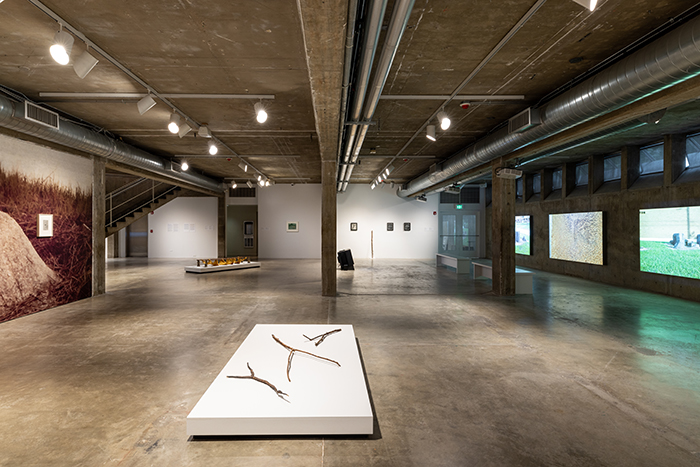
4 ⁄8
Installation view of Divination: Beverly Buchanan & Dionne Lee at Contemporary Arts Museum Houston, 2026. Image courtesy Contemporary Arts Museum Houston. Photo by Alex Barber.
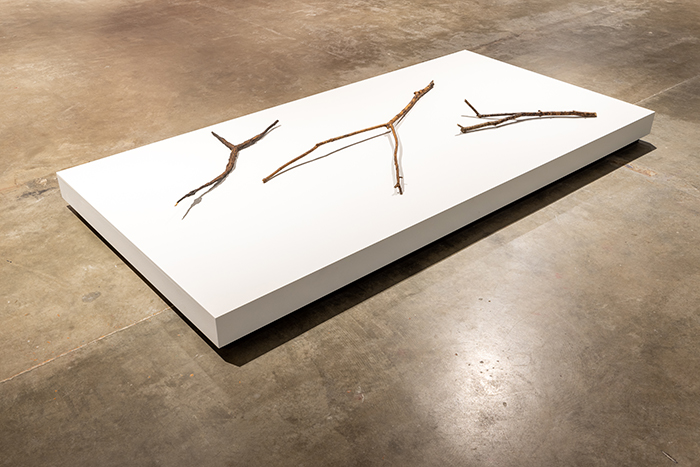
5 ⁄8
Installation view of Divination: Beverly Buchanan & Dionne Lee at Contemporary Arts Museum Houston, 2026. Image courtesy Contemporary Arts Museum Houston. Photo by Alex Barber.
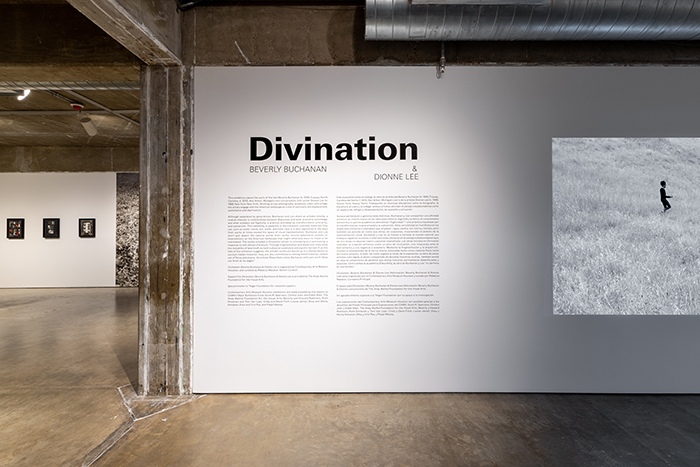
6 ⁄8
Installation view of Divination: Beverly Buchanan & Dionne Lee at Contemporary Arts Museum Houston, 2026. Image courtesy Contemporary Arts Museum Houston. Photo by Alex Barber.
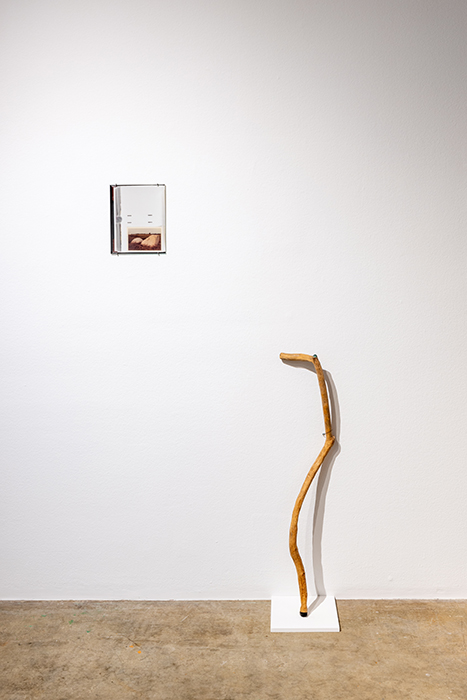
7 ⁄8
Installation view of Divination: Beverly Buchanan & Dionne Lee at Contemporary Arts Museum Houston, 2026. Image courtesy Contemporary Arts Museum Houston. Photo by Alex Barber.
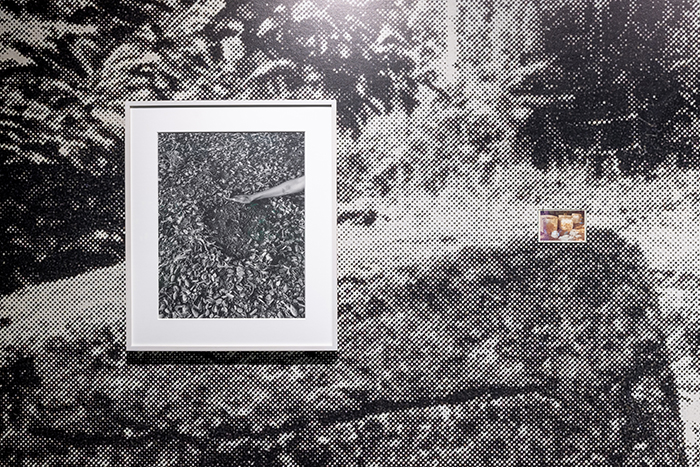
8 ⁄8
Installation view of Divination: Beverly Buchanan & Dionne Lee at Contemporary Arts Museum Houston, 2026. Image courtesy Contemporary Arts Museum Houston. Photo by Alex Barber.
The installation demands a hyper-awareness of physical space. Matalon’s walkthrough warning regarding Lee’s loose, unattached stone structures—“the rocks are not attached… we want to remind viewers to stand back from it because it is possible that it will fall”—operates as structural logistics. In a room populated by decaying shacks, fragile archives, and ephemeral water traces, the body must navigate the gallery with the provisional care required to traverse an unstable earth.
The convergence of Lee’s tactical documentation and Buchanan’s calcified earth refuses easy resolution. The methodology is relentless: how to mark time, memory, and endurance when the ground itself is shifting.
—JON HOPSON