
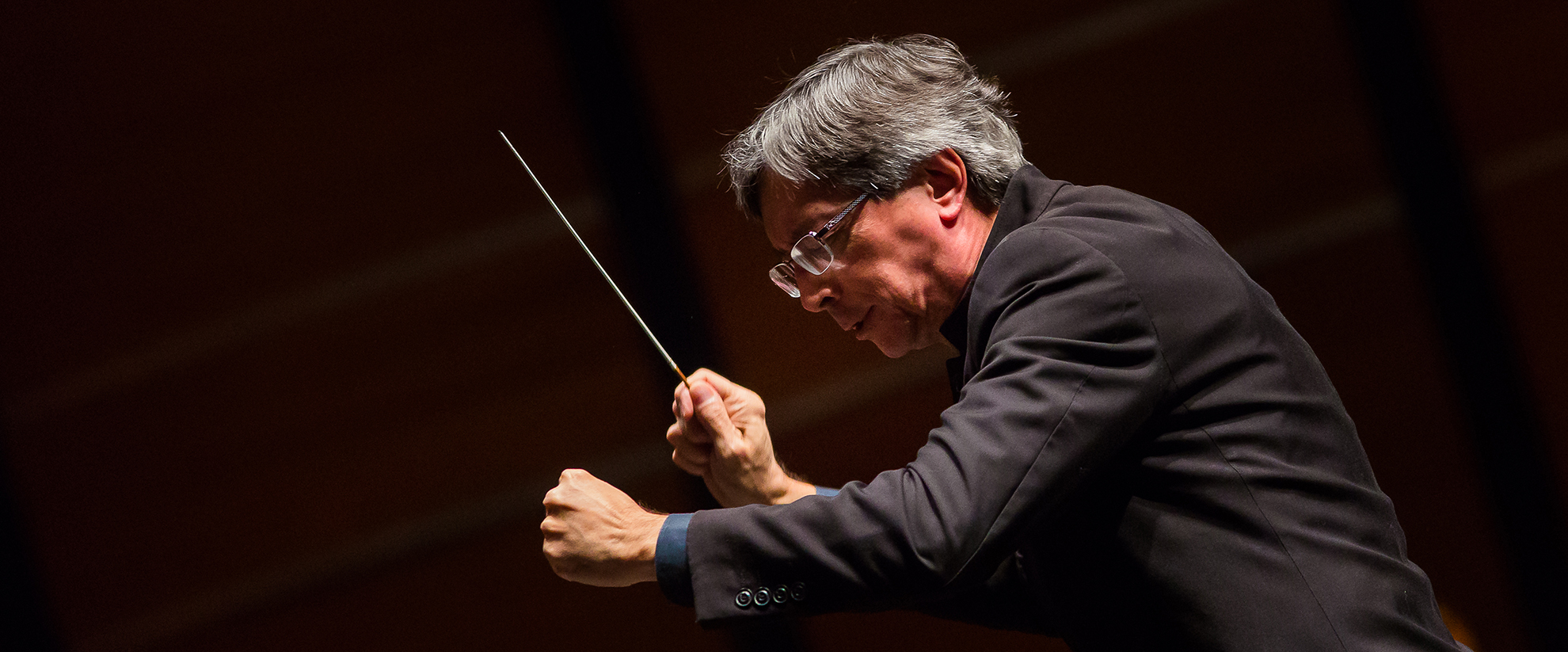

ACTX spoke with Austin Symphony Orchestra’s lead conductor and musical director, Peter Bay, about his decision to “pass the baton” at the 2026-2027 season’s conclusion. Bay also discussed his musical development, high notes from his thirty-year tenure at ASO, upcoming season highlights, and his future projects.

Leonard Bernstein is the reason I became a conductor. I was about six years old when I saw him conducting a young person’s concert on PBS. I was immediately smitten not only because he could explain music to young people but also by the enthusiasm and joy that came over his face and body when he conducted the orchestra. He made conducting seem like the coolest profession on the planet!
You’ve also mentioned that the Beatles influenced your musical development.
Absolutely! As a kid, I became interested in classical music because of Bernstein, but at the same time, I remember watching the Beatles’ first television appearance on the Ed Sullivan Show. For me, the excitement the Beatles produced with their music was equal to that of Bernstein as a conductor. And these two entities have this in common: they are ubiquitous and I also think they are ever-lasting.
A major change has been the sound of the orchestra, and different things contribute to this. First, our move from Bass Concert Hall, an auditorium with around 3,000 seats, to the Long Center, which is 2,400 seats,transformed the orchestra. 2,400 seats is an ideal maximum, so we don’t have to force our sound—to overplay—as we did at Bass Concert Hall. Simultaneously, the level of musicianship has gone up dramatically. During my time, we’ve been able to fill vacancies with wonderful players. Those are two things that contributed to the orchestra’s growth, and these trends will continue.
What other initiatives spurred ASO’s artistic growth?
When I accepted the job (as musical director), I took a long look at ASO’s performance history: I saw which pieces they have played throughout the years, and where the gaps were. My goal was to expand the repertoire: to play works by living composers—which I think is extremely important—and to feature the works by famous composers, such as Beethoven and Tchaikovsky, that are not played often, for no particular reason. And I’m proud of this repertoire expansion.
Speaking of programming, let’s talk about what you see as this season’s highlights.
Thinking about this season is a little bittersweet, but for my last season I wanted to program music and soloists I feel very close to. I’ve talked about Bernstein, and I’m very much looking forward to conducting his Trouble in Tahiti (Oct. 23-25). It’s a forty-five minute opera and it will be semi-staged, meaning we’re not going to have a bunch of sets and the orchestra will be on stage. Also, I’ve invited Bernstein’s daughter, Jamie, to direct it.
1 ⁄7
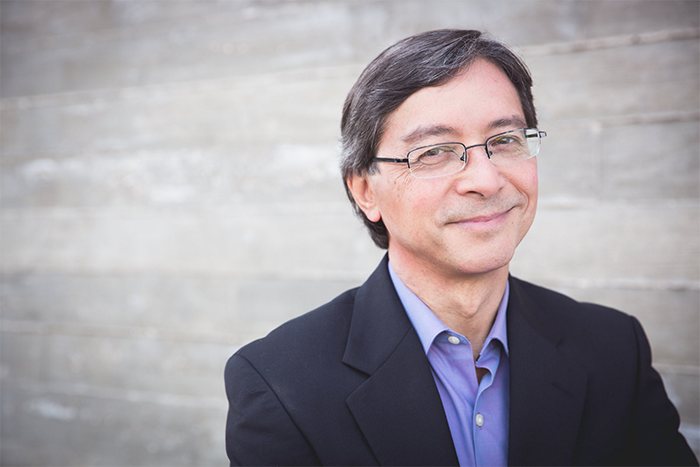
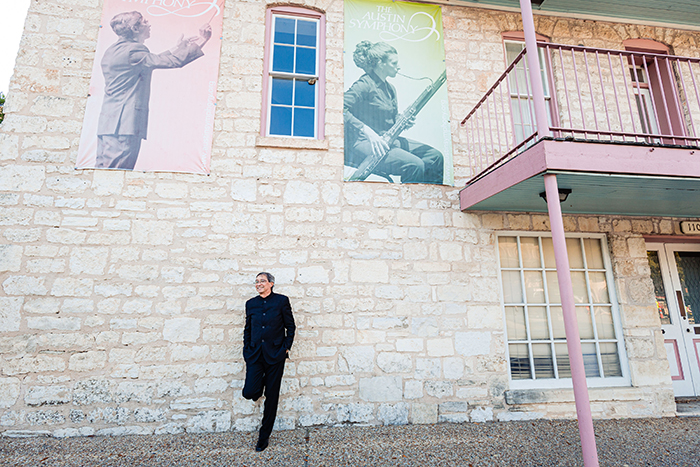
Peter Bay, Music Director and Conductor of the Austin Symphony Orchestra. Photo courtesy of Austin Symphony Orchestra.
2 ⁄7
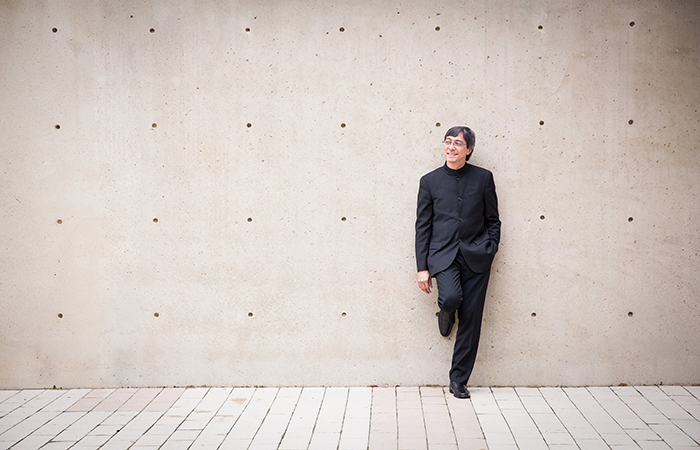
Peter Bay, Music Director and Conductor of the Austin Symphony Orchestra. Photo courtesy of Austin Symphony Orchestra.
3 ⁄7
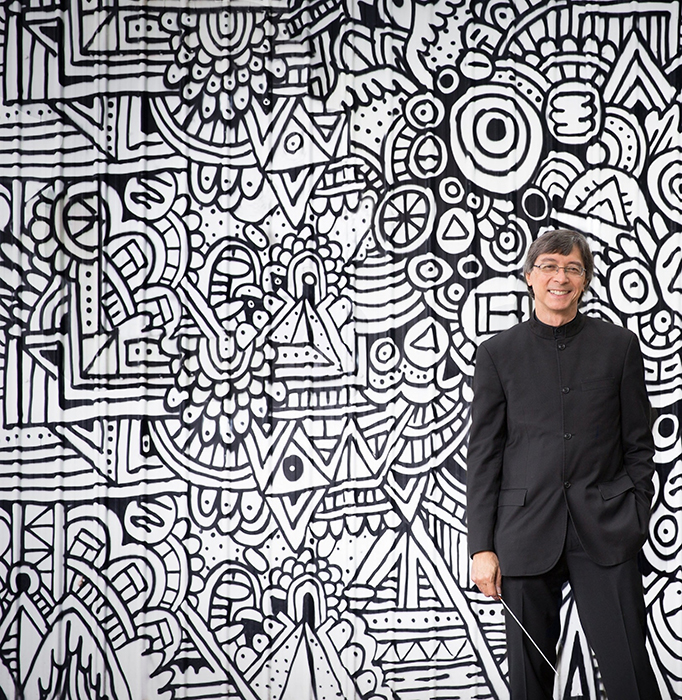
Peter Bay, Music Director and Conductor of the Austin Symphony Orchestra. Photo courtesy of Austin Symphony Orchestra.
4 ⁄7
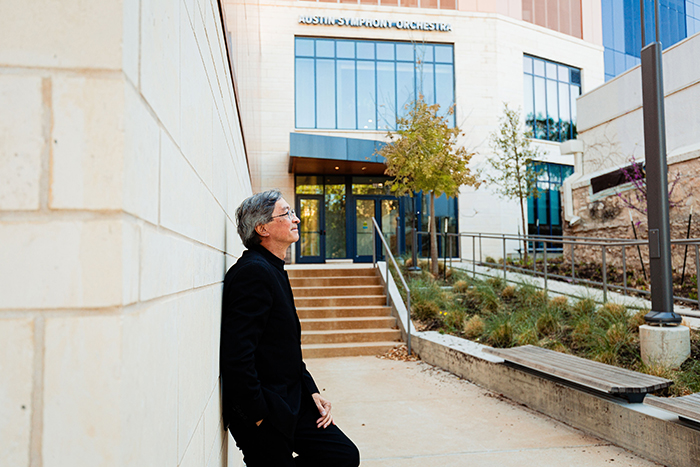
Peter Bay, Music Director and Conductor of the Austin Symphony Orchestra. Photo courtesy of Austin Symphony Orchestra.
5 ⁄7
Peter Bay, Music Director and Conductor of the Austin Symphony Orchestra. Photo courtesy of Austin Symphony Orchestra.
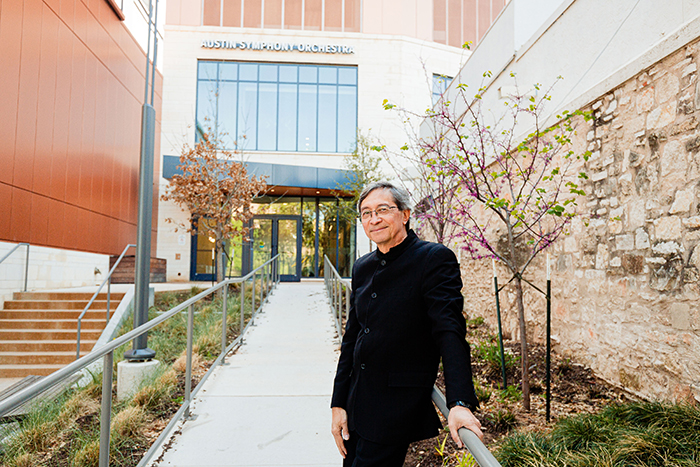
6/7
Peter Bay, Music Director and Conductor of the Austin Symphony Orchestra. Photo courtesy of Austin Symphony Orchestra.
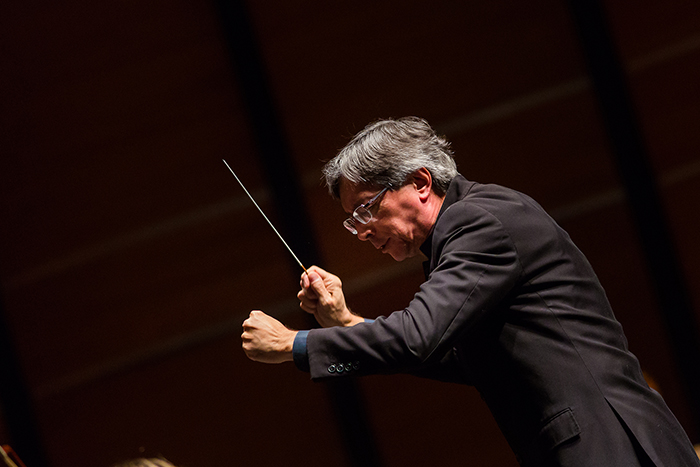
7 ⁄7
Peter Bay, Music Director and Conductor of the Austin Symphony Orchestra. Photo courtesy of Austin Symphony Orchestra.
Sounds exciting, and are there other musical luminaries visiting?
Yes, I’m looking forward to working with Yo-Yo Ma and Joshua Bell again (Nov. 18 and Feb. 19-20, respectively). These are two of the most in-demand classical musicians on the planet, and I am thrilled they have time on their calendars to return to ASO. I am also looking forward to Anton Nell playing with us again (June 11-12). He teaches at UT and he is one of the orchestra’s favorite souls.
What else will make this season memorable for you?
For my last season, I wanted to conduct pieces I’ve not done before with the orchestra. I selected Mahler’s Ninth Symphony, something I’ve never conducted before, nor has the orchestra played it (April 9-10). Conductors and orchestras love to feature Mahler’s music because it’s very challenging for every single instrumentalist—emotionally and technically. Also, the very last piece on the last program of the season will be Rachmaninoff’s Symphonic Dances (June 11-12). I have a special affinity for it—it’s one of my favorite works—and I wanted to end my tenure with it.

Yes, I will likely be in the pit conducting for Ballet Austin and for some of the Butler Pop Series where we play live soundtracks for feature films. I’ll have opportunities to conduct elsewhere, and I want to pass on what I’ve learned to younger conductors. But after this season, my title with the ASO will not be conductor emeritus—which, to me, implies retirement—but instead, it will be conductor laureate—that connotes a continuing relationship. So, yes, I will definitely stay connected because I just love this community of music making!
—TARA MUNJEE