

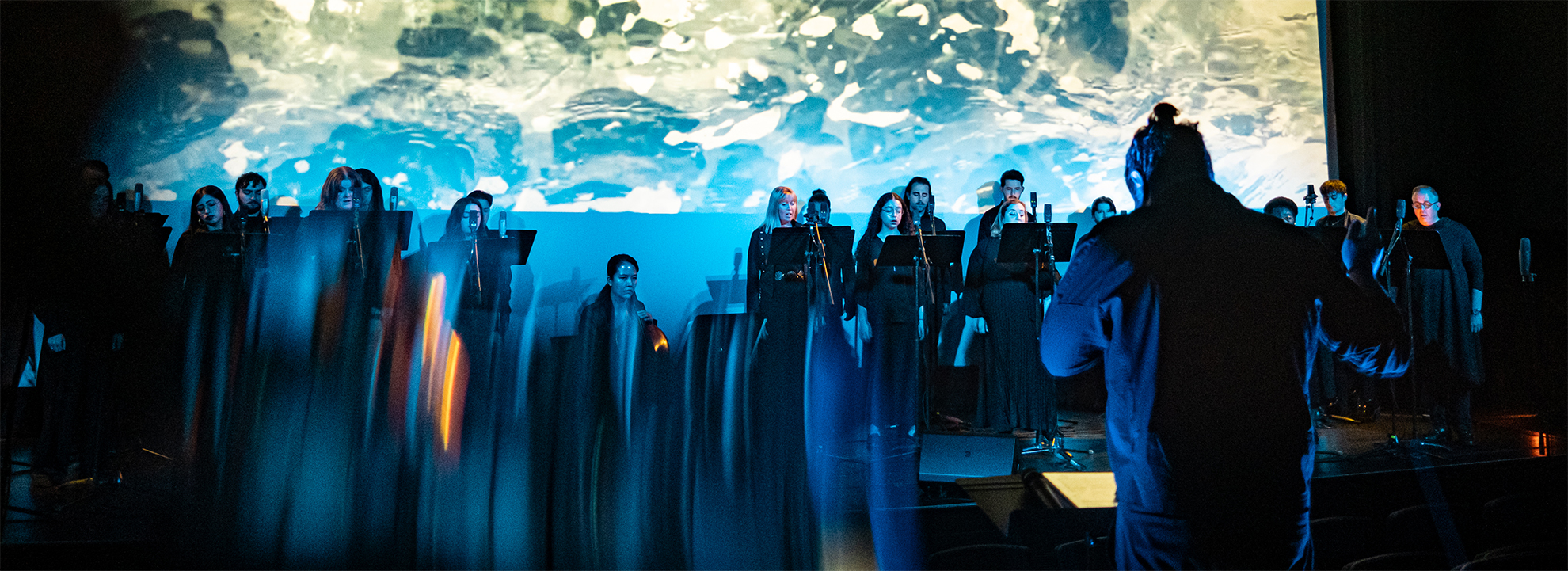

For most choral ensembles, the music is the main event. But for Sam Brukhman, founder and artistic director of Dallas-based Verdigris Ensemble, that isn’t always the case. “Sometimes the music becomes stronger when it is not always at the forefront,” says Brukhman.

It’s a striking statement that helps explain Verdigris’s evolution over the past decade. What began as an effort to push the boundaries of choral performance has become an exploration of storytelling, technology, and immersive experiences, sometimes allowing other artistic disciplines to take the lead.
“It’s more important to tell the story than to make sure that we come across as a music organization,” says Brukhman.
He identifies awe, storytelling, and sensory stimulation as three ways to connect with audiences unfamiliar with contemporary choral music.
Experimentation has defined Verdigris since its founding in 2017. Brukhman recalls a sentiment frequently expressed by audiences: “I go to Verdigris performances because I don’t know what I’m going to experience next.”
From performing The Velveteen Rabbit (2017) in a bookstore to presenting Kile Smith’s The Consolation of Apollo (2018) beneath the dome of a planetarium, Verdigris demonstrated a willingness to take choral music beyond the traditional concert hall. In Dust Bowl (2020), singers performed largely from memory on a sand-covered floor, with audience members seated just feet away. Projections, sound effects, and a live bluegrass band helped evoke the environmental catastrophe of the 1930s.
1 ⁄3
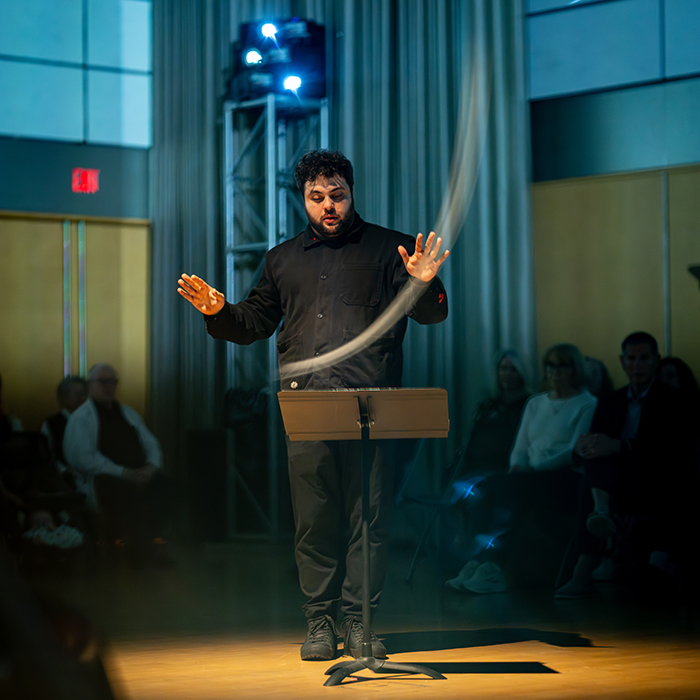
Verdigris founder and artistic director Sam Brukhman. Photo by Richard Hill.
2 ⁄3
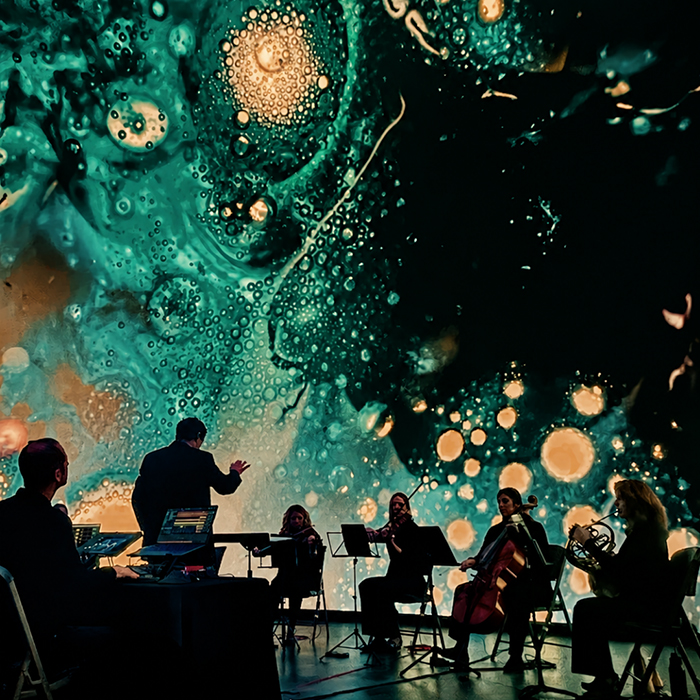
Verdigris in Cantus. Photo by Richard Hill.
3⁄3
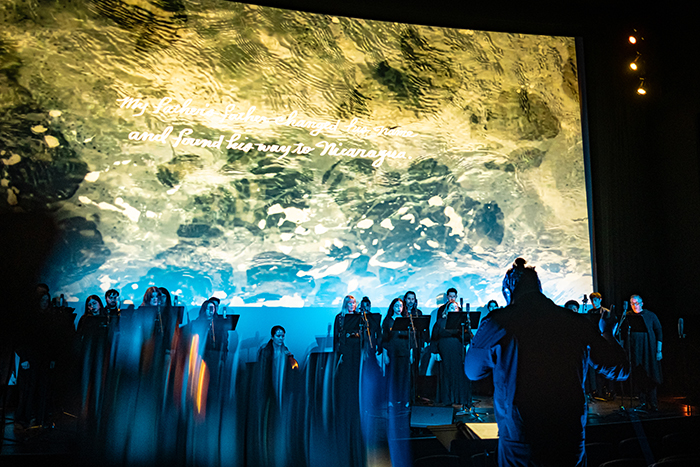
Verdigris in Reflection. Photo by Richard Hill.
Verdigris’s experimentation also extended into the digital realm with Nicholas Reeves’s Betty’s Notebook. In 2021, the ensemble made international headlines with the world’s first programmable classical music NFT, which sold for $375,000 and allowed listeners to alter elements of the musical experience. Recorded during the pandemic under strict safety protocols, Betty’s Notebook returns this anniversary season as Verdigris’s first album.
Reaching the ten-year milestone has not been without difficulties. Looking back, Brukhman acknowledges the challenges of sustaining an experimental arts organization.
“I’m very proud of where we are,” says Brukhman. “It’s been … very hard won over the course of ten years.” With economic pressures threatening smaller arts organizations, Brukhman is considering how Verdigris can serve its community in new ways. For Verdigris, artistic evolution may also be a strategy for survival.
As part of an effort to strengthen the organization, Brukhman will take a six-month sabbatical from day-to-day operational responsibilities to focus on artistic creation, professional development, and long-term artistic vision. He will remain artistic director, overseeing preparations for the season’s major productions and conducting both performances. Melissa Cashion, previously interim managing director, will become managing producer, while longtime ensemble vocalists Johnny Brown and Jacki Miller assume expanded artistic and administrative responsibilities.
The ensemble’s tenth-anniversary season, BREATH, explores one possible answer through the intersection of art and wellness. In Cantus Sound Bath, Jan. 29-30 at Moody Performance Hall, Verdigris collaborates with composer and electronic artist Ricardo Romaneiro to create an immersive, meditative experience. The project combines live choral music with electronic sound, projections, and visual effects. Rather than simply observing a performance, audiences are invited to turn inward and reflect on their own wellness.
Brukhman turns to his own family history in Everything Is Okay, April 30-May 1 at Moody Performance Hall. His first original work for choir and electronics draws on his mother’s immigration from the Soviet Union in 1990 and her subsequent stroke and recovery. The multimedia production incorporates archival family footage and brain scans. Witnessing his mother’s stroke prompted Brukhman to reflect on the physical and emotional effects of displacement, a connection he explores through music and personal history.
The desire to transform audiences is personal for Brukhman. He credits joining choir in high school with changing his life, both academically and personally. That experience informs Verdigris’s Leave Different philosophy: “If I’ve done that even for one person, then I’ve done my job.”

A forthcoming partnership with the Nasher Sculpture Center will bring Verdigris’s interdisciplinary approach into a museum setting. Scheduled for May 15, 2027 at noon, the Nasher Partnership will feature a composition inspired by Constantin Brâncuși’s The Kiss. Brukhman’s artistic interests also extend beyond the ensemble. For Overgrowth, a collaboration with Pegasus Contemporary Ballet and Dallas Contemporary inspired by the work of Iván Argote, he composed an original electronic score that he performed live alongside choreography by Elliott Ludovic.
At NEW INC, the New Museum’s art and technology incubator in Manhattan, Brukhman is exploring new creative approaches to performance alongside artists, scientists, and technologists. He participated in the 2026 fall cohort of the Beth Morrison Projects Producer Academy, a virtual professional development program focused on producing contemporary performance. These interdisciplinary exchanges are shaping his ambitions for Verdigris and its role in Dallas’s cultural landscape. Brukhman adds, “I envision Verdigris as a laboratory for the development of Dallas culture.”
—JULIANNA PEEK