


Contemporary dance experiences in San Antonio are few and far between compared to in other Texas cities. But that doesn’t stop Laredo-born dancer/choreographer Seme Jatib from creating innovative, large-scale multidisciplinary projects that carry on the legacy of her illustrious training, including her devotion to the Graham technique.

Jatib’s family moved to Mexico when she was an infant, coming of age in the cosmopolitan city of Monterrey. “I started studying at a Julliard-type conservatory, the Escuela Superior de Musica y Danza de Monterrey,” she says. “In Mexico, if you want to be a Modern dancer, you study Graham, so I did that for eight years starting at twelve years old.”
Upon completion of her studies, Jatib leapt into Monterrey’s vibrant dance scene, performing with local companies before founding her own collective Proyectos en Movimiento (Projects in Motion). In addition to touring her choreography throughout Mexico, she also presented internationally in Ecuador, Argentina, Uruguay, and Paraguay. After some time spent in Ohio, her husband’s work brought her to San Antonio, and back to Texas, in 2009, where she has been a consistent presence at the city’s Luminaria Contemporary Arts Festival.
Jatib’s work often explores the duality of identity, as well as communication across boundaries both cultural and geographical. “My own story is very complex,” she says. “My persona is in Mexico. I consider myself Mexican in terms of language, culture, and traditions. I don’t feel like I’m an American, but I have my papers, I have my birth certificate. It’s this dialogue of building this identity.”
1 ⁄4
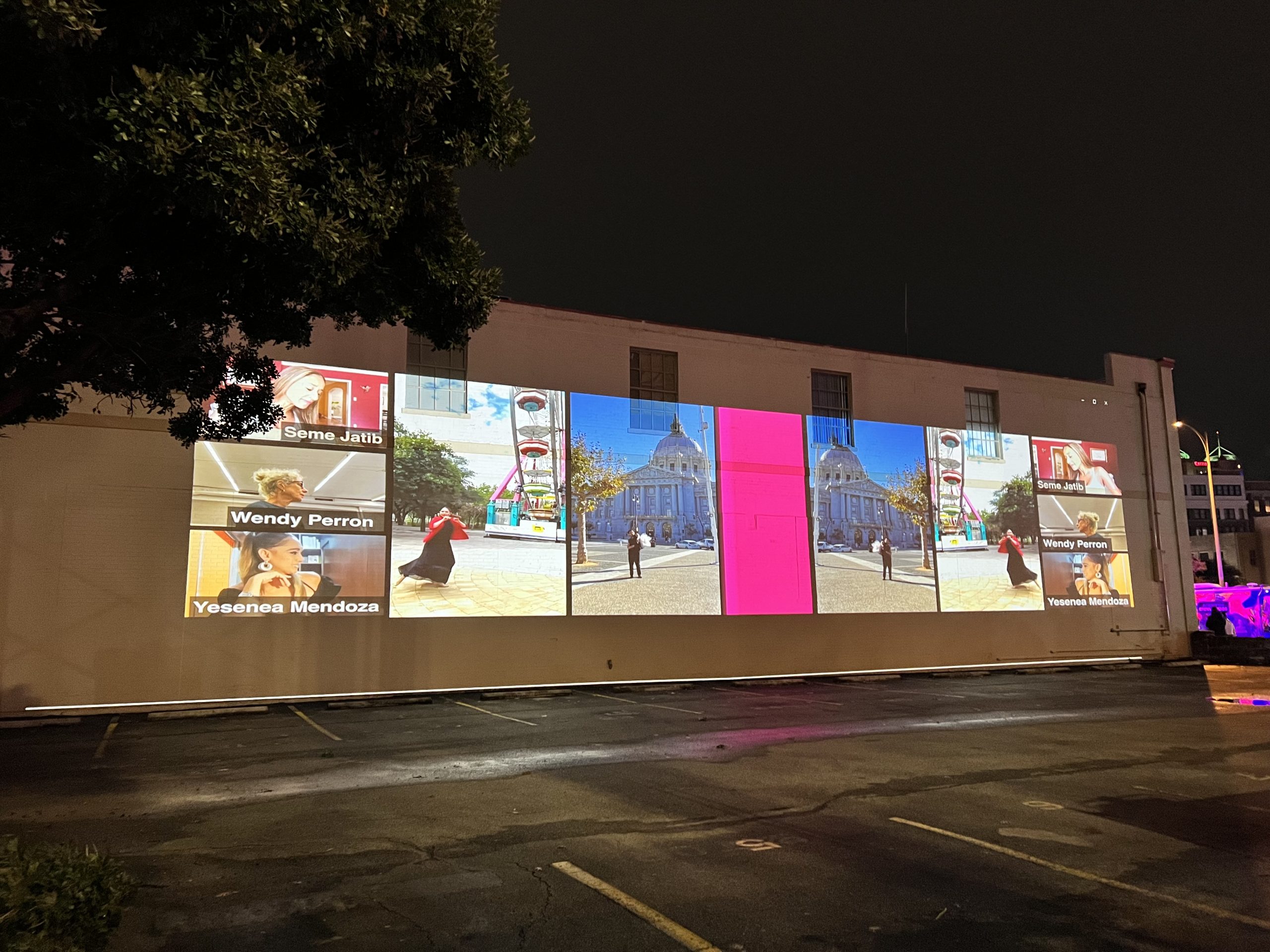
Maria Castro (Mexico), Seme Jatib (USA), Yesenea Mendoza(Ecuador), Wendy Perron (USA) and Victor Talledos (USA) in Seme Jatib’s At a Distance, with video editing by Erik Bosse, 2026. Photo courtesy of the artist.
2 ⁄4
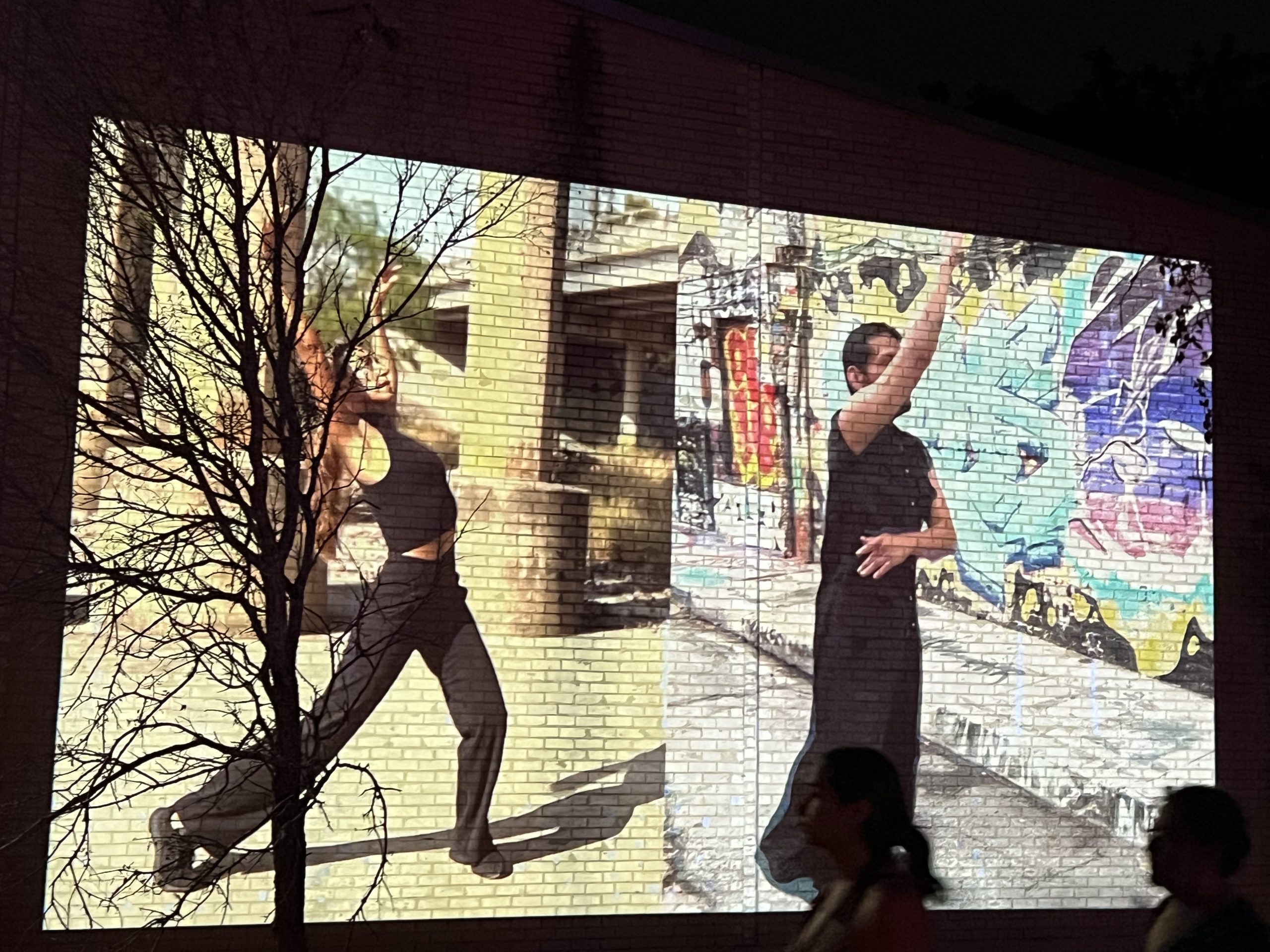
Maria Castro (Mexico), Seme Jatib (USA) and Victor Talledos (USA) in Seme Jatib’s Xiabe, video editing by Erik Bosse, 2023. Photo courtesy of the artist.
3 ⁄4
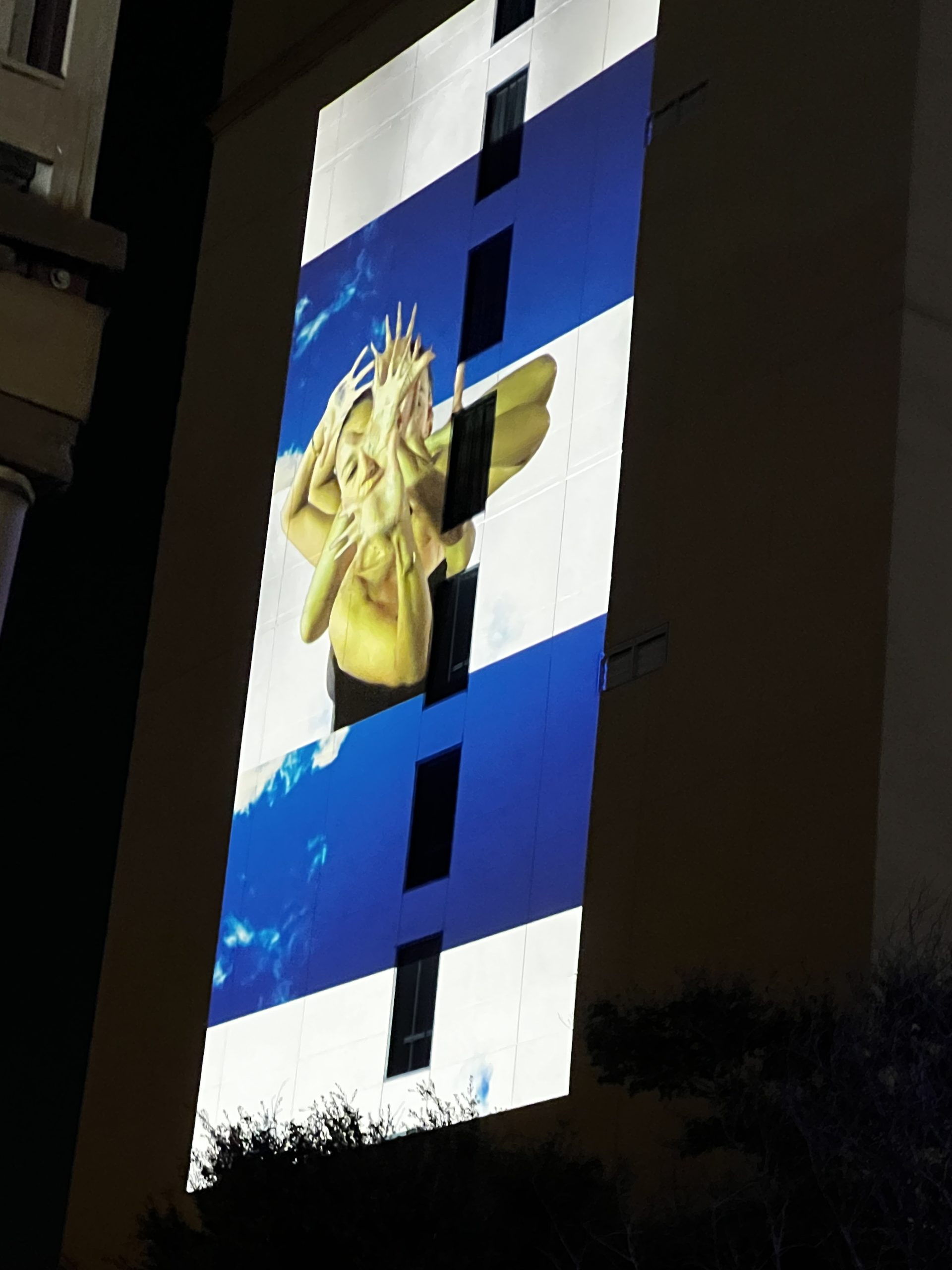
Seme Jatib in her work Dance Echoes, film and editing by Erik Bosse, 2024. Photo courtesy of the artist.
4 ⁄4
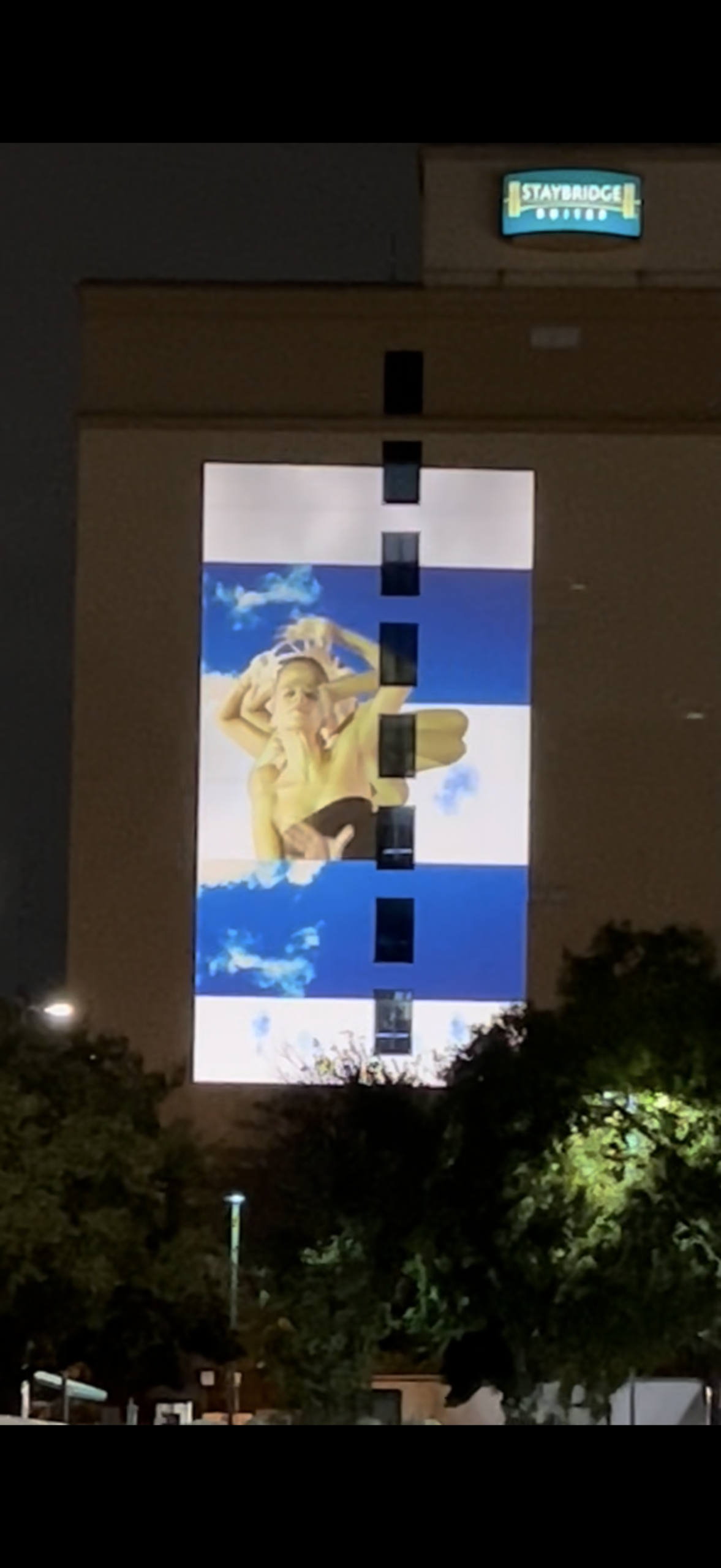
Seme Jatib in her work Dance Echoes, film and editing by Erik Bosse, 2024. Photo courtesy of the artist.
Her Luminaria works excavate this personal narrative, but via grand, building-sized proportions. In collaboration with filmmaker Eric Bosse, her detailed and fluid choreography is projected across San Antonio’s urban landscape, underscoring the themes of crossborder identity, relationships, and community-building.
The scope of her work is often determined by the parameters of Luminaria; this year the festival will be held in downtown San Antonio on Nov. 14. Jatib’s work will be housed in La Zona art gallery. “It’s huge, and not a neat gallery in my mind,” she says. “In my imagination, it’s rough, like the arts in San Antonio.” On one of the inside walls, a video made in collaboration with Bosse will play throughout the night, but will be punctuated by two dance interventions. Jatib will perform a live duet with Juan Paulo Roblesgil, a dancer from Monterrey, which will further interrogate San Antonio’s cityscape and its relationship to nature.
Prior to this new Luminaria creation, Jatib will team up with Our Lady of the Lake University and artists Pablo Robles Gil, Amber Ortega-Perez, Britt Lorraine, and Violeta de Leon to present Celebration of an Icon on Nov. 7 in commemoration of the centennial of the founding of the Martha Graham Dance Company. The event, which includes two Graham technique classes and a panel discussion of her work, is aimed at both experienced dancers and those that are new to Martha Graham’s legacy.
“The Graham technique is very approachable if you are an adult,” says Jatib. “Not like ballet, where if you are an adult, it’s hard to understand with your body, and it’s very restrictive. The Graham technique is very organic.” The event will also include screenings of Graham masterpieces Errand into the Maze, Lamentation, and Night Journey, popcorn and drinks provided.

The drama inherent in Graham’s vocabulary is also another signature characteristic, and has served Jatib well in her multidisciplinary approach to creating. She has collaborated with San Antonio theater company Atticrep on a production based on the Sanskrit epic Mahabharata, which utilized her choreography and classical Indian dance to create a distinct form of dance play. “I’m a yoga practitioner,” she says. “So the gods were sending me that opportunity.”
A second dance play with Atticrep incorporated aerialists, underscoring her ever-expanding practice. Invitations to choreograph followed, taking her to Kansas, her hometown of Laredo, and back to Mexico. Then the pandemic hit and, like many artists, Jatib experienced a recession of opportunities. She decided to refocus her work on Luminaria and continue her ongoing collaboration with Bosse. “He has been an amazing collaborator,” she says. “He is now based in New Orleans, but we work remotely, and sometimes he comes to San Antonio to film.”
This type of long-distance process makes sense for an artist who is interested in how people communicate beyond labels and across borders. Right after the onset of the COVID-19 pandemic, when much of the world was in an unprecedented state of isolation, Jatib created At a Distance, a dance-for-camera and projection work that featured dancers in San Antonio, San Francisco, New York City, and Monterrey framed into a single composition. Celebrated choreographer and dance writer Wendy Perron was one of her collaborators. At a Distance was inspired by the exponential increase in Zoom meetings, and the experience of existing in a digital window.
“[The dance] is about that, and shows different parts of the world presented in a huge, extra wide format,” she says. “For me, in a way, it’s an endless possibility. I didn’t want to have boundaries.”
—ADAM CASTAÑEDA