
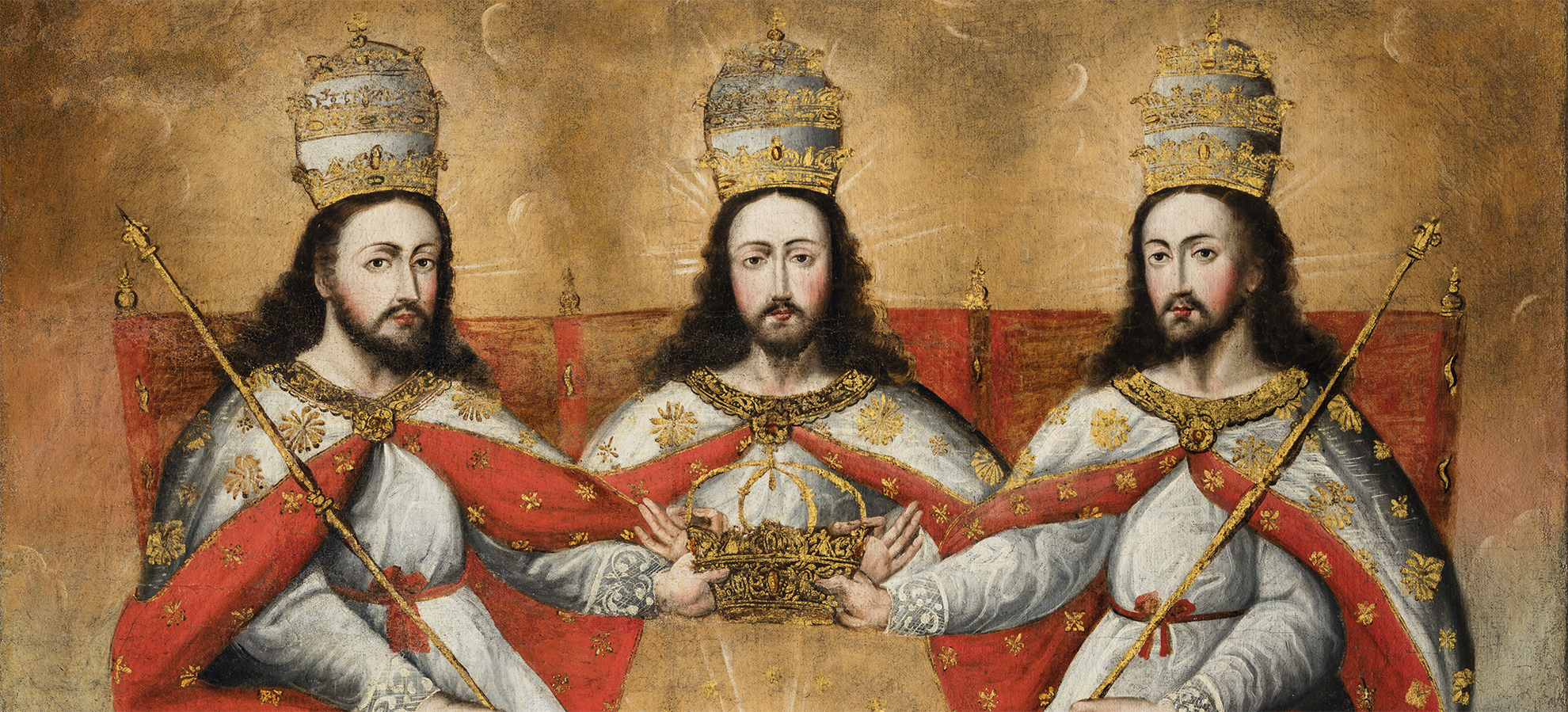

Spectacles of Power and Faith draws from the Dallas-based Thoma Foundation’s extensive collection. In present-day Peru, Bolivia, Venezuela, and Ecuador, an ethos of painting emerged that captured the cultural complexity of South America in all its glory. Not as well-known as similarly baroque Catholic-inspired art from Spain, Mexico, and Portugal, these portraits of saints, politicians, and daily life nonetheless possess a richness that drew the eyes of Dallas-based collectors Carl and Marilynn Thoma.

“Almost everything (in Spectacles) has been acquired since then, so it really is a complement to that 2006 show and building on it,” says Adam Jasienski, co-curator of the exhibition and associate professor of art history at the Meadows School of the Arts, SMU. “What we want to do with this show and the collection is to show how complex South American art of the colonial period is—we’re talking about 300-plus years of history and an enormous geography of nine modern-day countries.”
Jasienski says mounting such an ambitious look at the subject was the result of both perfect timing and a shared passion for Spanish Art from South America.
Together, the duo combed the Foundation’s Chicago storage to select 63 pieces they then distilled into sections honoring Saints, American Virgins, Spain in the Americas, Jewels, Daily Life at Home, Teaching Faith, and Art in Sacred Spaces. It is the latter segment that might become the most memorable, as Jasienski and Muñoz-Nájar envisioned an immersive chapel installation recreating the multi-sensory atmosphere of a house of worship, right down to a custom scent of frankincense, myrrh, and incense that perfumes the space.
“That will be the thing that will surprise people the most,” Jasienski says. “We wanted to really lean into the fact that what we’re treating as Art with a capital A was something people lived with in a very emotional way. Behind the velvet curtain is church music from Peru, and a painting will be installed atop a large visualization of what an altar would look like. It’s a smaller space in which to linger a bit and try to put yourself imaginatively in a different kind of place in the museum.”
1 ⁄7
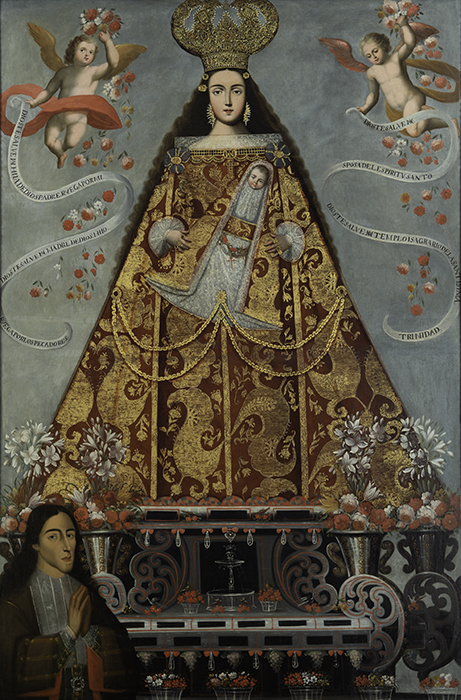
Unidentified artist, Our Lady of Bethlehem of Cuzco with Donor, 18th century. Cuzco, Peru. Oil and gold on canvas, 86 ¼ x 63 in. (219.1 x 160 cm). Collection of the Carl & Marilynn Thoma Foundation, 2013.43. Photo: Amber Shields Johnson, courtesy of the Blanton Museum of Art, University of Texas at Austin.
2 ⁄7
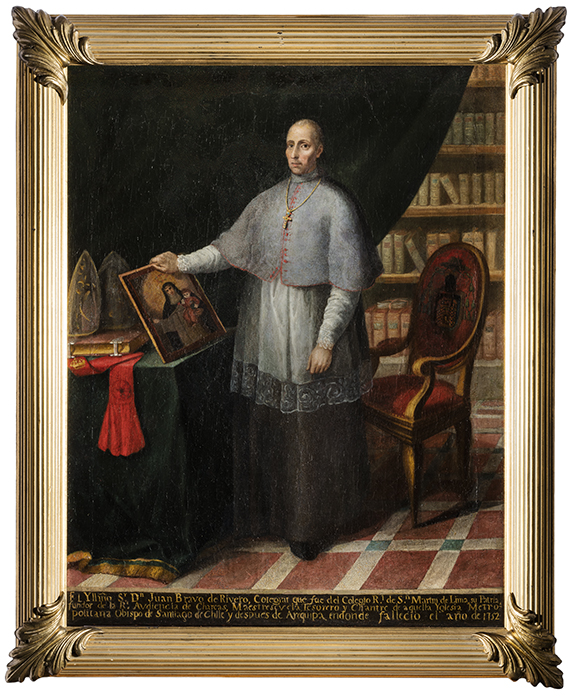
Unidentified artist, Portrait of Juan Bravo de Rivero, Bishop of Santiago de Chile and Arequipa, mid-18th century. Arequipa, Peru. Oil on canvas, 25 x 19 ¾ in. (63.5 x 50.2 cm); with frame, 30 x 24 ¾ in. (76.2 x 62.9 cm). Collection of the Carl & Marilynn Thoma Foundation, 2024.59. Photo: José Luis Municio.
3 ⁄7
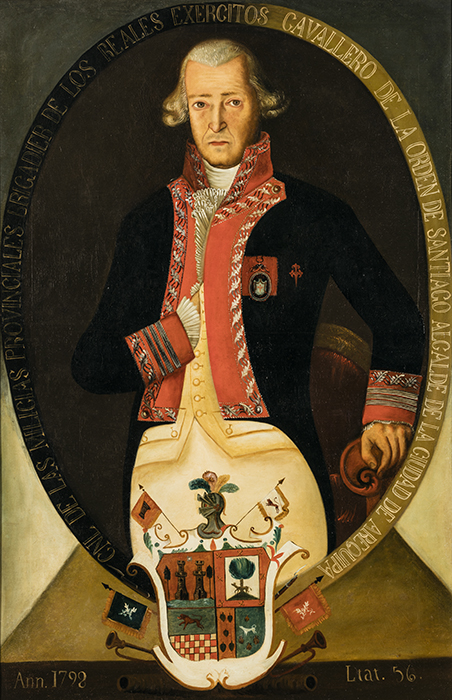
Unidentified artist, Portrait of Juan Fermín Errea, Mayor of Arequipa, 1798. Arequipa, Peru. Oil on canvas, 50 ¼ x 32 ⅞ in. (127.6 x 83.5 cm). Collection of the Carl & Marilynn Thoma Foundation, 2024.90. Photo: José Luis Municio.
4 ⁄7
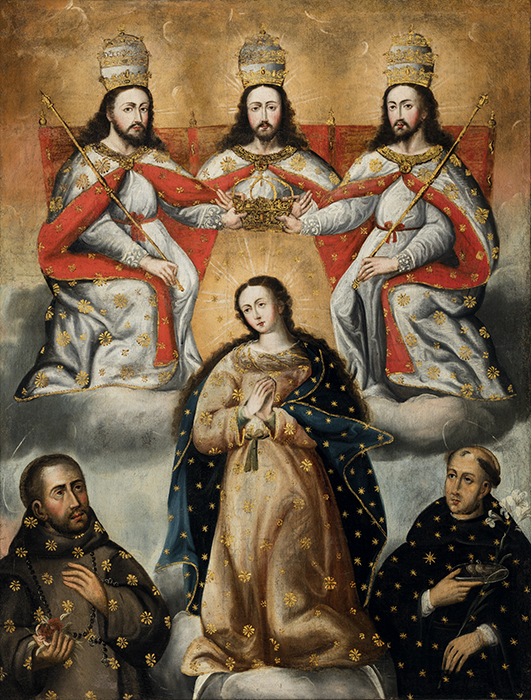
Unidentified artist, Coronation of the Virgin by the Holy Trinity with Saints Didacus (Diego) of Alcalá and Nicholas of Tolentino, 18th century. Peru. Oil on canvas, 62 ½ x 48 in. (158.8 x 121.9 cm). Collection of the Carl & Marilynn Thoma Foundation, 2024.29. Photo: José Luis Municio.
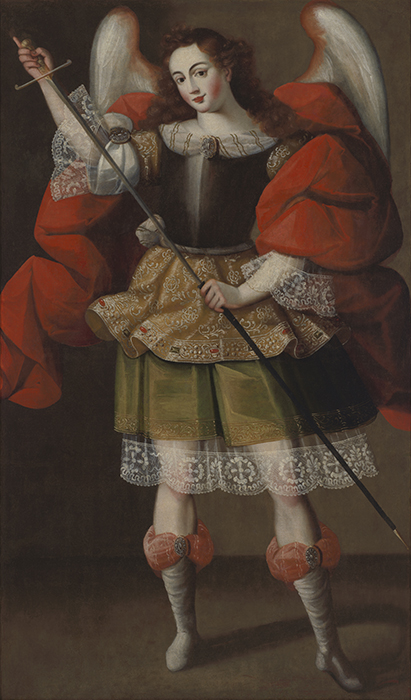
5 ⁄7
Unidentified artist, Archangel with Sword, 18th century. Bolivia. Oil on canvas, 71 ¼ x 42 ⅝ in. (181 x 108.3 cm). Collection of the Carl & Marilynn Thoma Foundation, 2024.10. Photo: Jamie Stukenberg.
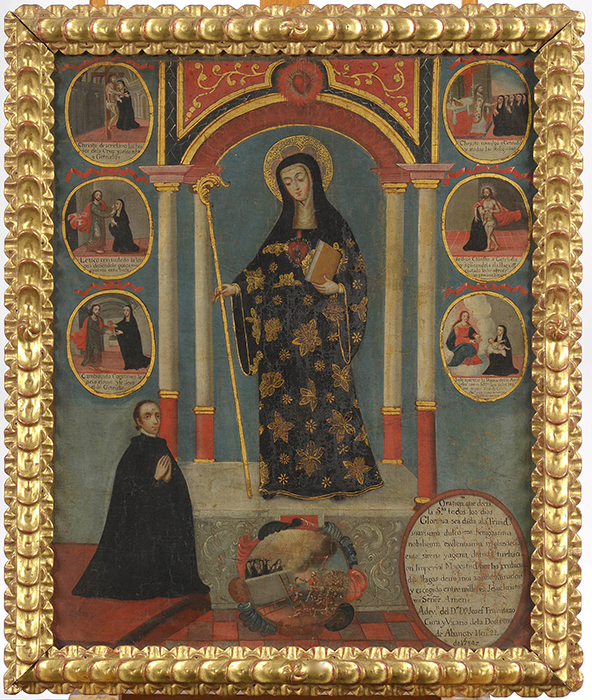
6/7
Unidentified artist, Saint Gertrude with the Vicar of Abancay, c. 1784. Cuzco, Peru. Oil and gold on canvas, 35 x 29 ⅛ in. (88.9 x 74 cm). Collection of the Carl & Marilynn Thoma Foundation, 2024.8. Photo: José Luis Municio.
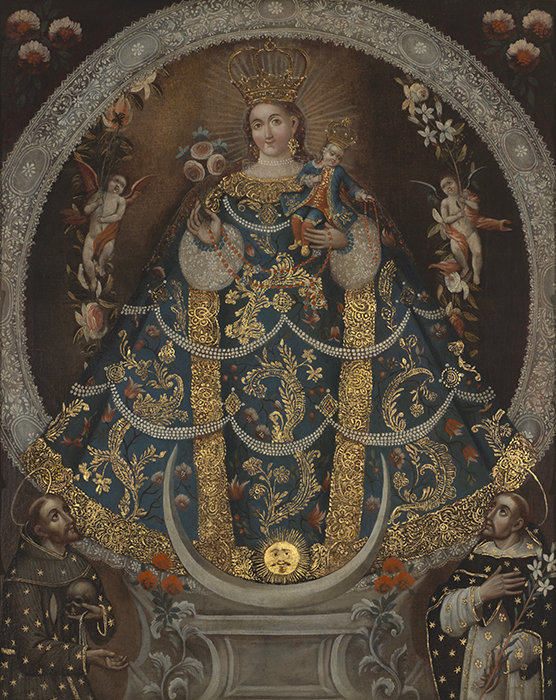
7 ⁄7
Unidentified artist, Our Lady of the Rosary of Potosí, 18th century. Bolivia. Oil on canvas, 41 ¼ x 33 in. (104.8 x 83.8 cm). Collection of the Carl & Marilynn Thoma Foundation, 2022.69. Photo: Jamie Stukenberg.
“It will be a sensory experience where people can see what it’s like to be inside a religious space,” adds Muñoz-Nájar, a native of Arequipa, Peru. “We’re also going to talk about daily life and home, how people commissioned portraits of themselves to reveal their lineage and history. It’s a panoramic show of art of the Spanish Americas, and we’re trying to explain the diversity and richness of South American painting.”
As transformative as the curators hope the viewing experience will be, Spectacles of Power and Faith is just one of the ways the Foundation is looking to enhance their adopted hometown through access to the arts. In addition to a fall show at the Crow Museum of Asian Art highlighting the Thoma’s bamboo art, there is Presence of Absence: Embodied Portraiture, currently on view at the Foundation’s headquarters. This supportive presence, both in their space and in Dallas/Fort Worth museums, is one that Muñoz-Nájar says her employers will continue to strive for.
“One of Carl’s goals when he arrived was not only showing his collection in Dallas, but also supporting museums,” she explains. “They have a long relationship with the MFA Houston, and work with the Modern in Fort Worth, the Amon Carter and the DMA. In their mission, they say they want art to be accessible—they recognize themselves not as collectors, but as someone who chose art and doesn’t have it in their home behind walls. They want everyone to access it.”
—KENDALL MORGAN