

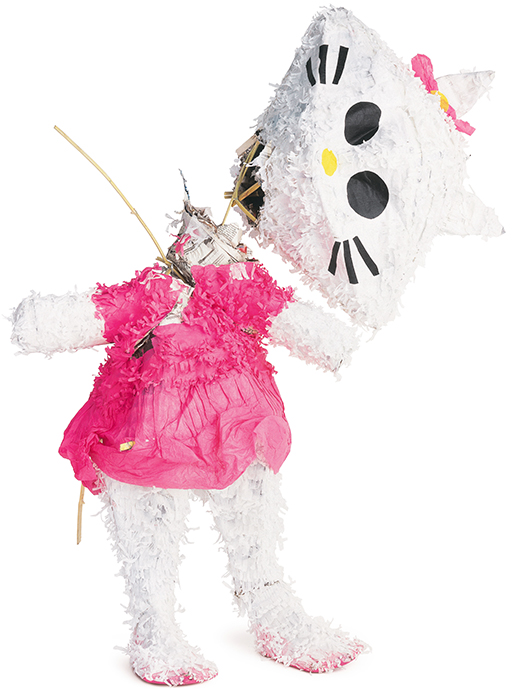
The therapeutic process of making a piñata from papier-mâché over a balloon and then decorating it with colorful fringed tissue paper and the tension releasing experience of hitting the piñata with a stick at a birthday party as well as the feeling of sheer joy when the piñata bursts open and rains candy all come to mind when looking at Chuck Ramirez’s Piñata: Gregory. Ramirez (1962-2010) was a San Antonio-based artist with a reverence for material culture. He was a graphic designer and art director for the Texas grocery chain H-E-B. The pigment inkjet print prompts viewers to imagine the frenzy of collecting the fallen candy from the piñata as the culmination of this Mexican-American cultural tradition so frequently included at birthday parties and holiday celebrations.

The exhibition, on view Oct.15, 2026-March 7, 2027, includes a total of sixteen artists, representing a few different generations in different phases in their lives. Mercado/Material is about transforming everyday objects, places, and ideas into metaphorical and sometimes literal vessels of heritage and culture.
Lopez likened the process of developing Mercado/Material to “putting together a puzzle specific to the site that made sense for the space and community.” In keeping with the gallery’s mission to explore and highlight the Latino experience in the United States with a core emphasis on San Antonio, South Texas, and transnational borderlands, Lopez selected works that engage viewers with ideas around belonging, labor, and commerce.

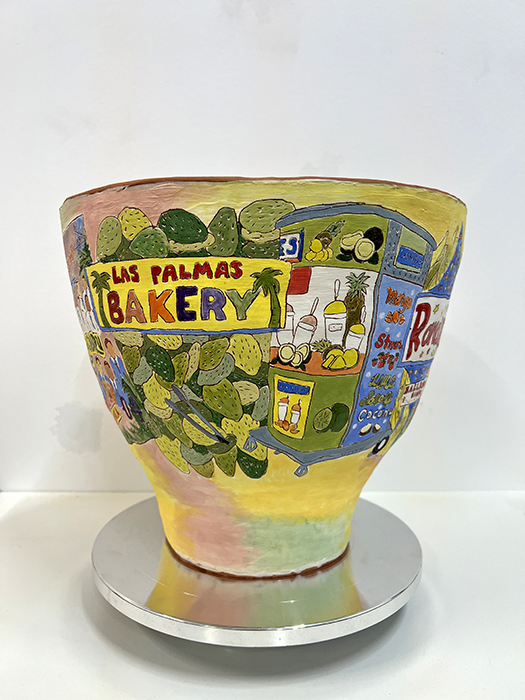
Sarita Garcia’s ceramic artwork, titled Randy’s, Los Globos, Las Palmas, is packed full of lively and colorful imagery including hand-lettering for Chicago’s Los Globos (multicultural nightlife), Mango, Strawberry, Lime and Coconut on a snowcone cart; and Las Palmas Bakery all portraying places for delectable delights. Lopez compares the icons Sarita depicts out of the minutia of daily scenes found in San Antonio and Chicago to the ceramics from Ancient Greece illustrating everyday life.
Lopez met Sarita in 2017, almost a decade ago, while they were both living in Chicago. “I got to see her grow as an artist and educator,” recalls Lopez. “She went from screen printing on paper and fabric to her more recent work in ceramics. I was blown away by her ability to switch mediums with such command. Sarita is great at drawing with quite a bit of detail. Her work tells a significant cultural story in a contemporary way.”
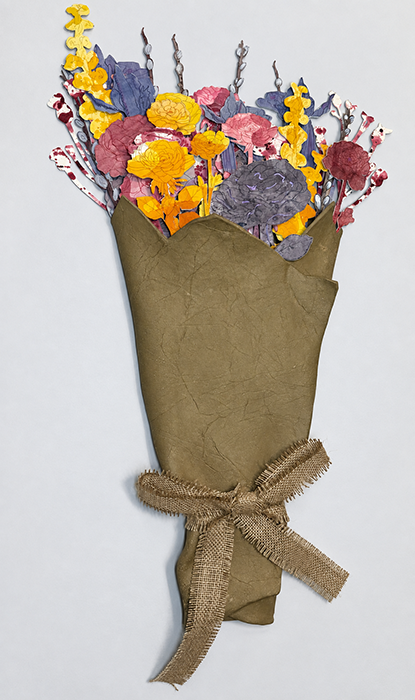
“It is important to think about a story through a wide lens,” says Lopez. The hand-built ceramic flower holder with paper flowers dyed with cochineal, Osage, Madder, and Logwood, watercolor and marker, titled Y Esas Son Las Cosas Que Pienso on the Verge of Spring, is by San Antonio artist Daniela Oliver de Portillo. Lopez elaborates on the broader influences on this work. “When Daniela was growing up, her mom owned a flower shop. Her work is inspired by her mom and encompasses themes of fragility, beauty, domesticity as well as strength and perseverance. It also explores the many roles women take on.”
1 ⁄5
Sarita Garcia, Randy’s, Los Globos, Las Palmas, 2026, Ceramic, 18 x 12 in., Courtesy the Artist.
2 ⁄5
Chuck Ramirez, Piñata: Gregory, 2002, Pigment inkjet print, 30 x 24 in., Courtesy of Ruiz-Healy Art, New York | San Antonio and the Estate of Chuck Ramirez.
3 ⁄5
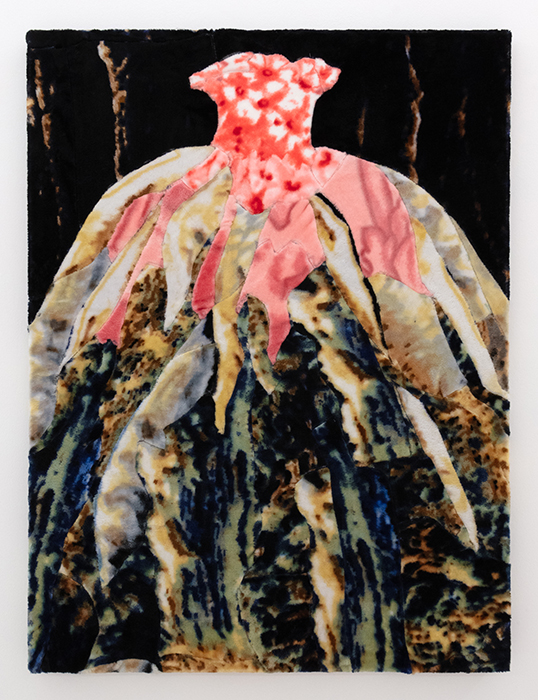
Antonio Lechuga, Quince, 2024, Various fleece blankets, thread, 48 x 36 in., Courtesy the Artist.
4 ⁄5
Daniela Oliver de Portillo, Y Esas Son Las Cosas Que Pienso on the Verge of Spring, 2026, Hand-built ceramic flower holder, paper flowers dyed with cochineal, Osage, Madder, and Logwood, watercolor, marker, 26 x 35 x 3 in., Courtesy the Artist.
5 ⁄5
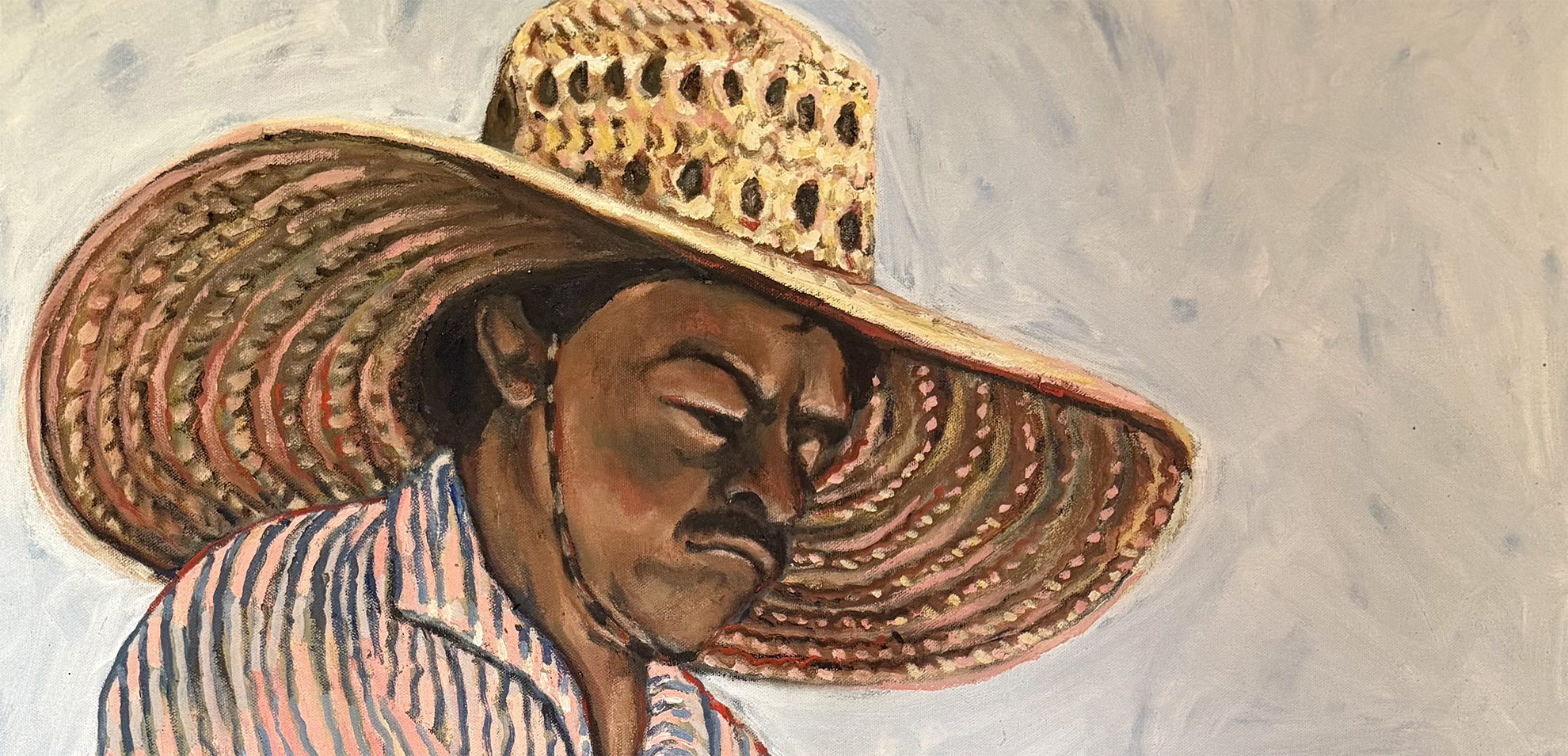
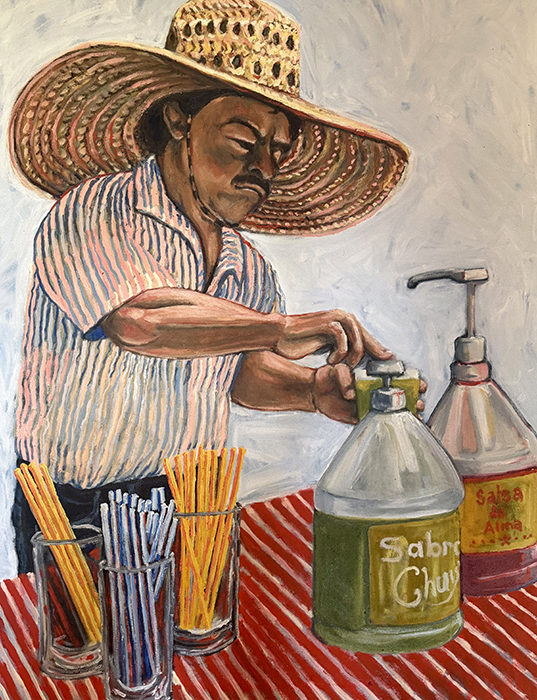
Kristina Salinas, Raspa Vendor, 2026, Oil on canvas, 48 x 36 in., Courtesy the Artist.
“Mercado/Material is a full circle moment as I began my career at Museo Alamada, which was the largest museum in the United States dedicated to Latino arts and culture. It is now the location of Centro de Artes Gallery,” says Lopez. “The exhibition covers the breadth of different lived experiences and the important duality of the artist’s personal narrative. It is a platform for a conversation about marginalism, material culture and commercialism that transcends contemporary and historic.”
—NICHOLE PRUITT