

A cathedral rises and dissolves in a wash of light. Arches ripple like water. Columns stretch into impossible geometries before collapsing into clouds of color. Elsewhere, fingerprints become a glowing index of the body, translated into pattern and pulse. A West Texas oil field becomes a looping digital ecology, where weather, wildlife, and industry fold into one another. In Run the Code: Data-Driven Art Decoded by Thoma Foundation X Blanton Museum of Art, code does not sit invisibly in the background. It becomes the medium itself: elastic, unstable, and strangely luminous.

Though the exhibition is rooted in digital technology, its concerns are not entirely new. One of the more compelling aspects of the show, as it emerges through curator Hannah Klemm’s framing, is the way it situates contemporary data-driven art within a longer history of artistic experimentation. These works may run on software and networks, but they still return to familiar artistic questions: authorship, chance, materiality, perception, and the unstable line between control and surrender.
“Artists have always been deeply interested in innovation and in technology,” said Hannah Klemm, Curator of Modern and Contemporary Art at the Blanton and organizer of the exhibition. “We see it all through art history. You have academics who connect printmaking in the fifteenth and sixteenth centuries to these interests in innovation. I think with computers, what’s fascinating is that artists initially weren’t coders. They were brought in as thought partners with engineers who wanted to visualize information through these machines.”
Over time, artists learned to write code themselves, transforming a tool of efficiency into a medium of expression.
1 ⁄7
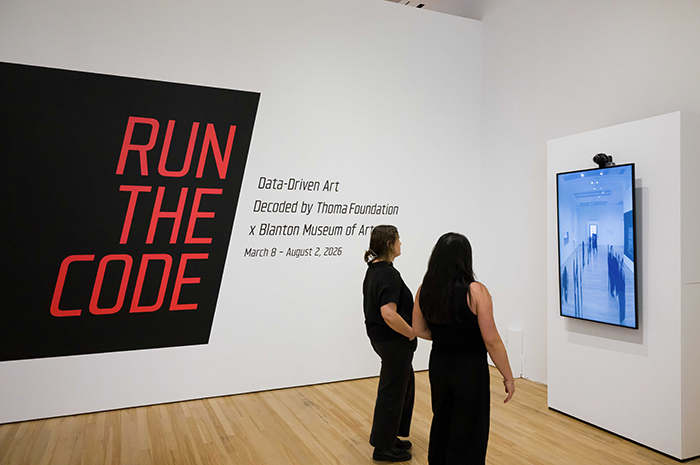
Installation view of “Run the Code: Data-Driven Art Decoded by Thoma Foundation X Blanton Museum of Art,” Blanton Museum of Art, The University of Texas at Austin, March 8, 2026–August 2, 2026.
2 ⁄7
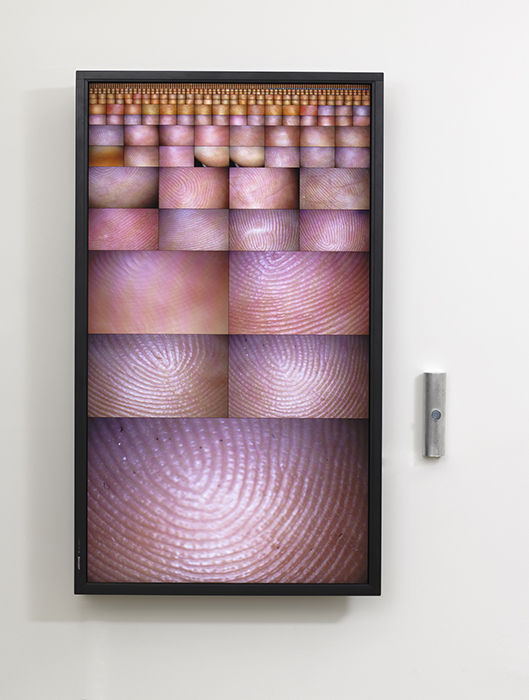
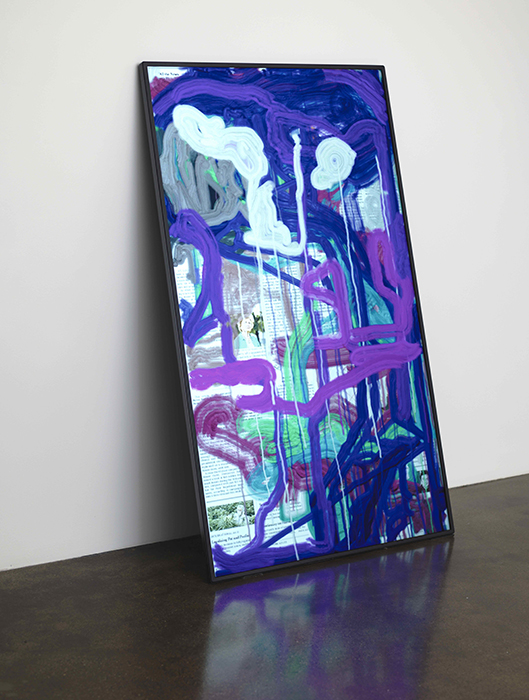
Rafael Lozano-Hemmer, Pulse Index, 2010, interactive generative custom software, silent, computer, digital microscope, industrial camera, plasma monitor, Collection of the Carl & Marilynn Thoma Foundation © Rafael Lozano-Hemmer
3 ⁄7
Siebren Versteeg, Daily Times (Performer), 2012, real-time generative custom software animation, silent, computer, internet connection, monitor, 24-hour cycle, Collection of the Carl & Marilynn Thoma Foundation © Siebren Versteeg
4 ⁄7
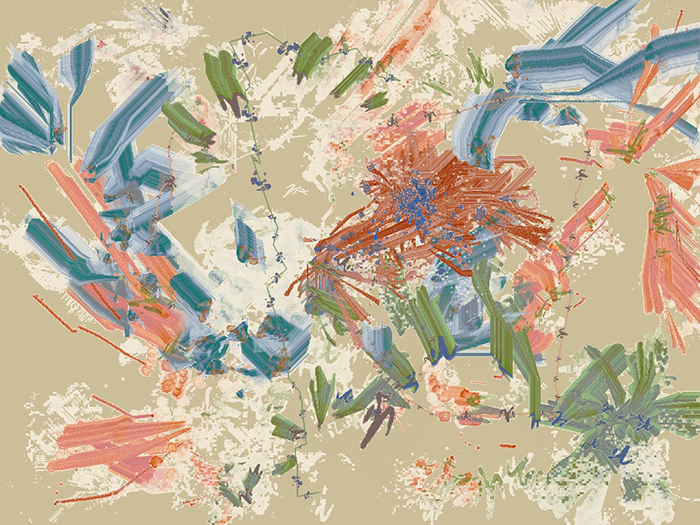
Camille Utterback, Untitled 5, 2004, interactive installation: custom software, silent, video camera, computer, projector, lighting, infinite (live generation), Collection of the Carl & Marilynn Thoma Foundation © Camille Utterback
5 ⁄7
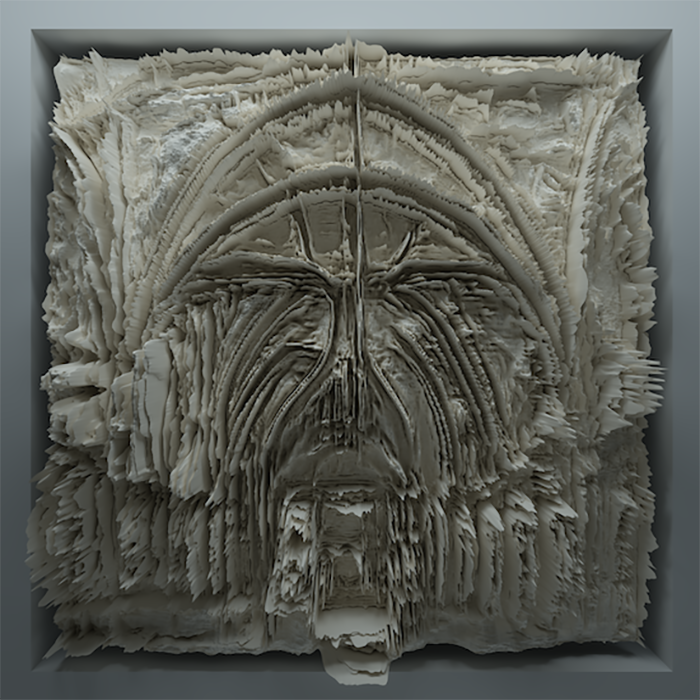
Refik Anadol, Machine Hallucinations – Study I, 2019, single-channel digital video, silent, computer, monitor, 30 min., Collection of the Carl & Marilynn Thoma Foundation © Refik Anadol
6/7
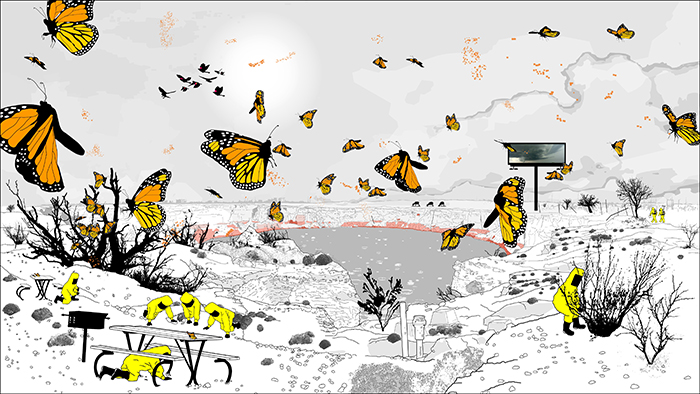
Marina Zurkow, Mesocosm (Wink, TX), 2012, real-time generative custom software animation, with sound, computer, monitor or projector, 146-hour cycle (24-minute day, 146-hour year), Collection of the Carl & Marilynn Thoma Foundation © Marina Zurkow
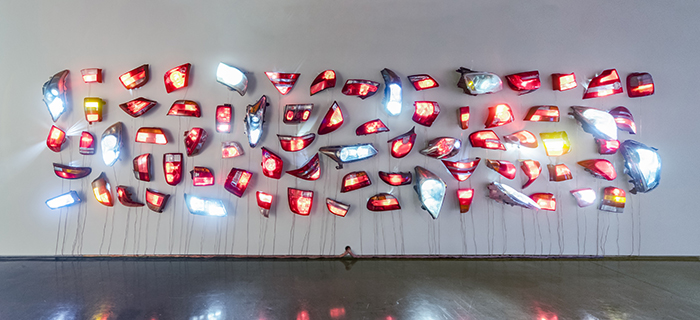
7 ⁄7
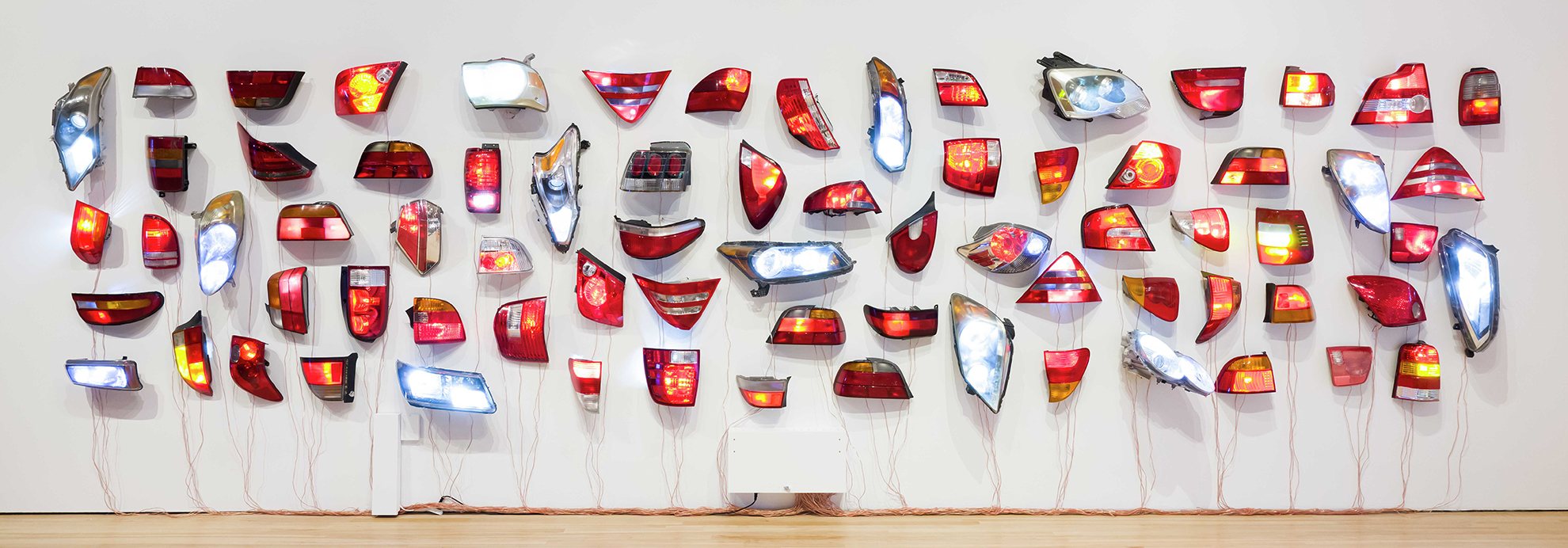
Madeline Hollander, Heads/Tails: Walker & Broadway 4, 2020, 73 Automobile headlights and taillights customized with LEDs and real-time software program, infinite, display: 120 x 240 in., Collection of the Carl & Marilynn Thoma Foundation
“One of the things that has been so interesting to me,” Klemm explained, “is watching artists become incredibly adept at computer science and engineering, while still bringing this beautiful visual element to their work. They take systems that were designed to do something very specific—make something faster or more efficient—and they use them to create something without that purpose. Suddenly the code becomes a malleable and beautiful material.”
That idea—that code can function as a material rather than a neutral tool—sits at the center of the exhibition. Rather than constructing a sweeping historical survey of computer art, Klemm and her collaborators focused on a more recent moment in digital practice.
“We were really thinking about our audiences and where we sit in the world of technology,” Klemm said. “Instead of presenting the full history of computer art from the 1960s forward, we decided to focus on contemporary work, especially generative, algorithmic work from the 2010s.”
The exhibition arrives at a moment when conversations about artificial intelligence, automation, and authorship dominate cultural discourse. Yet Run the Code seems less interested in alarm than in process. The emphasis falls not on machines replacing artists, but on artists designing systems that generate form.
“One thing that really runs through the show is the idea of generative algorithms,” Klemm said. “The algorithm continues to evolve and creates new outcomes. Many of these artists are interested in releasing control of the final result to the system itself.”
That approach is visible in Siebren Versteeg’s Daily Times, which uses the ever-changing homepage of The New York Times to produce painterly abstraction. The work treats the news cycle as both material and engine. Composition emerges from constant change rather than fixed design.
“He never knows what the painting is going to look like,” Klemm said. “That’s not really the point. It’s about creating the conditions where the process becomes visible.”
“The neural network creates these completely fake Gothic cathedrals that move in and out of focus,” Klemm said. “Sometimes it even learns from its own creations and begins generating images that aren’t based on the original sources anymore.”
There is something almost devotional in that description: the machine studying the sacred until it begins to invent its own theology of stone and light.
Other works in the exhibition turn toward the body, surveillance, and the invisible infrastructures of digital life. Rafael Lozano-Hemmer’s Pulse Index converts biometric information into visual form, using fingerprints and heartbeats to build a growing archive of the body’s rhythms. Daniel Canogar’s Billow draws from Google search trends, transforming the drifting attention of the internet into sculptural animation.
For Klemm, these works gain their force by making abstract systems perceptible.
“We deal with so much data without even understanding it,” she said. “What I like about these artists is that they structure and visualize those systems in ways that completely abstract them from daily life. But through that abstraction, they force us to consider them.”
The result is a curious tension between beauty and unease. A fingerprint becomes a minimalist composition. Search trends form a flowing sculpture. A digital ecosystem resembles a painting. Each work holds two realities at once: the seduction of image and the systems that produced it.
Marina Zurkow’s Mesocosm (Wink, TX) offers another version of this duality. Built around a Texas oil field, the work stages the landscape as both ecosystem and extractive site. Weather shifts, animals move through the scene, infrastructure persists. It is a landscape, but not a pastoral one. It belongs to a Texas shaped by industry, heat, and long entanglements between land and resource.

Behind that transformation lies a surprising amount of technical labor. Digital artworks may appear seamless, but they depend on networks, hardware, compatibility, and ongoing maintenance. They are less like static objects than living systems.
“I honestly hope people are less afraid of some of this innovation,” Klemm said. “We’re in a moment where there’s a seismic shift happening with technology. But artists have always been responding to those shifts.”
That may be the clearest way into Run the Code. The exhibition is not a manifesto about technological doom, nor a celebration of novelty for its own sake. Instead, it presents artists working inside the conditions of the present, finding within those conditions space for experimentation, reflection, and play.
If earlier traditions of art-making were tied to the hand, these works suggest that creation can also reside in the design of systems, the shaping of parameters, and the patient construction of images that never fully settle.
Here, data is not only extracted, bought, sold, or surveilled. It is also reworked—becoming color, rhythm, distortion, and light.
—MICHAEL McFADDEN