

When gallerist Liliana Bloch said to me, “If you keep giving people what they want, then you’re going to miss what they need to see,” I considered ending the interview right then and there. What more was there to say about how to make a meaningful impact?
Plenty more, it turns out.

Bloch grew up in El Salvador before becoming an American citizen, and her dual vantage point — insider and outsider, local and global — pulses through everything she does. “There are very different ways to exist in the art sphere,” she says. “I want to be in the realm of curious and open minds. We are here to support collectors who, as we do, embrace that approach.”
Today, Bloch represents 18 artists whose backgrounds, mediums, and perspectives span an extraordinary range — from Mongolia to the American Southwest, from textile arts to digital photography to painting. Hers is a program built not around a single aesthetic but around a set of values: urgency, rigor, and the willingness to engage with the world, contradictions and all.
That tension between aesthetic pleasure and conceptual provocation is something Bloch takes to heart. “I try to have a healthy balance between artists whose work makes immediate connections with the viewer because it’s stunningly beautiful and more challenging ones. Regardless, there is a lot behind what meets the eye in those pieces. They are layered.” she explains.
1 ⁄5
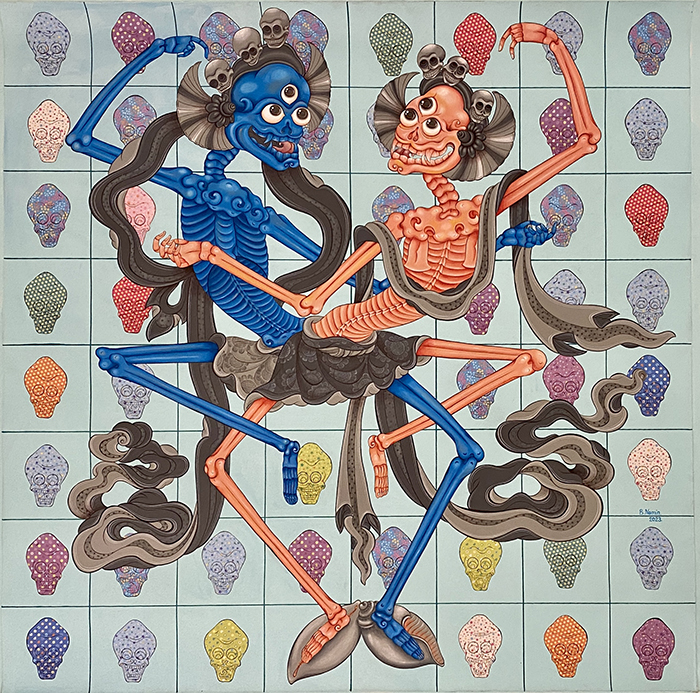
Nomin Bold, Monogamy, 2023, paper collage, acrylic, canvas, 39 x 39 inches, image courtesy the artist and Liliana Bloch Gallery.
2 ⁄5
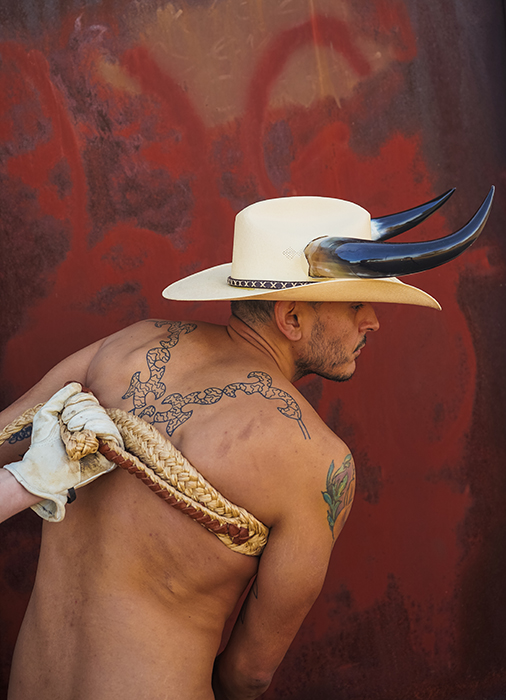
Jose Villalobos, Steer the Queer, 2025, chromogenic print, 60 x 40 inches, image courtesy the artist and Liliana Bloch Gallery.
3 ⁄5
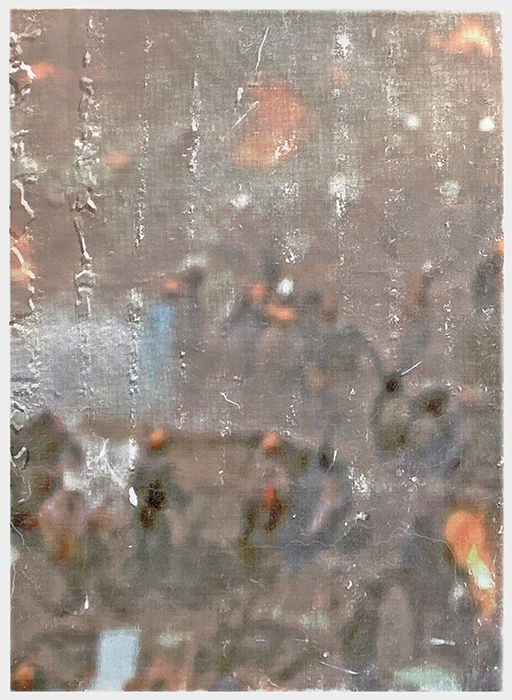
Sally Warren, Independence Square, 2023, Inkjet transfer on calligraphy paper, 38.5 x 54 inches, image courtesy the artist and Liliana Bloch Gallery.
4 ⁄5
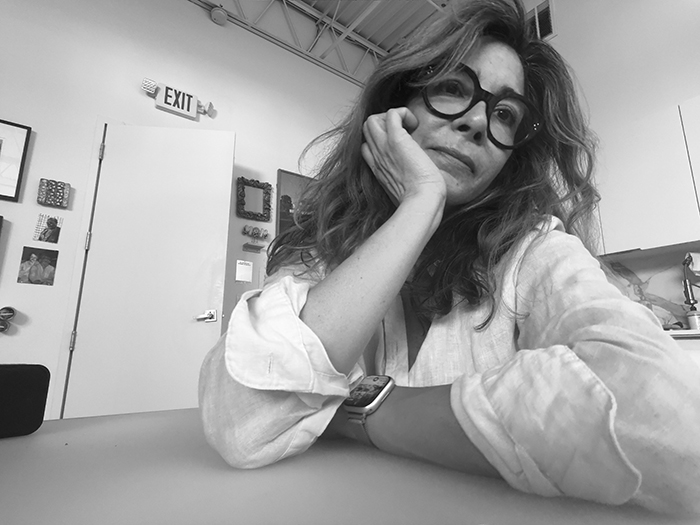
Liliana Bloch, 2026, image courtesy Liliana Bloch.
5 ⁄5
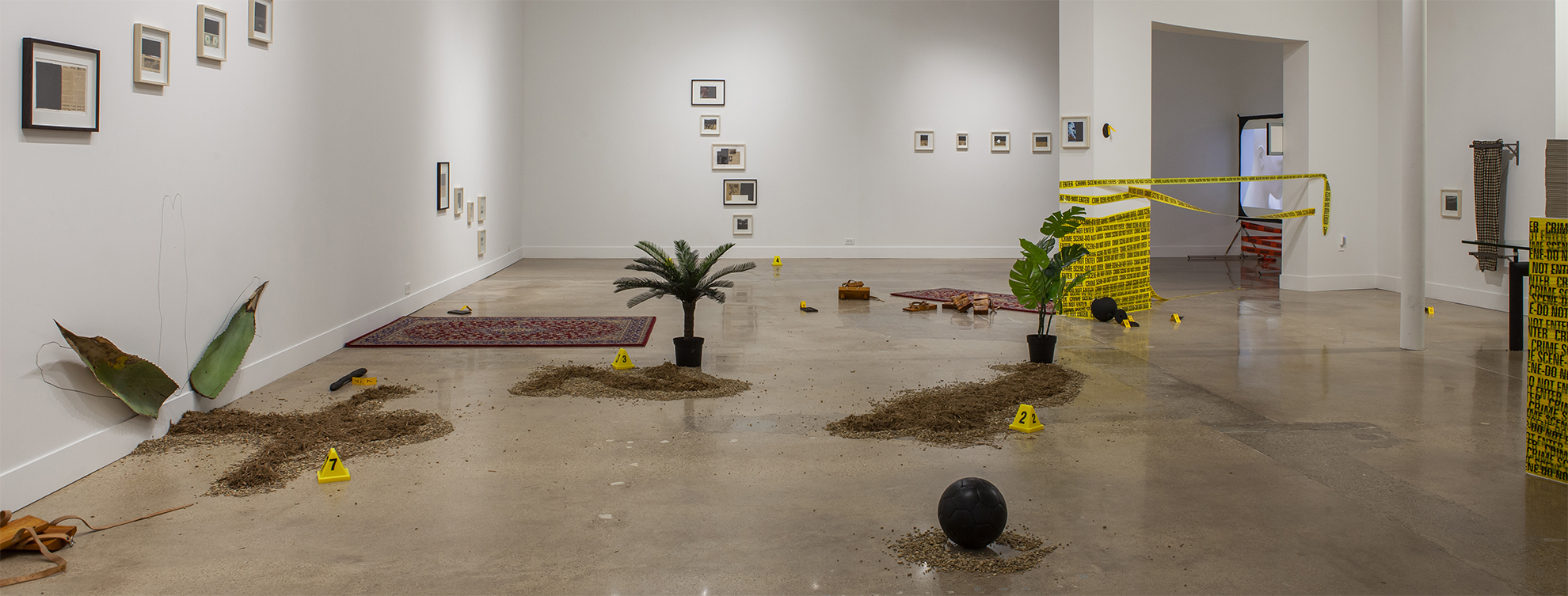
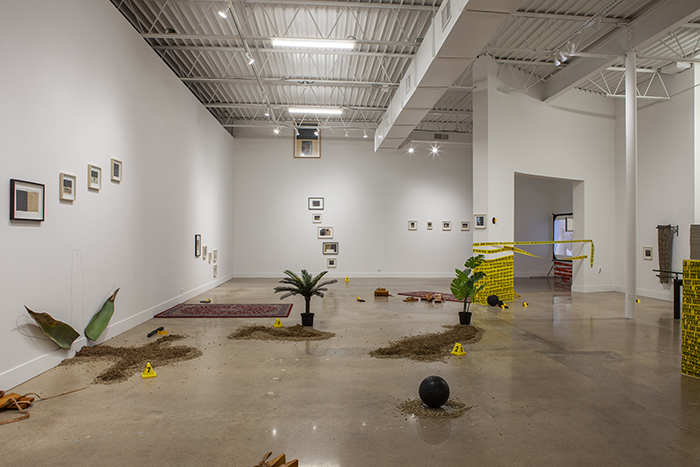
Installation view, Bogdan Perzynski, Half Slave and Half Free, May 29th – July 3rd, 2021, photo by Mike Fleming, image courtesy the artist and Liliana Bloch Gallery.
An internationally prominent artist on the roster right now is Nomin Bold, one of four artists selected to represent Mongolia at the 61st Venice Biennale. And, as far as this writer can tell, Liliana Bloch is the only Texas gallery with a pavilion artist. Bold works within the Mongol Zurag painting tradition, a style defined by intricate detailing, flattened perspective, and imagery rooted in nomadic life, which she brings into contemporary conversation.
“As Americans, individualism is one of the pillars of our society; I think my program is calling that out. We need community. We need variety. We need to be welcoming, and we need to have safe conversations about different things,” says Bloch. “In the end, art is all about connections. Bold’s work is an example of that. She comes from a place so remote and far away; it’s hard for us to imagine what life is like in Mongolia. Through her work we know that we share the same aspirations: a life well lived, committed to preserving the legacy of our ancestors and their wisdom. If the idea of Western ‘progress’ imposes destruction of our land and history, it is imperative to consider a compromise. Nomin Bold raises those questions.”
Other represented artists include José Villalobos, who uses performance, sculpture, and textile to interrogate masculinity, queerness, and border identity. Simón Vega brings a sardonic, politically charged and historically referential wit to his two- and three-dimensional works. Leigh Merrill’s photographic practice explores constructed and idealized landscapes. Bogdan Perzynski, co-founder of the Transmedia Area at UT Austin, takes interdisciplinary art to new levels with video, interactive code, and architectural settings.
The list goes on, Bloch points to a throughline: “There’s a common thread in my exhibition program, which is discussing the most pressing issues that we are facing,” she says, “and the program has evolved according to the times.” In 2014, she also launched URBANO, a public art initiative designed to bring contemporary work outside the white cube and into shared civic space.
She is equally direct about the relationship she’s trying to build with collectors, more like the one a reader has with a favorite book. “If you have something special, you don’t get bored. Like a good book. You can always go back to it. And every time you do, you discover something that you missed. I think it’s the same with visual art. That is a conversation I have with the collector base I’m cultivating, especially young and new collectors.”
There is something intriguing about a gallerist who talks about her program in terms of what viewers need rather than what they want. But Bloch frames it not as antagonism toward her audience, but as a deeper form of respect — a belief that people are capable of more than comfort.
“Art is about freedom,” she says. “To handle that freedom is one of the most difficult things to do as humans, as an artist.”
—NANCY ZASTUDIL