

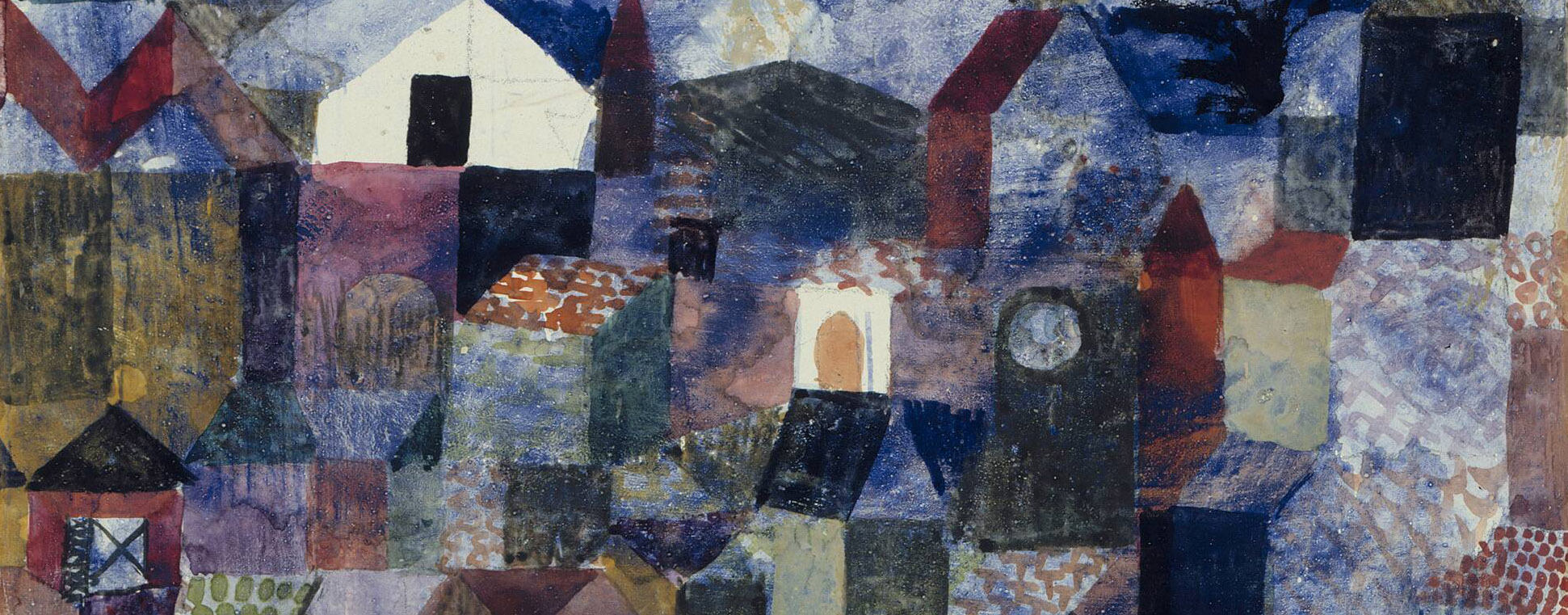

Heinz Berggruen bought his first Klee in 1940 for reasons that had nothing to do with investment. He was nineteen, newly arrived in America, a Jewish émigré from Berlin carrying ten marks and a sense of displacement. The watercolor reminded him of home. He carried it on a train from San Francisco to New York and kept it close for decades before eventually giving it to the Metropolitan Museum of Art. “He thought of it as a talisman,” says Dena Woodall, the MFAH’s curator of prints and drawings. That instinct — collecting from the gut, from personal resonance, from genuine relationship with living artists — is what makes Picasso–Klee–Matisse: Masterpieces from the Museum Berggruen, on view at the Museum of Fine Arts, Houston through Sept.13, feel rarer than a survey of modern masters. It feels like a portrait of a particular kind of looking and a way of collecting that barely exists anymore.

The installation reflects that intimacy without indulging in it. Consulting curators Ann Dumas and Dena Woodall organized the show thematically rather than by artist — still life, portraiture, the figure, works on paper — allowing unexpected conversations to surface across the galleries. Bold bands of primary color punctuate the walls, a deliberate nod to postwar Parisian modernism, to Le Corbusier and Léger, to the cultural milieu in which Berggruen operated his gallery on the Rue de l’Université. They anchor the domestic-scale works against the room’s high ceilings. The final gallery abandons this palette entirely for what the curators call “Klee blue” — a particular shade that makes the works feel weightless, almost airborne.

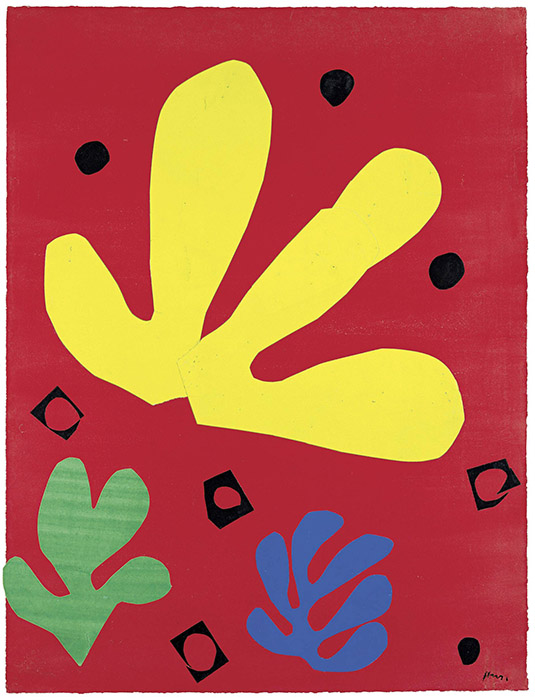
Surprises accumulate. In one corner, a Matisse textile rug — acquired by the museum in 1955, catalogued only with a small black and white photograph, never before exhibited — was pulled from storage during exhibition research and unfurled for what may have been the first time in a decade. Woven vegetable elements in Matisse’s characteristic cutout vocabulary, rendered now in thread rather than gouache on paper. I have spent decades looking at art. I had never encountered a woven Matisse. The object stopped me. It turns out Berggruen was among the first to recognize the Matisse cutouts themselves as finished works rather than preparatory studies — championing them at a moment when critics dismissed them as design sketches. The rug feels like evidence of how far that vision traveled.
1 ⁄6
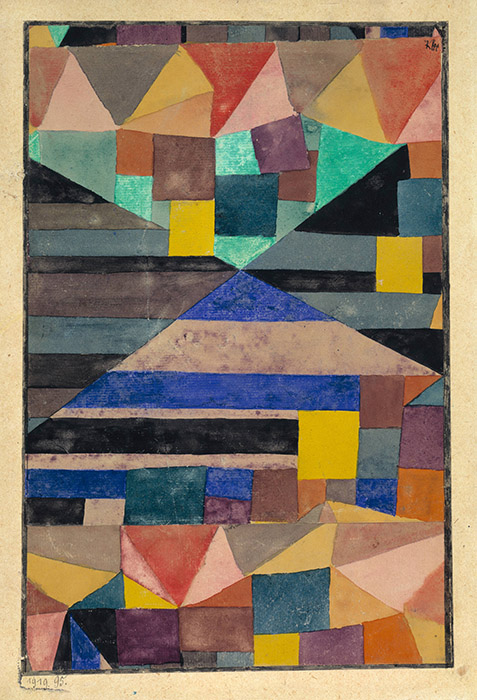
Paul Klee, Blue Mountain, 1919, watercolor, gouache, and graphite on paper on paperboard, Museum Berggruen, Neue Nationalgalerie, Berlin.
2 ⁄6
Henri Matisse, Vegetal Elements, 1947, gouache cutout on paper mounted on canvas, Museum Berggruen, Neue Nationalgalerie.
3 ⁄6
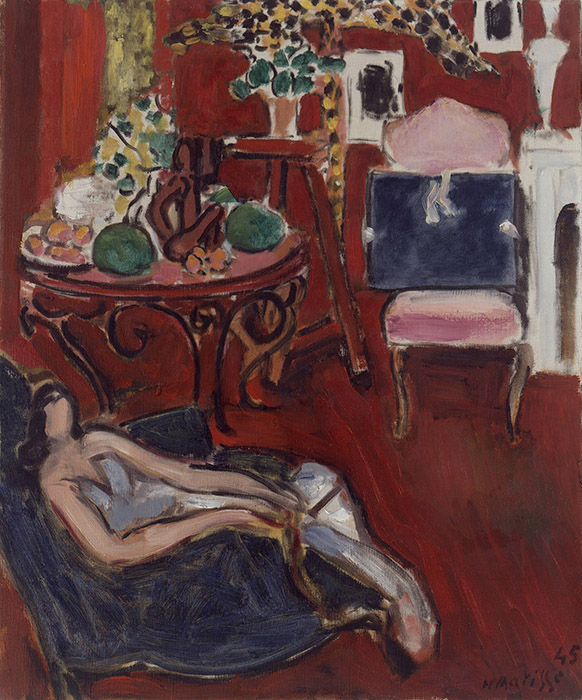
Henri Matisse, The Blue Portfolio, 1945, oil on canvas, Museum Berggruen, Neue Nationalgalerie, Berlin. © 2026 Succession Matisse / Artists Rights Society (ARS), New York
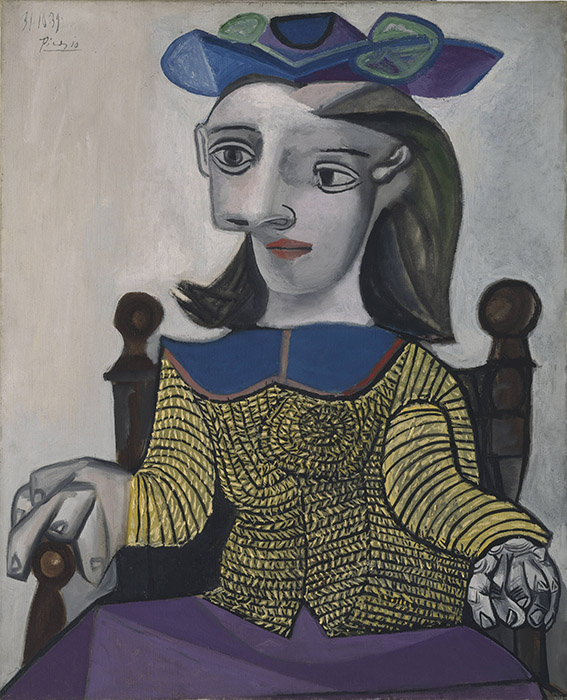
4 ⁄6
Pablo Picasso, The Yellow Sweater, 1939, oil on canvas, Museum Berggruen, Neue Nationalgalerie, Berlin. © 2026 Estate of Pablo Picasso / Artists Rights Society (ARS), New York.
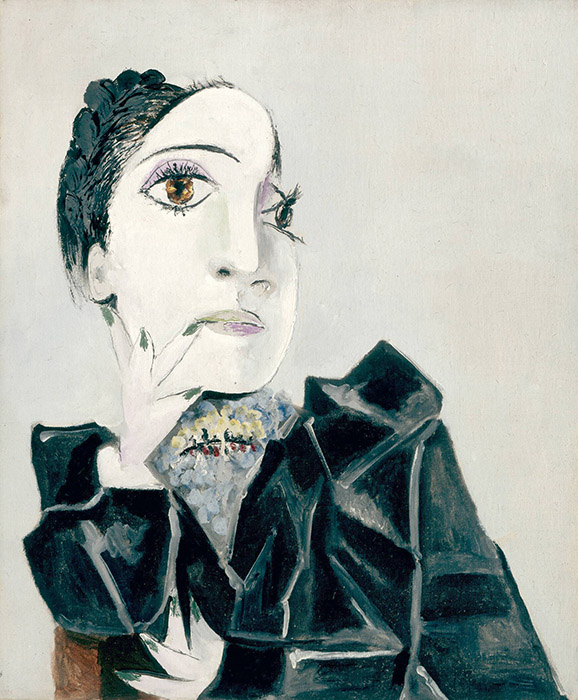
5 ⁄6
Pablo Picasso, Dora Maar with Green Fingernails, 1936, oil on canvas, Museum Berggruen, Neue Nationalgalerie. © 2026 Estate of Pablo Picasso / Artists Rights Society (ARS), New York
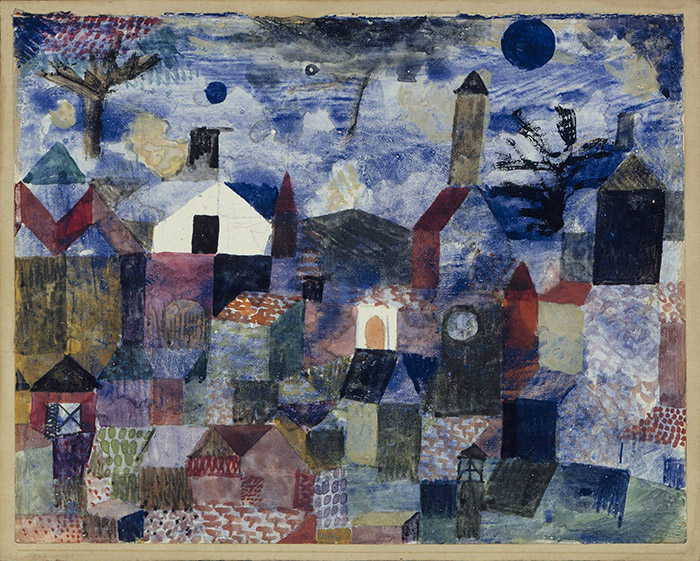
6 ⁄6
Paul Klee, Landscape in Blue, 1917, watercolor, graphite, pen, and ink on primed paper on paperboard, private collection.
The Picasso works offer something closer to a career retrospective — from the Blue Period portrait of Jaume Sabartés to the violent female nude painted under Nazi occupation. The range is almost unreasonable. The Sabartés is the surprise: a faint smile, the warmth of long friendship, none of the Blue Period’s usual remove. Dumas calls the Cubist Sideboard “an optical feat that contains almost the entire vocabulary of Cubism” — Berggruen himself catalogued its contents in his memoir, still searching for the absinthe glass. Standing in front of it, you understand the hunt — the painting rewards the kind of looking that doesn’t end.
As a gallerist who has spent years building relationships with living artists — sometimes collecting work because it moved me, sometimes because I believed in someone before anyone else did — I recognize Berggruen’s orientation immediately. What the collection models is a cultural practice, not just a taste. He didn’t collect art — he collected relationships with people who made it. That distinction matters now more than it did then. In a market increasingly shaped by financial return and institutional consensus, the personal relationship between collector and living artist has become ethnographic in the truest sense — a way of being with artists rather than acquiring from them.
—JON HOPSON