

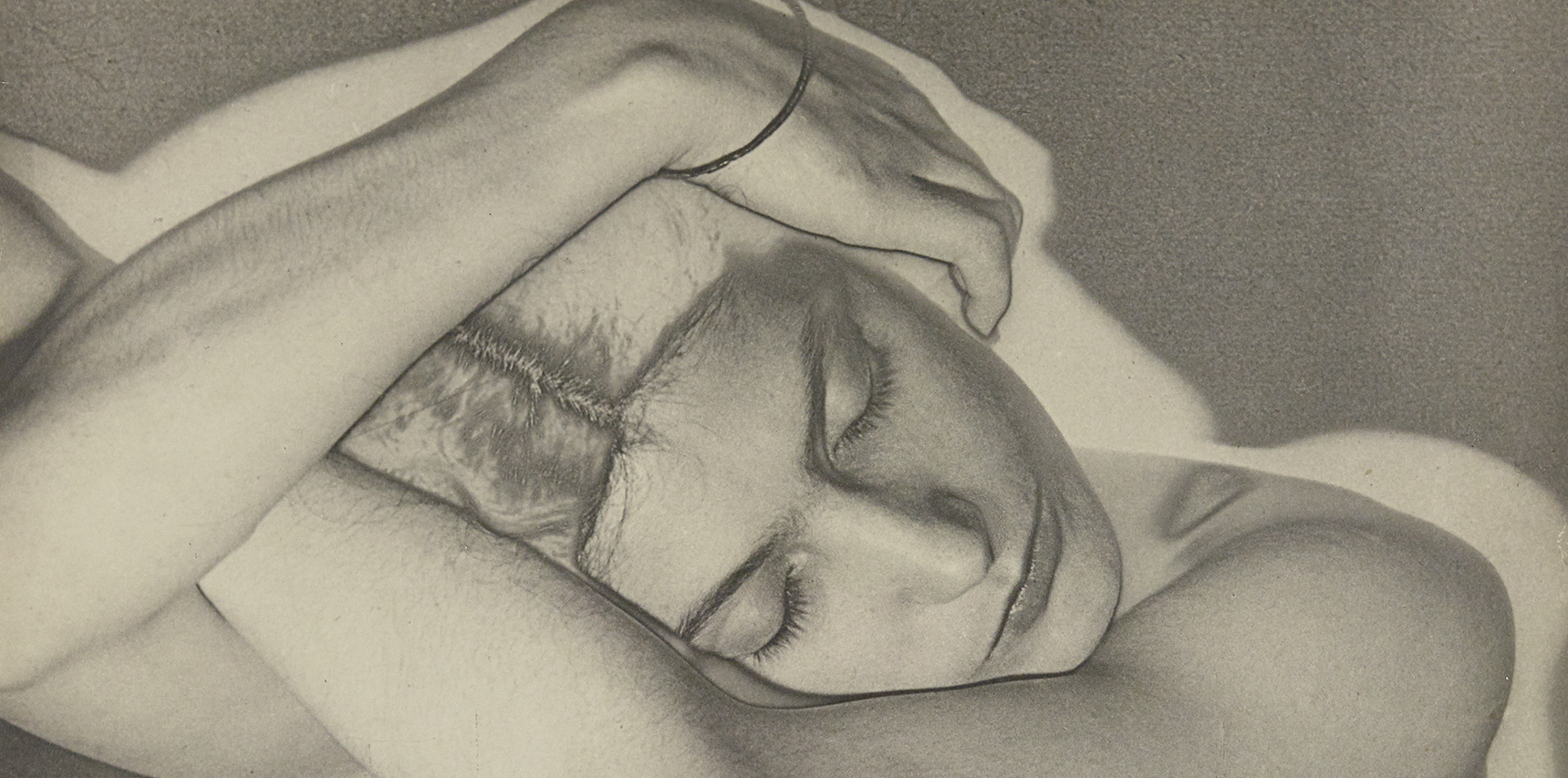

We were both dealing with the heat when we started talking about it—I managing an overheated kid and a sudden ice-cream run in Texas, George Shackelford locked in a Massachusetts office while a carpenter yelled about framing in the background. When you’re talking about an exhibition built entirely around the stubborn, physical reality of nineteenth-century paper and metal, you’re already arguing against the disembodied rush of modern life.

Inside the Kimbell Art Museum’s Renzo Piano Pavilion, that argument materializes across the gallery. This isn’t Kimbell’s usual wheelhouse, but they’ve built a space where history has to be negotiated with the body, not just scanned with an eye.
The exhibition opens with objects that flat-out refuse passive viewing. Joseph-Philibert Girault de Prangey’s 1840s daguerreotypes act as mirrors. Their silvered copper surfaces shift meaning depending on your angle—step one way and the image vanishes into dark reflection, shift slightly and a crisp view of Mediterranean stone emerges. “The daguerreotypes need to be seen at a very particular angle, just so vis-à-vis the light,” notes Shackelford, the Kimbell’s Deputy Director and organizing curator for the Kimbell’s presentation. “That’s a first for us.”
Scale swings dramatically throughout the pavilion, anchored by monumental physical objects like Édouard Baldus’s 1850s albums created for Emperor Napoleon III and Empress Eugénie. Bound in rich green and red Morocco leather, the massive volumes document the expansion of the Paris-Lyon-Méditerranée railway. “Sylvie Aubenas opened them, turning the pages one by one,” Shackelford recalls of examining the vaults in Paris. “We’re displaying one open to a centerfold spread—a sweeping panorama made from two separate large-format glass negatives. As an object in a book, it just knocks your socks off.”
Further into the gallery, the Kimbell refuses the idea of photography as finished object. Eugène Delacroix’s 1854 studies of nude models show a painter’s eye directing the pose—the photographs serving his studio practice rather than existing independently. Edgar Degas’s dimly lit prints capture friends in dark Paris living rooms, not posed subjects. These aren’t artworks on display. They’re evidence of how artists actually used photography: as a tool for thinking, for testing, for working through problems. Nearby, pages from private albums reveal accidental double exposures and informal family snapshots. The gallery says: photography doesn’t need a frame to matter. It needs a practice.
The interwar section intensifies the visual demand. Black-and-white prints of Sonia Delaunay’s avant-garde textiles force the eye to translate sharp geometric contrast back into the radical color theory she pursued. The prints don’t contain the color—they require it.
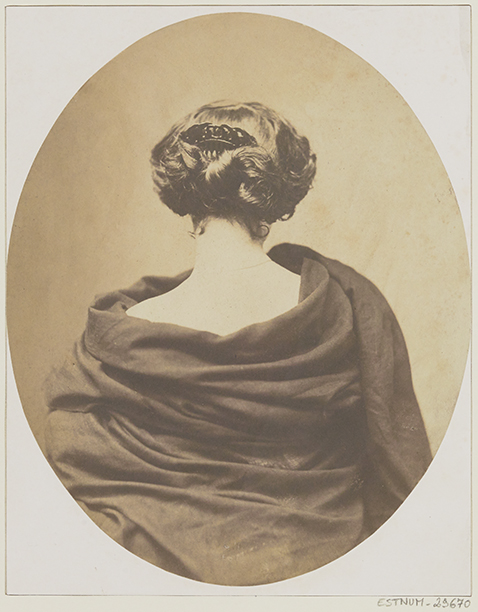
1 ⁄7
Félix Nadar, The Actress Marie Laurent, from Behind, c. 1856, acquired from the widow of Paul Nadar, 1949. Bibliothèque nationale de France, Department of Prints and Photography.
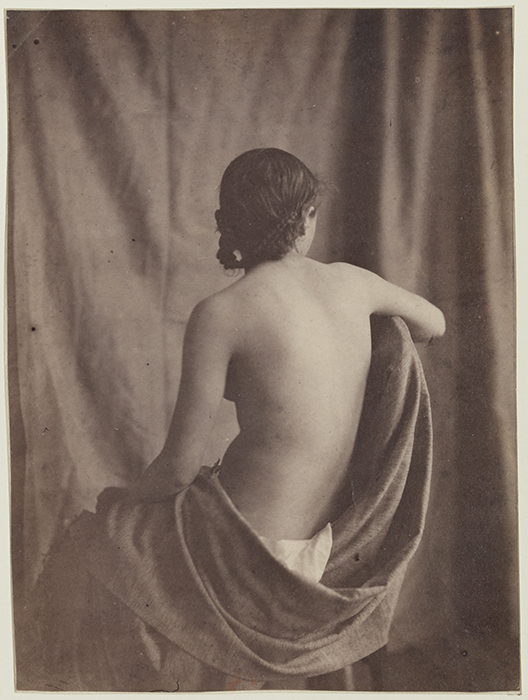
2 ⁄7
Attributed to Eugène Durieu, Female model, from the “Durieu album,” which contains thirty-two model studies, mostly posed by Eugène Delacroix (detail), 1854, donated by Maurice Tourneux, 1899, Bibliothèque nationale de France, Department of Prints and Photography.
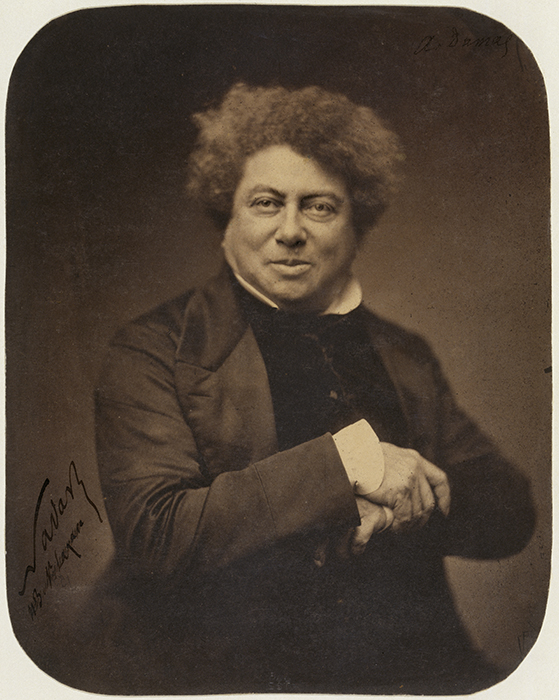
3 ⁄7
Félix Nadar, Alexandre Dumas, 1855, purchased from the Nadar studio holdings through Anne Nadar, widow of Paul Nadar, 1950. Bibliothèque nationale de France, Department of Prints and Photography.
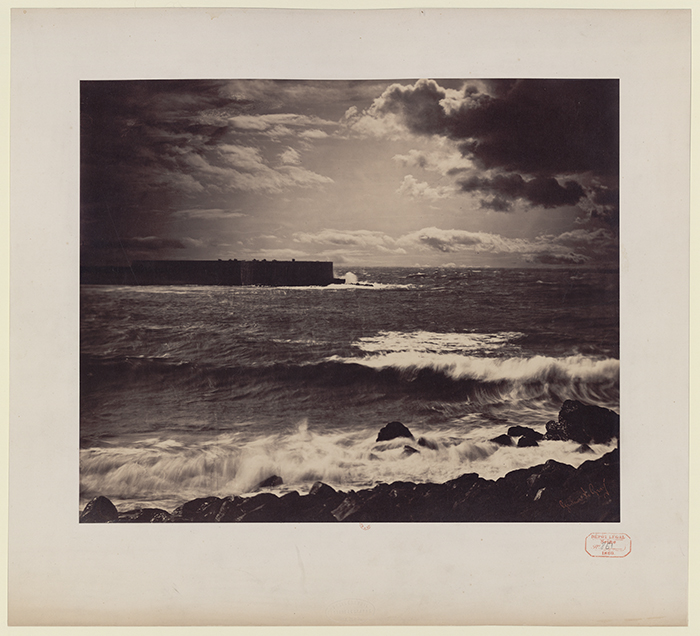
4 ⁄7
Gustave Le Gray, The Great Wave, Sète, 1857, legal deposit of the photographer, 1860. Bibliothèque nationale de France, Department of Prints and Photography.
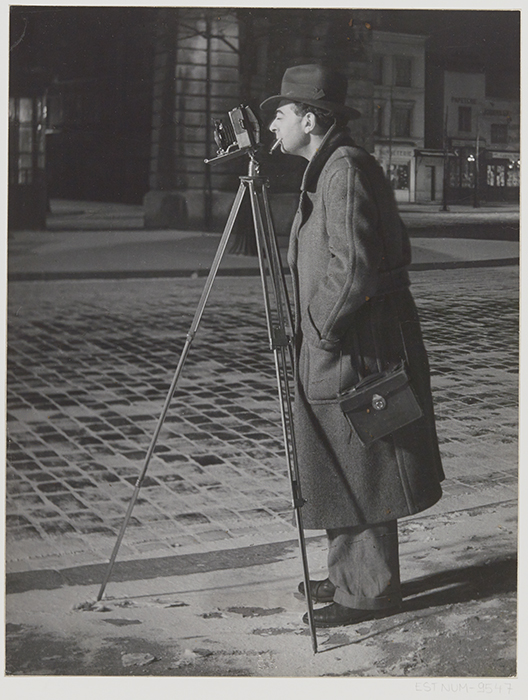
5 ⁄7
Brassaï, On the Boulevard Saint-Jacques, 1930–32, donated by artist’s estate, 2012. Bibliothèque nationale de France, Department of Prints and Photography.
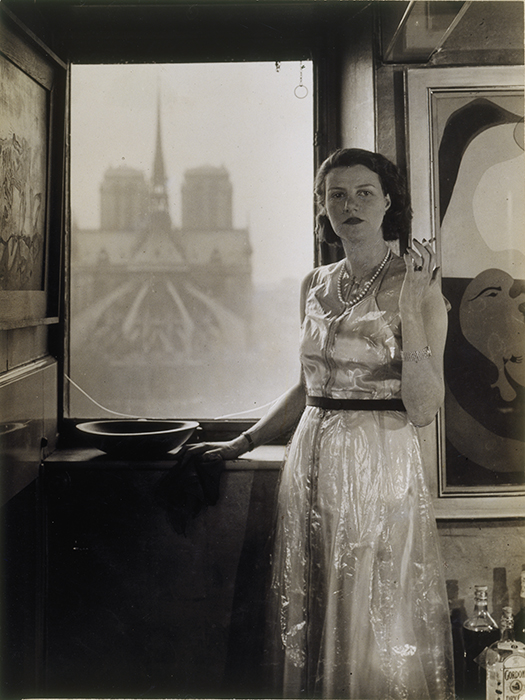
6/7
Rogi André, Peggy Guggenheim at the Window of Her Apartment, with the Apse of Notre-Dame Cathedral, Paris, in the Background, c. 1940, purchased from the Rogi André studio holdings after the artist’s death, 1970. Bibliothèque nationale de France, Department of Prints and Photography.
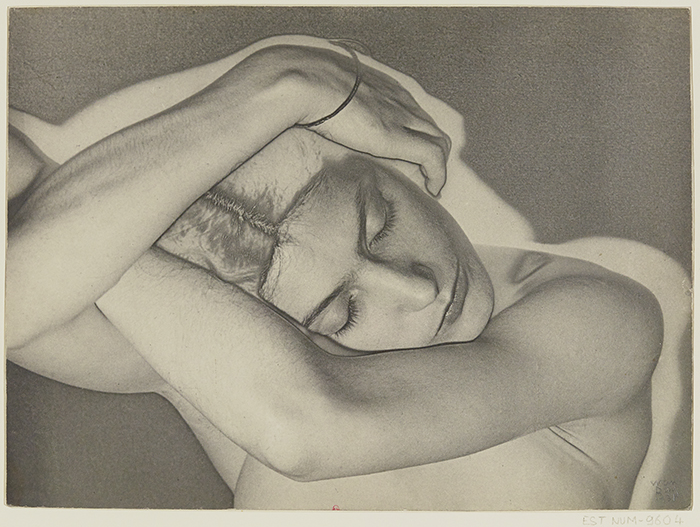
7 ⁄7
Man Ray, Sleeping Woman, 1931, donated by artist’s estate, 1984 Bibliothèque nationale de France, Department of Prints and Photography © Man Ray 2015 Trust / Artists Rights Society (ARS), NY / ADAGP, Paris 2026.
Photography’s First Century doesn’t ask visitors to absorb abstract history. It puts fragile, handmade objects directly in front of them—daguerreotypes that shift with your footing, backlit calotypes that filter light like stained glass, and imperial albums that reveal the physical hands that bound them. Seeing them on a screen glowing from within is a completely different medium. Standing three inches away from the paper and metal in Fort Worth is where the work actually lives.
—JON HOPSON