

This August, the Amon Carter Museum of American Art will unveil The Statue of Liberty from Bartholdi to Warhol, a sweeping exploration of how one of the world’s most recognizable symbols has been reimagined, reinterpreted, and reclaimed by artists over 150 years. Opening on Aug. 16, 2026—just weeks after the nation’s 250th anniversary—and running through Jan. 3, 2027, before traveling to Denver, the free exhibition arrives at a moment when questions of American identity feel more urgent than ever.

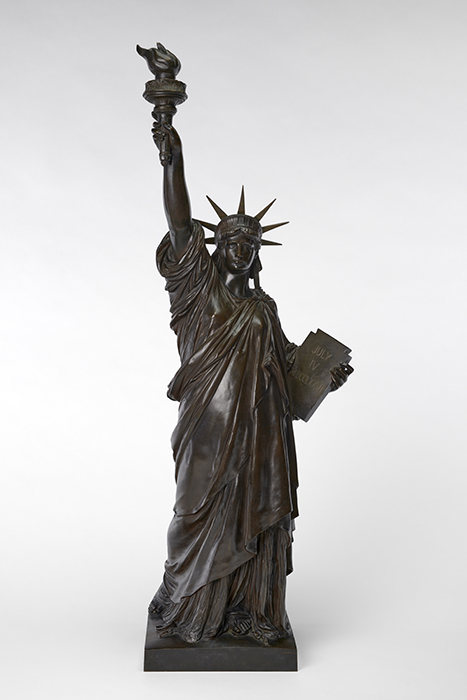
At the show’s heart is a rare bronze cast of original designer Frédéric Auguste Bartholdi’s Liberty Enlightening the World (1894–1901)—Lady Liberty’s official name. It’s one of only five domestic-scale reductions made during the artist’s lifetime. Acquired by the Carter in 2024, it “showcases an exceptional artwork that almost everyone in our community—regardless of their background or education—could recognize,” says Andrew Eschelbacher. “Once we had that, we started to think about the work’s place in popular culture, and how its ubiquity sometimes leads us not to look as deeply into its history.”
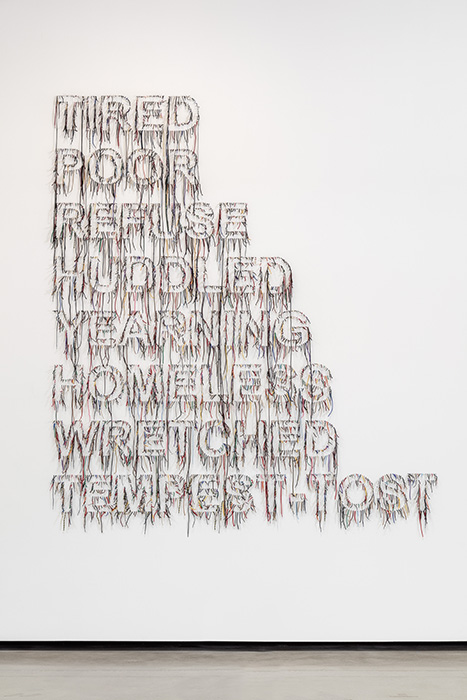
“I find Nari Ward’s work at once full of hope and a reminder of the work we have yet to do to achieve some of the ambitions that are so embedded not only in Emma Lazarus’s poem The New Colossus, but also in our founding ideas,” Eschelbacher reflects. “As Ward pulls out key words and phrases from Lazarus’ poem—tired, poor, refuse, huddled, tempest-tost—there is, for me, an immediate thought about the promise that the statue suggests. At the same time, seeing the words isolated and not enfolded within the rest of Lazarus’ verse gives them a certain edge that prompts me to think more broadly about questions of modern immigration and equity. I love that Ward talks about the importance of using shoelaces to create it, as everyone has had an experience with them so, like the statue, there is an individual connection.”
1 ⁄9
Frédéric Auguste Bartholdi (1834–1904), Liberty Enlightening the World (Statue of Liberty), 1894–1901, bronze with brown patina and black lacquer, Amon Carter Museum of American Art, Fort Worth, Texas, Purchase with assistance from the Ruth Carter Stevenson Acquisition Endowment, Pat and Shelby Adams, Anonymous, Susan and Stephen Butt, Sue and John Allen Chalk, Julie and Glenn Davidson, Subie and Phil Green, Debra and Ken Hamlett, Karen Hixon, Diane Jacobsen, Christina and Mark Johnson, Luther King Capital Management, Mary Potishman Lard Trust, Dana and David Porter, Richard Russack, Clara and Stephen Smiley, and Barbara and David Wyatt, 2024.26
2 ⁄9
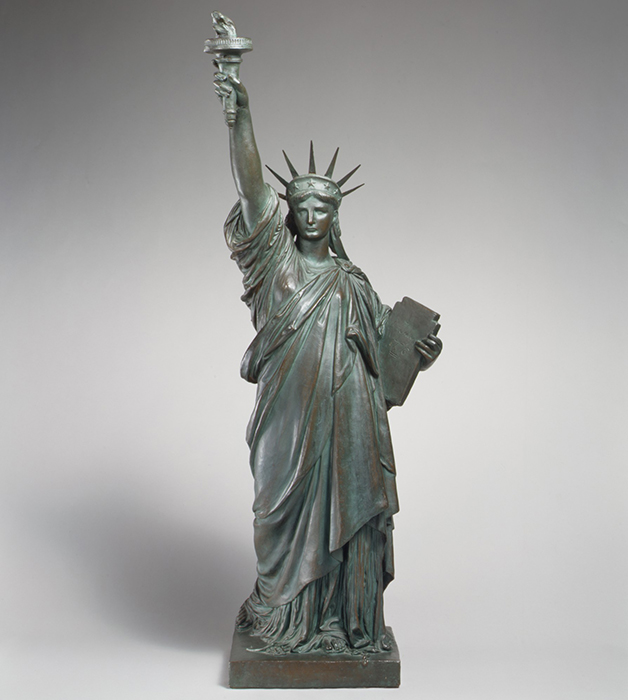
Frédéric Auguste Bartholdi (1834–1904), Liberty, 1875, bronzed terracotta, The Metropolitan Museum of Art, Gift of Julia Neville Adams Aubry (Mrs. Charles Georges Aubry), in memory of Jules Weber and his grandson, Charles George Aubry, 1999, 1999.49
3 ⁄9
Nari Ward (b. 1973), Lazarus, 2019, shoelaces, Vilcek Foundation Collection, © Nari Ward Studio. Courtesy the artist and Lehmann Maupin, New York, Seoul, and London, and GALLERIA CONTINUA, Photo by Joshua White
4 ⁄9
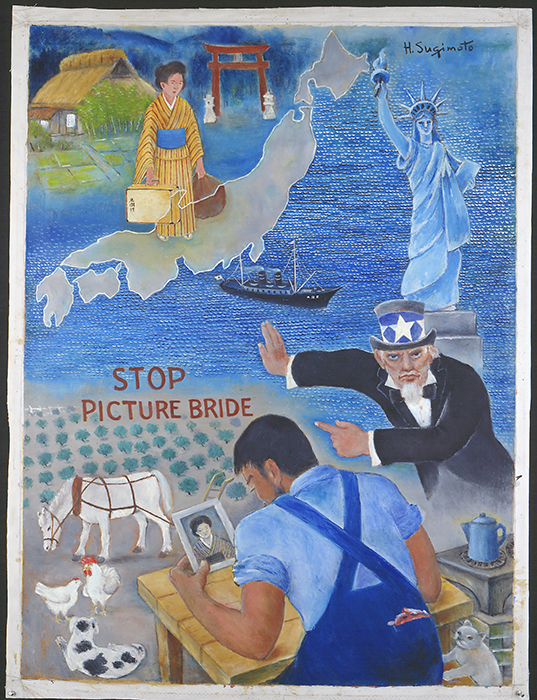
Henry Sugimoto (1900–1990), Untitled (Stop Picture Bride), 1965, oil on canvas, Japanese American National Museum (Gift of Madeleine Sugimoto and Naomi Tagawa, 92.97.121)
5 ⁄9
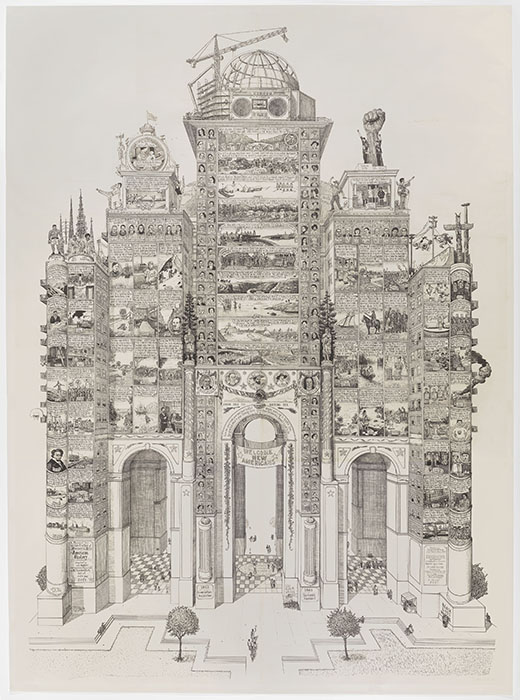
Sandow Birk (b. 1962), White Out: A Monumental Arch to American History, 2021, direct gravure etching, Amon Carter Museum of American Art, Fort Worth, Texas, 2025.2, © Sandow Birk. Courtesy of the artist, Catharine Clark Gallery, and Mullowney Printing
6 ⁄9
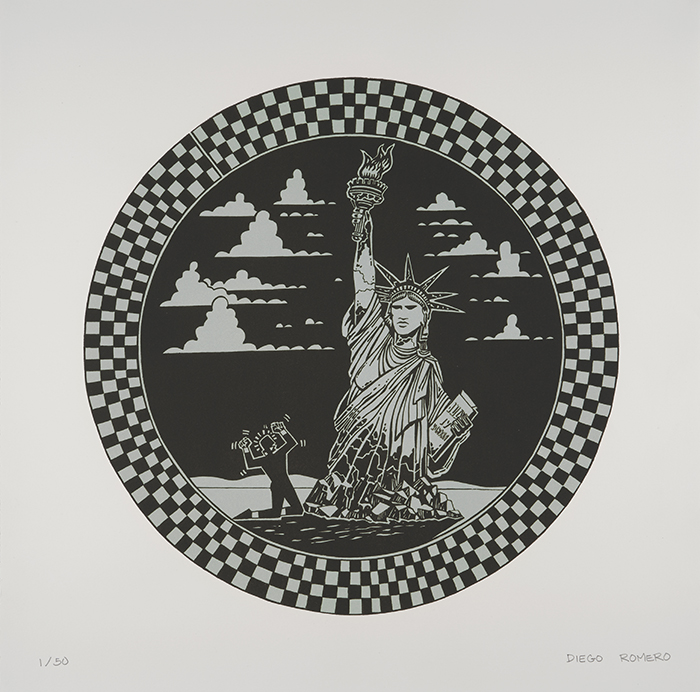
Diego Romero (b. 1964), Apocalypto, 2011, lithograph, Amon Carter Museum of American Art, Fort Worth, Texas, Purchase through the support of the Lakeside Foundation, 2023.30, © Diego Romero. Courtesy of the Artist. All Rights Reserved.
7 ⁄9
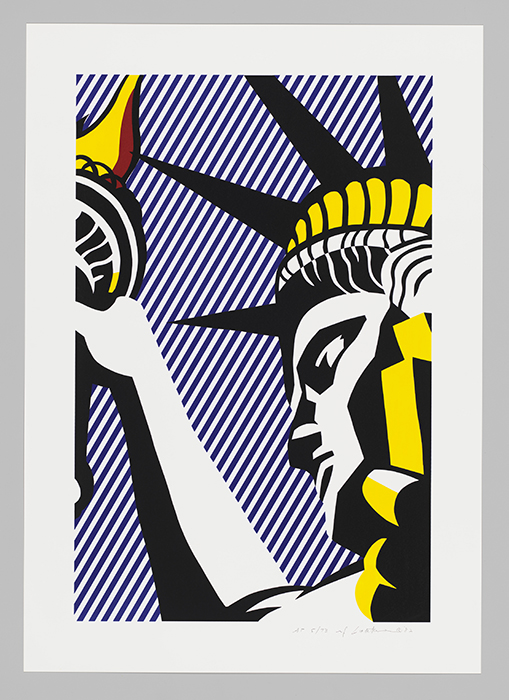
Roy Lichtenstein (1923–1997), I Love Liberty, 1982, planographic print, Whitney Museum of American Art, New York; The Roy Lichtenstein Study Collection, gift of the Roy Lichtenstein Foundation, 2019.161, © 2025 Estate of Roy Lichtenstein/DACS
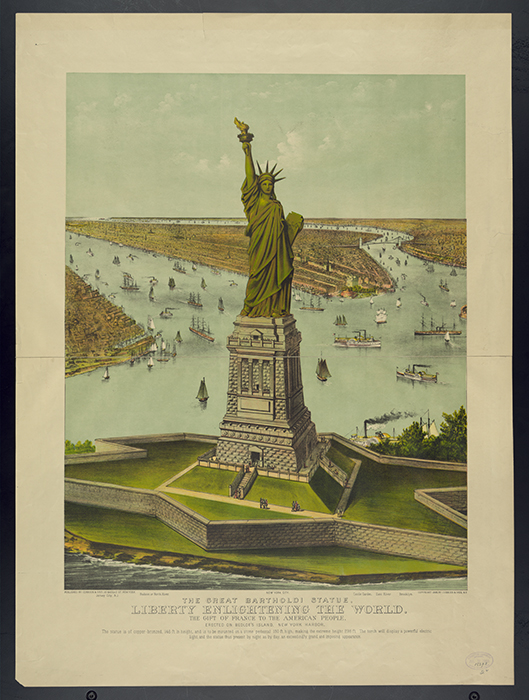
8 ⁄9
Currier & Ives., The Great Bartholdi Statue, Liberty Enlightening the World: the gift of France to the American people, ca. 1885, chromolithograph, Prints and Photographs Division, Library of Congress, Washington, D.C., 2001702146
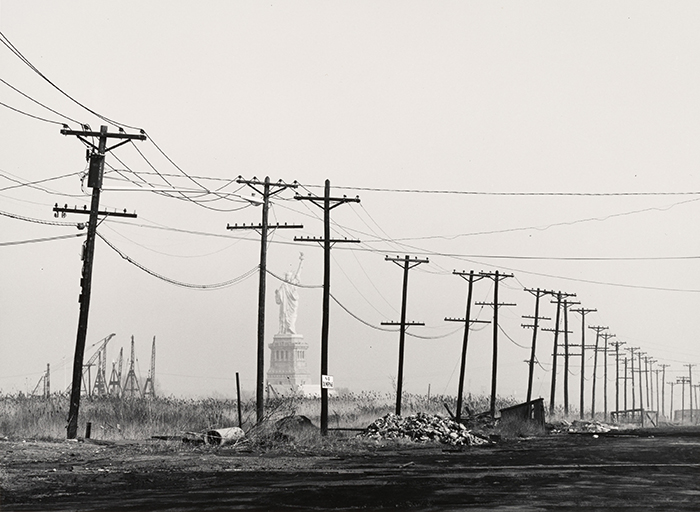
9 ⁄9
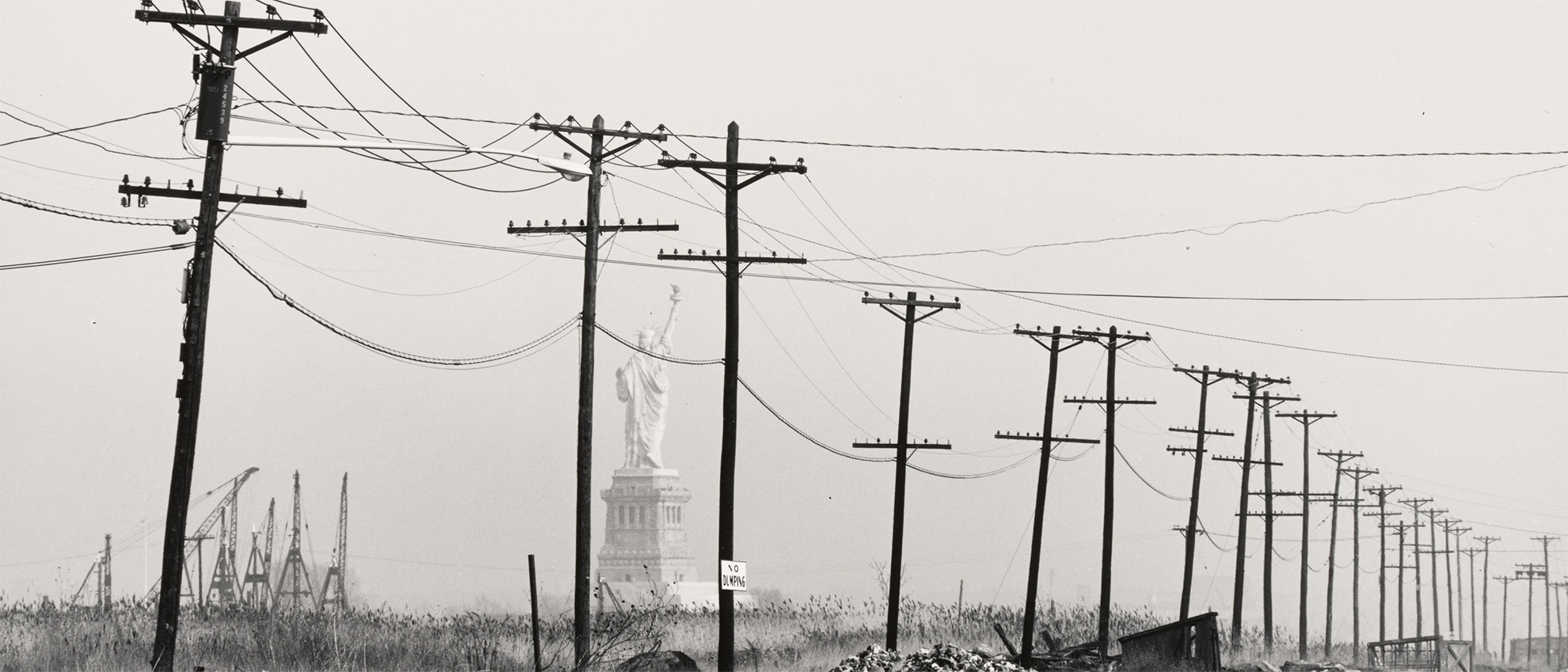
David Plowden (American, 1932–2026), Statue of Liberty, Caven Point Road, Jersey City, New Jersey, 1967, printed 1994. Gelatin silver print. Amon Carter Museum of American Art, Fort Worth, Texas, Gift of the artist. © David Plowden.
Community members were invited to contribute their viewpoint, as well. A dedicated installation in the closing section displays personal Statue of Liberty objects—from rubber ducks to dolls—that were loaned to the museum. “Statue of Liberty imagery and objects are so incredibly pervasive in our lives,” Eschelbacher explains. “Not just tourist knickknacks picked up in New York, but on logos and posters, printed on T-shirts, and seen across our television screens. Since its inception, the Statue of Liberty has been a dynamic, provocative, and pervasive artwork that has become one of the most powerful icons in American visual culture and something so ubiquitous that we have, on occasion, taken for granted its influence to shape and reflect the discourse about American identity. The goal here is to show how these Statue of Liberty objects exist not just in the realm of an art museum, but in the day-to-day world of our community.”
—LINDSEY WILSON